084: The Consequences of Christian Parenting "By the Book" with Marissa Burt, Kelsey McGinnis, and Meaghan Hampton
Dec 09, 2025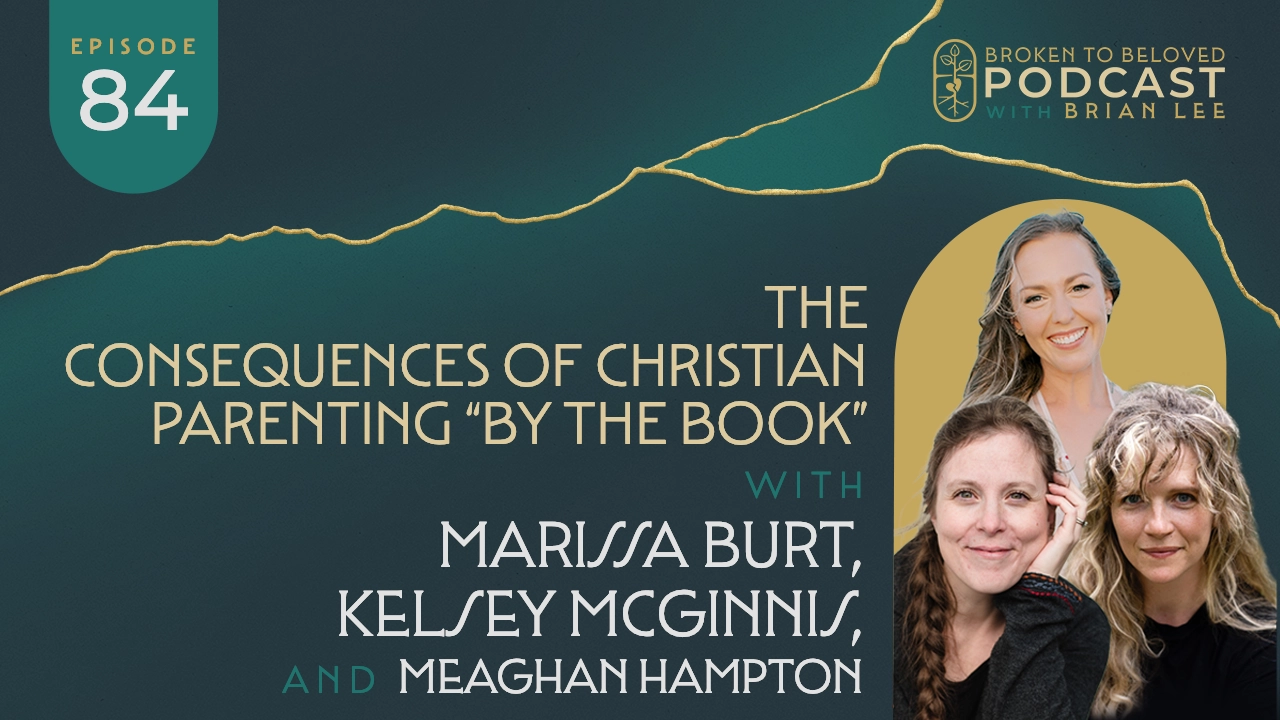
Were you raised (and maybe harmed) in a Christian household that did parenting "by the book?"
Maybe you were a parent who was looking for resources to parent "the right way," Regardless of intent, research and time have shown the harmful impact of Christian parenting books and the myths they perpetuated.
In this conversation, we dive into the very real and lived effects on generations of children and adults, and how we look for more informed and honoring ways to move forward. We'll talk about patriarchy and hierarchy, spanking and discipline, and the ways that these messages set up compliant Christian children for future abuse.
Listen in for a compassionate look at at how we can approach parenting (and learning to reconcile with our own stories of how we were raised) with a more informed lens that balances both therapy and theology through a trauma-informed lens.
Guest Spotlight ✨
Marissa Franks Burt (MA in Theological Studies, Columbia International University) is a novelist, editor, teacher, and cohost of the At Home with the Lectionary and In the Church Library podcasts. She lives in a small town in Washington's Snoqualmie Valley with her husband, six children, and heaps of books.
Kelsey Kramer McGinnis (PhD, University of Iowa) is a musicologist, educator, and correspondent for Christianity Today, writing on worship practices and Christian subculture. She is an adjunct professor at Grand View University in Des Moines and previously worked at the University of Iowa Center for Human Rights.
Meaghan Hampton is a Christian therapist, writer, and parenting educator passionate about integrating faith, psychology, and neuroscience to support families on their journey toward healing and wholeness.
Links & Resources 🔗
Marissa: Website | Instagram | Substack
Kelsey: Website | Instagram | Substack | “In the Church Library” podcast
- The Myth of Good Christian Parenting by Marissa Burt and Kelsey McGinnis | Amazon | Bookshop
-
The Whole-Brain Child by Dan Siegel & Tina Bryson | Amazon | Bookshop
-
No-Drama Discipline by Dan Siegel & Tina Bryson | Amazon | Bookshop
- The Connected Families Framework
Similar Episodes You Might Like
- Episode 66: Integrating Theology and Psychology in Parenting with Meaghan Hampton
- Episode 44: Building A Marriage Based on Mutuality with Sheila Wray Gregoire
Don’t Miss the Next Episode!
Sign up for our Podcast Newsletter and subscribe on your favorite podcast app below and never miss out on these conversations with old and new friends. Is there a guest you’d like to hear from? Let us know!
Apple Podcasts | Spotify | Amazon Music | YouTube
Spread the Word. Leave a Rating and Review. It would mean the world if you would leave us a rating and review on Apple or on Spotify or share with your friends.
Broken to Beloved is a 501(c)3 nonprofit that works to provide practical resources for recovery from and safeguarding against spiritual abuse. Our programs like this podcast are made possible in part by the generous donations of our supporters. Consider joining our community of supporters with a gift of $25 today.
As an Amazon and Bookshop.org affiliate, I may make a small commission at no extra cost to you.
Episode Transcript 📄
Marissa Burt
Parents are not God. However we understand the story of the Old Testament, and I would even contend there's not instant first-time obedience in the Old Testament, those passages of judgment come after decades of long suffering, warning, call for repentance with the end of the well-being of the community in mind. So then when we force it into this, you didn't pick up your toys when I asked you to the first time right away, I'm going to spank you. Like, wow, that is a leap. And it's really a mishandling of the biblical text, I think as well.
Brian Lee
Hey, friends. Welcome back to the Broken to Beloved Podcast. If you're looking for practical resources for recovery from and safeguarding against spiritual abuse, then this is the place for you. I'm your host, Brian Lee. As an ordained pastor and spiritual abuse survivor, I know what it feels like navigating life after spiritual abuse. I also know what it's like to want to prevent anything from happening to the people you love. It's why Broken to Beloved exists. And we can't do it alone. We need your help. Support our work today by becoming a donor to help make our podcast and programs possible. Just head to brokentobeloved.org/support or click the link to donate in the show notes.
Today, we have an incredible conversation about the consequences of, "Christian parenting" with Marissa Burt Franks and Kelsey Kramer McGinnis. Marissa is a novelist, editor, teacher, and co-host of the at Home with the Lectionary and in the Church Library podcast. She lives in a small town in Washington with her husband, six children, and heaps of books.
Kelsey is a musicologist, educator, and correspondent for Christianity Today, writing on worship practices and Christian subculture. She's an adjunct professor at Grandview University in Des Moines and previously worked at the University of Iowa Center for Human Rights.
I've also invited our friend, therapist, writer, and parenting educator, Meaghan Hampton, also known online @SoulCareForFamilies, who you met on episode 66 to join me for this conversation. Marissa, Kelsey, and Meaghan, welcome to the podcast. Hello.
Marissa Burt
Hey, thanks for having us.
Brian Lee
I'm really excited for this conversation. The Myth of Good Christian Parenting: How False Promises Betrayed a Generation of Evangelical Families. I love that you talk about what you almost called the book at the end, which we can talk about later. There is so much good in the book, but the first question, and maybe we'll start with Marissa and then Kelsey, is what prompted you to write it, and what prompted you to write it together?
Marissa Burt
Yes, good question. The idea for this had been rumbling around in my imagination for a couple of years. I'm the mother to six and have parented over a couple of decades now, which feels wild to say. But so I've read my fair share of these books, right, know well, that feeling of new parenthood, where you are looking for advice. And so that was there in my mind in my own personal experience. And then around maybe three or four years ago, I wrote a novel set in the stay at home daughterhood movement of Christian dominionism and fundamentalism. As I was researching for that, I was thinking about the ways in which family life teaching and theology enables abuse in a number of ways. That combined with a church too moment in my own denomination, where I was witnessing leaders unable to respond to injured people, unable to listen to them, blaming people for leaving churches. In my mind, these things were all mirroring each other. That combined with my husband's a pastor, so parish ministry for a couple of decades, just hearing some people's stories where they were, maybe adult children, feeling stuck in their relationships with extended family members or older parents who were confused why things had appeared to work and now they were distance in their relationships.
So all of that was in my mind. And I was thinking, Where's the book that really examines this? Where is the Great Sex Rescue for parenting books that really looks at some of this teaching that we all absorbed? And so on Twitter, one day, someone tweeted out, If you had endless time, what would you write a book on? And I tweeted out a version of this because I'm a novelist. So I've written fiction books, but this is my first non-fiction book. So I, with trepidation, tweeted that out there. And the response was very revealing. People saying, I wish we had that. I would read that. I wish I had that. When I was a parent. We need that. Please write that. It was enough, even in my little small social media circle, to think, Oh, this is timely. People are ready for this conversation. And it was enough for me to be like, okay, maybe I'm going to give focused attention to this. And shortly after that, I received a DM in my Twitter inbox.
Kelsey McGinnis
This is back when decent things happened on Twitter. I spent a lot less time there than I do now. So at the time, so it was a couple of years ago now, I was writing for Christianity Today. That's still where most of my public-facing writing is. I write on worship practices, and music, and church culture, and some other things here and there. But I saw this message and I thought, okay, I've been thinking about wanting someone to do that for a for years, since my oldest, who is now eight, was about one. When I was a new parent, I went down this rabbit hole of research and resources, because because I had grown up very what I would call normy evangelical. And like, SBC churches, my parents were on staff with Campus Crusade for Christ for a long time. They were big fans of the book Shepherding a Child's Heart. That book was given to me when I became a new parent. I started reading these resources. I did not read parenting books before I had kids. It was just I didn't do that preparation. But when I had a toddler, I started asking questions about, okay, what is a healthy parent response to something like a tantrum or a child asserting their will?
At the time, I was working at the University of Iowa Center for Human Rights during grad school, and we were wrapping up grant program, grant programming about child labor laws internationally. I was working with a lot of scholars who deal very directly with the rights of children, the UN Convention on the Rights of the Child. I was steeped in this language about how we talk about the dignity and rights of children from a legal scholarship perspective, from an advocacy perspective, and was teaching classes on human rights advocacy. There was that part of my world, and then there was the private parenting part of my world. As I started reading parenting books, I was thrown for a loop because the gulf between these two worlds was massive. There was no language of things like developmentally appropriate behavior, autonomy, free will. Those concepts were absent from the Christian parenting books that I was reading and was aware of. Some of this was just me turning to things that I was familiar with and looking for things. I could not find anything that was bridging this this gap between these two worlds. Eventually, my husband and I, we started reading these books and just taking notes and writing these podcast scripts.
We weren't going to do a podcast. We were both just academics. So this was our way of processing this out loud. And then we just let it go and we're like, okay, I don't think that these resources are helpful at all. So we just left the world of Christian parenting resources behind and found mainstream resources that we found incredibly helpful and left it there. I never thought I would do anything with any of that until I saw Marissa's tweet, and I just thought, you know what? This is not what I write about. This is not my area of academic expertise. But I have all of this information, and I've done all of this work, maybe I could be a helpful conversation partner. Maybe I've come across something that could be helpful to this writer. And so we started talking, and it became clear that we definitely have different training areas, different areas of expertise. But as we started thinking about what we would want a book like this to do, we started to think maybe we could be the ones to write it, and that we could write it in a way that is responsible and thoughtful, and something that would fill this gap for people as they're looking for answers.
Brian Lee
I love it. Thank you for writing it.
Kelsey McGinnis
Thank you for reading it.
Brian Lee
I'm so glad you found each other.
Kelsey McGinnis
Yeah, it's me too.
Marissa Burt
It's wild to think back to that day where we just hopped on a Zoom to be like, Let's get to know each other. At the end of the interview, we were like, do you want to give this a shot? Do you want to give this a shot? Can we see what happens? So it's just wild to think back to that because it's been almost three years now, and I'm so grateful. I think the book is that much more well-rounded and accessible because of the collaborative effort. It's been a real grace to work on this together.
Brian Lee
I love it. Meaghan, do you want to jump in with anything?
Meaghan Hampton
I first just want to say thank you for writing It has been so impactful for me and my lived experience. You guys just do such a beautiful job of providing language for, I think, what so many people feel in their bodies and their nervous systems and for what they experience spiritually and relationally. I just think it's such an incredible resource, and I'm constantly telling people about it. I just want to say thank you. It's really, really good. If any of our listeners haven't read it, they have to pick up a copy. It's really, really good.
Kelsey McGinnis
Thank you so much.
Marissa Burt
It means a lot to hear that. I'm so glad it's been a help to people.
Brian Lee
Yeah. I love that you referenced that there was no great sex rescue for parenting. We've also had conversations with Sheila about the latest book, [The Marriage You Want], and just so much data, so much good research about, Hey, here's what we were taught, and here's what the research is actually showing. I get so much of that from your book without so much of the academic clinical of it, but still the information is there, which was helpful. Kelsey, I love the idea around global rights of children in advocacy. That was an eye opener when I got to that section, and especially the idea around developmentally appropriate behavior, which Meaghan, I know you did a great job talking about as well. I'm looking forward to diving into all of it. You set up a really beautiful premise, and I don't want to bury the lead because this comes all the way at the end of the book, but we're just going to jump there, is that you say, despite the heavy emphasis on consequences For a child's misbehavior, one of the biggest lies Christian parents believe is that their own actions do not have consequences. They expect to be judged by their intentions and not by their actions.
Tell us more about that.
Marissa Burt
Yeah. This is something we saw a lot. As we wrote the book, we surveyed people who had experienced this, whether adult children reflecting back or older parents reflecting back. This was a thread that kept coming up again and again in those conversations and even just conversations with people on Instagram engaging as we would write and post about this. The way families were stuck, particularly with older parents who had, for whatever reason, believed some of these myths and applied various things, when down the road, there came a moment of conversation, maybe an adult child was attempting to express what that experience was like for them or offering feedback, saying this didn't work, or even just making different choices in how they parented. Choosing not to spank or something can feel like an attack on a parent who was all in on spanking. Any of those things could bring up this moment, and the response would be, Well, we did the best we could, or, We didn't mean for that to happen. A number of things that really kept older parents in a state of fragility and defensiveness, and Some of that has to do with the central ingredients to these myths, one of which is that these experts were just laying out simple biblical principles.
If that premise is wrong, then everything goes askew from there. But that underlying premise of it's just plain biblical authority really left people placing a lot of trust in the authors and creators these resources, not perhaps exercising the critical thinking that would have helped them reject it. We did hear from some parents who were able to reject these resources when they came across them. It left them doubting their own intuition or overriding it in the moment because they believed in these principles were the most important thing in the project of parenting. All of that really leaves not only families experiencing the harm of these methods themselves, but bereft of the tools needed to reckon with the consequences, to say we made mistakes and to know how to begin to name that and attempt repair. Because the expectation on the children to instantly comply without question was also, in a sense, on the parents to comply with these ideas without questions. So I think in that moment, there may even be a lot of parental fear. It takes a lot of courage, I think, and humility to really engage that idea, that whatever you meant, it could have had negative consequences.
And to look at that with clear eyes and an ability to humbly digest that information is really challenging for any parent, but I think especially for devout Christian parents who really believed that they were doing it all right and were really sincerely trying to follow these ideas that had promised such blessing, which is why in the title, reach for the language of Betrayal, because I do think there are many layers to this where entire families are betrayed. But the reality is these ways of parenting day in and day out, trained up parents in a certain way, trained up children in a certain way and had very real consequences down the road that many families are picking up the pieces from. What would you add to that, Kelsey?
Kelsey McGinnis
A lot of what you said, I would echo. And just add that the emphasis on parental authority above everything else throughout these books encourages parents to build this fortress around themselves, from their children, that if they are doing it the right way, if they're doing what these books are saying, which they believe is what God is telling them to do, it closes them off from questioning and from later from criticism from their children, even from adult children. I think When there is a lot of conversation about estrangement right now, and when we talk to adult children who are estranged from their parents, the inability of parents to accept criticism or consider that they were wrong is really strengthened by these teachings about parental authority as the first principle of parenting. And that is something that it becomes part of this ego of parents where they feel like even as their children are adults, they were acting as these authoritative agents of God, and that adult children still owe them that respect, owe them adherence to that hierarchy, even in adulthood, and at the very least, owe them the benefit of the doubt, and at the very least, owe them that.
I think in healthy families where you have real connection and you have real openness, I think many adult children are willing to give the benefit of the doubt. But when you have someone demanding it of you because they are the parent in authority, that is a dynamic that is really hard for everyone involved, right? And it's a dynamic that absolutely quashes any authentic connection and relationship. And so when we talk about intent versus impact, that's one real way this shows up, because parents have a very hard time letting go of that hierarchy that they've been able to use as this defense for their whole lives as parents.
Brian Lee
Yeah, that is huge.
Marissa Burt
Yeah. And one final thing, and then I'd love to hear what you have to say on this, Meaghan, too, as you encounter it, is I think a lot of these resources, they give no off-ramp. We talked about those stages of development. There's no consideration of differentiation or individuation or these stages where it's natural and appropriate and healthy for a child to separate. So in that sense, from the earliest days, These resources are casting a vision for a child as an extension of a parent and of parental ideals and dreams about Christian legacy or witness or any whatever, fill in the blank. But that is really strengthened by these teachings. Sometimes there's maybe a nod to, okay, when people get married, they might leave and cleave. But otherwise, it's assumed you won't need an off-ramp because your child will be walking in the way that you set them. And so it really there's just no consideration of that natural stage, which leaves a lot of people not knowing what to do when it comes.
Brian Lee
Meaghan, you want to jump in?
Meaghan Hampton
Sure. Yeah. I think both Marissa and Kelsey, you both touched on this, and I see this clinically in my practice a lot, that adult children, when they come to their parents and say, Hey, when you were doing this, and the adult children may even acknowledge the intention. That I'm sure that your intention was blank, but this is the impact. This is how it harmed me. The families that are able to repair and reconcile have parents, the older generation, being able to say, Being able to be humble and say, I think I made a mistake. I was wrong. What can I do to repair this? What can I do to make this right? Versus the ones that really cling to the umbrella hierarchy that you all talk about in the book and really cling to the, Well, this was my intent. I did the best I could. Those are the families that I see really struggling to repair, because really, those two things can be true. You can do the best that you can and you can still fall short. I think that's true for all of us as parents, just to varying degrees. Being able to acknowledge that tension and really hold space for our kids when they're struggling, and especially as they become and say, Hey, this is how I was harmed, is, I think, a really important ingredient to repair.
Brian Lee
That whole section and setup is so good. I appreciate that you offer space and grace for the parents who raise their children this way to that it's most likely have started with good intentions for your child's protection, safety, well-being, and yet you don't move towards setting up a binary or a false dichotomy of... And so it excuses everything that happened and the impact of what the children have now grown up with and are reconciling with today. I think a lot of people in our audience know this from their own upbringing. I think it was brought to light in the documentary Shiny Happy People, all about Bill Gothard and IBLP, and just hearing the stories. We've talked with Cait West, who wrote RIFT, and we've talked with several other people from that community or who were brought up that way. It is such a thing. I was fascinated on your take on children being written about as a class, and what a flattening and dehumanizing view that was. Would you tell us more about that?
Kelsey McGinnis
Yeah, I owe a great deal to R. L. Stollar's book, The Kingdom of Children. He is building ideas around child liberation theology. One thing that I think he gets absolutely right is that when we generalize children as a class, the way that a lot of these resources do that is so that we can then set up a a behaviorist model of how to manage them, basically. I think any book that does that ends up dehumanizing whoever it's talking about. I'll often draw the parallel to bad dating manuals. Bad dating manuals are a way of gamifying a relationship in a way that is basically giving you a shortcut around a relationship with an individual person. Instead of having to get to know the person, instead of having to do the hard relational work of dealing with the individual in front of you, it gives you generalities about this person, sometimes only informed by the person writing the book, and they're like maybe three dates they've ever been on, right? All of these parenting authors are generalizing about the nature of children. Now, some, in the case of James Dobson, who was a doctor in front of his name, you trust the generalization because it comes with this credential.
He is the exception in that case, and eventually tries to distance himself from that credentialing. But for the most part, the evangelical authors writing parenting books are either recycling his generalizations or they're coming up with their own based on anecdotal experience from their own lives and the people in their community, and then making these massive generalizations about how children are, what children need, what the spiritual state of children is. Also, these generalizations about the inner lives of children that are completely unsubstantiated. Some of the more disturbing ways of generalizing about children as a class come from the pulpit, where you have people preaching. I cannot remember the name of the preacher, but basically saying, if you were to put the kids in our nursery, the two and three-year-olds, if you were to leave them without an adult in the room, they would all kill each other. They would all kill each other because they are evil, because of their sin nature. They don't know right from wrong. They don't know good from evil. They don't know any of this. They would all kill each other because they are basically animals. These are the dehumanizing ways we talk about children as a class.
Ken Ham is another example who talks about children as incapable of discerning between good and evil, which is why they should be homeschooled so that they aren't exposed to the evil that they will not recognize. All of this is so troubling, and it glosses over things about just being human, because there are plenty of adults who make mistakes and mistake good for evil. But he's pathologizing childhood and creating this imagined class of people that are subhuman, that don't have a moral compass, that are dangerous if left to their own devices, when all of that on some level can be true of humanity. But this generalization is done in service of then being able to label and offer these relational formulas.
Marissa Burt
I think, too, the factor of it coming often from the pulpit, we note this a lot with humor. There's often a lot of jokes anecdotal stories that are supposed to be humorous that dehumanize children. This happens outside of Christian circles as well. Children are so vulnerable to this in our community. But sometimes I think about what what that's like for the child sitting in that congregation to be formed in a community where they are discussed as a class of people, where they are lumped in, not just forming their self-image, but the reinforcement that they are essentially a non-person in the community. They're maybe an appendage of their parent, maybe part of their parents' testimony, but that they don't matter and their individual needs don't matter. I I think that is a really subtle way that especially children were raised within communities that were reinforcing these ideas. It way it formed them and their understanding of God and how God perceives them. I think one of the tragic things about these unexamined narratives that continue to circulate is it is such an opposite from what we see from Jesus in his life and ministry, where he sees the individual, often in a very personal way, says, What do you want me to do for you?
When he's engaging with an individual who needs healing, it's very personal. He's concerned for even one child who is caused to stumble who are stumbling blocks to their faith. There's a direct individual personal way in which he, as the incarnate God, is relating to people. And that's simply not possible in a framework that has One, told you parenting is a project, you need to get right a task, like your children are part of your good Christian task list. Then given you these ideas that even if a parent separately wants to see their child as an individual, recognize some of that, is still saying it's one size fits all parenting. How you relate to them has to be the same way no matter what. There's no consideration of anything else. That really does train parents every day to begin to relate to their children that way. Even if maybe that's not their starting place, that functionally is what happens. Again, contributes to what we were talking about earlier, that moment where if you've never practiced seeing your child as an individual, that will not suddenly come naturally to you 20 years down the road, necessarily. I think we see this in the broader conversation around it, like deconstruction is a scary word.
People talking about this are in a victim mentality. Why won't the children stop whining and be more grateful to their parents? These things where it keeps us, even as a Christian community, unable to hear the individual stories of the people saying, I experienced harm. This is how it was heard. So it has layers that ripple out.
Brian Lee
Yeah. And there are two directions I could take this. I think I'll go in one first. But one of those directions is the idea that so much of abuse I've found is centered around the need to hold on to power and control, which you've talked a lot about, and I want to talk about. But I want to start with the idea of sin, because there is so much around Christian parenting that centers around labeling behaviors as sin. You said earlier, around what may be developmentally appropriate, but people label as sin, and addressing the sinful nature of children. Or, Kelsey, like you're saying, but leave a whole bunch of two-year-olds in the room and they're just going to kill each other with no evidence that that's going to happen. Because you also address the doctrine of total depravity and all this other stuff that it's like, well, you'll become a parent and you'll just see it yourself. Then how others completely refute. That's like, absolutely not. I see the beauty and goodness of my child.
Do we just see what we want to? How do we know we're not just doubling down on how we were raised around the idea of total depravity versus original goodness that God creates, man, it says very good, right? How do we know that we're not just doubling down on that or what we're choosing to believe? Help us out with that.
Marissa Burt
That's a good question. I think for Christians, a key thing to keep in mind sometimes is that in these conversations, sin becomes a catch-all phrase. It's often not defined or it's not precisely defined. Sometimes people are operating with an understanding of sin is missing the mark of something. Maybe they've gotten that definition. But a lot of times, everything just gets thrown into the sin bucket. Anything someone doesn't like. And I see this just last week. There was a conversation on Twitter where some different pastors were saying, Oh, What's a sin to send your child to public school? Well, we can talk about the problems with that as an opinion, but it's a categorical error to start talking about those things as a sin issue. So first First, I would encourage people whenever you hear sin language, particularly in these application-oriented ways, to ask yourself, How is this person defining sin? Have they? Because I think I could even say in all the research, I'm trying to think if any of them really take the time to define sin. They don't. I'm pretty sure across the board. Instead, they speak like, We all know what we're talking about here, and then throw some parenthetically Bible verses on it.
But what's downstream of that is a parent walking away thinking, Anything I don't like or anything that's hard must be a sin issue. Someone in the relationship must be sinning because this is hard, or I don't like it, or in language we might use, a parent is triggered and feeling undesirable emotions in themselves, and so their mind bumps to, Oh, my child is sinning. They're defying me. They're contradicting me. They're talking back to me, any number of things. So it lump it in together. So then when you pick up a book that is saying, saying, Oh, children are vipers in diapers, or little bundles of sin, or terrorists, or tyrants, it reinforces something maybe the parent is experiencing in a particularly overwhelming season. Because a lot of times people pick up these books when things aren't going well for them. They don't know what to do. They're having a problem. So I do think it provides a really easy answer for them of like, Oh, this is hard because my child's a sinner. And if I spank them, I will get compliance and we'll have dealt with their sin. We talk about how it's catechizing children in a certain way.
And sometimes that can provide a short term logistical answer. It's behaviorism. A child may then comply, and a parent may feel like, Okay, I must be doing this right. It really can become a self-reinforcing narrative. I think for people to question it does require a deconstruction, which is very intimidating for a lot of people. I think that's necessary. If you start poking around in these teachings and asking, What do they mean by sin? What is the church historically taught about sin? What does my church say about that? A lot of times that can feel like pulling out the cards on the bottom of this house of cards, and it can produce a lot of internal resistance because it can feel like, Oh, if I start, is this a slippery slope for me?
Or in the community, sometimes you'll hear this. We hear this a lot in the conversations that are saying, Well, is gentle parenting sin? That headline pops up all the time in Christian outlets. A lot of times there's this thought stopping moment early on in the conversation of we cannot tolerate gentle parenting because it doesn't adequately deal with sin, whatever we mean by that. It really, I think, stirs up a lot of things for people because sin is such a key part of the Christian conversation around our faith. So, yeah, I think it tugs on a lot of different things to challenge it.
Brian Lee
Yeah. Kelsey, anything you want to add?
Kelsey McGinnis
Well, I would love to actually hear Meaghan's perspective on this because I think one thing that just was so troubling to me as a new parent was like, I felt like my evangelical lizard brain turned on in a weird way and was like, everything my kid does is either like, obedience or it's sin. Like, every no is evidence of my child's sin nature. That was the only framework I had for interpreting toddler behavior. And so I'm so curious to know how you deal with that and what you would say, Meaghan, to people who are like, well, no, that is your child's sin nature. It's rebellion, right? That's what this is. And it's like, well, I mean, developmentally, I don't know that that's correct. At least my impression is that it's not. But I am not a clinical psychologist.
Meaghan Hampton
Yes. Yeah. You You are 100 % right, Kelsey, because really, like you mentioned, Marissa, differentiation at different points of development from very, very young children, ages two and three, all the way up into teen years and adulthood. It's a really, really important part of development. And kids experience differentiation in different ways throughout the developmental process. But it's the way that God designed their brains and their psychological identity to develop. And so if we are constantly overriding that, and we are judging what God has... The way that God has designed the brain to grow and the nervous system to develop. And it's super uncomfortable for us as parents, honestly, many times. And we assign this label to it, this moral label of, well, it must be sin, because now I'm uncomfortable.
It does the child a disservice because now they're unable to really complete some of these developmental stages that God has set out for them. But it also does us as a parent disservice because then now we can blame the child and put ourselves in this adversarial position against our child instead of allowing our own dysregulation to be what motivates us to do the internal work to heal our own triggers. So it ends up being a disservice to both the child and to the parent.
Marissa Burt
Yeah.
Kelsey McGinnis
The first time I heard the term developmentally appropriate behavior, it was like an entire... It was like my world just changed because I felt like for the first time I could look at my child and not be alarmed by any time they were in opposition to me. Because before that, I felt like any opposing behavior that I had to respond to that with decisively as like, That is not okay, and try to bring that into obedience. I felt so relieved. But at the same time, I was terrified that I was wrong. What if I'm wrong? And what if I start operating this way, and I'm wrong, and I mess up my child?
Meaghan, how do you explain to parents that you You can teach your child right from wrong. You can teach them that not all behavior is okay without pulling the sin cart. How do you come at that? Because I think for a lot of our readers, especially the more conservative readers, that's just a nonstarter. It's like, if you're not talking about sin, you're not actually teaching.
Meaghan Hampton
Yeah, that's such a good question. I think that you guys touch on this in your book, a little bit of this idea of not putting ourselves in the role of God, right? As though it's our role to decide what is sin in our child's life. And now it's our role, not only to we're tasked with deciding what is sin, but now it's our job to root it out. And we have this just heavy, heavy burden on us. Instead, being in a relationship with our child and in the same way that we would set healthy boundaries with a friend or a spouse, we can also set boundaries with our children and teach them what it looks like to just live in healthy relationships. Obviously, that relationship with our child is different than that of our friend or our spouse. But just being able to, I think, model what that behavior looks like, too, because I think that's one of the primary ways that kids learn is through modeling. And so being able to model the behavior that we want to see and then lovingly set boundaries around that type of behavior with our kids as well.
But I love that you guys talked about this because I had never heard the concept concept of us, like reading these Old Testament passages and putting ourselves in the role of God. I think that's where a lot of these parenting, it seems like, I'd love to hear you guys speak to this, a lot of these parenting teachings come from, is that, well, God did this to Israel in the Old Testament, so we should do that to our kids. I would love to hear you guys speak to that a little bit.
Kelsey McGinnis
Yeah. I mean, it's just such a very blunt use of the Bible right? Like, look how seriously God takes the sin of his people. You must take this very seriously, right? It's like a very one to one, and always encouraging parents to identify themselves with God, as opposed to as a brother or sister, right? Like, which is very radical, like to encourage parents to see themselves as fellow learners, fellow children of God. Instead, parents are told to imagine themselves as the stand-in for God in their child's in his life. And that is, one, just so much pressure, and so much power that no human being is equipped to handle in the life of another person, right? And it sets up parents to expect a level of control that is absolutely unrealistic and unhealthy. But it really is what I would call a blunt use of the Bible, right? Like, look at what God did here. You must take it just as seriously, right? Which, of course, falls apart once you start looking really closely at it.
Marissa Burt
Yeah. Yeah. And I would say it's out of alignment with the life and teaching of Jesus. He was very direct when he says the pagans lorded over one another in their authority, and it should not be so with you. The leadership he models, because, yes, there is... Parents do hold a authority, but the leadership he models is to serve. It's incarnational, it's relational. He comes to show us. When God decides to show us what he's like, he comes in Jesus and says, This is what it is like. And it is discipleship, is how he leads. It is service. It is mutual. The epistles are full of these, even the household codes, passages of how children and parents and wives and us, they're all structurally organized around mutuality and mutual belonging. So I think the way we prooftext the story, the narrative of the Old Testament, really reveals something about ourselves and our view of power. It's interesting because you see this in other conversations, not just the child-parent dynamic, but the umbrella of authority dynamic. Often the people giving this messaging are subtly always going to be at the top of the authority chain. They're never envisioning themselves at the bottom.
The men are eager to tell women to submit, but they don't really have to submit. The people defending slavery do not envision themselves as the slaves. They envision themselves as the benevolent master in their mind. I think that plays out here when it's convenient. It really does reveal a worldly way of power. Honestly, it becomes a idolatry because Yeah, parents are not God. However we understand the story of the Old Testament, and I would even contend there's not instant first-time obedience in the Old Testament. Those passages of judgment come after decades of long suffering, warning, call for repentance with the end of the well-being of the community in mind. Then when we force it into this, you didn't pick up your toys when I asked you to the first time right away, I'm going to spank Wow, that is a leap. It's really a mishandling of the biblical text, I think, as well.
Brian Lee
That's huge. Meaghan, I know you talk about that all the time. I want to point out something else that you shared that I thought was so helpful around this whole sin nature thing that viewpoints like that, number one, equate sin nature with personal moral failure and culpability. Two, ascribe adult motives to infants who have no sense of self-reference. That was huge. Then number three, they interpret anything short of perfection as sin. Then you go on to say that an ordinary parenting moment, Stop hitting your sibling, becomes imbued with theological motivations. Children hit because they're sinners, and there is no excuse for sin, which reveals a unique isogesis or reading one's own already established ideas into specific verses. I love that you approach this work with curiosity and that you provide plenty of questions for us to examine, why do I believe this? Why do I treat this person like an authority? What credential What skills do they have? And I think that was just so helpful. And I think it was Meaghan saying earlier, it takes an amount of humility to be able to ask those questions of ourselves and to re examine our own beliefs, the way that we were raised, the way that we raise.
And I just think it's so helpful. We've referenced it so many times, so I want to end here with the time we have is this idea of spanking, because it's been mentioned so much, and I think so many of us have been raised under this household. Maybe we haven't. I had no idea it's outlawed in several countries or that the US is the only UN member yet to ratify the Convention of Rights of the Child. What in the world?
Kelsey McGinnis
Correct.
Brian Lee
Yes. There's so much around that. But I want to point out one thing that I think is the big one is that corporal punishment, you say, doesn't hurt children only in the moment. It also grooms them for further abuse. This was mind-exploding to me. The spanking manuals you write include instructions such as the following: take a child somewhere private, give them spiritual instruction, pull down their pants, spank their bare bottom, offer hugs and prayers. This recipe communicates the children that it's okay for adults to hurt their bodies in private places because God says so. And then it primes them for this abuse in the future as adults. God wants me to do this. I'm doing it because I love you. Even though I hurt your body, you must show me affection and act reconciled. Liturgized, spanking trains children and groom them for sexual and other kinds abuse in direct ways. I can't tell you how many times I hear this comment from people in our community, and just the connection that this made for me is mind boggling.
Marissa Burt
Yeah, it is something I think we, as the collective Christian community, really need to reckon with and take some degree of accountability for because this teaching came from Christian pulpits and Christian publishers and Christian Christian families, and absolutely, directly and indirectly in a number of ways, enabled abuse, groom children for abuse is complicit with abuse, and that is worthy of anger and grief and lament. I think that alone should be the final word for parents on spanking. End of story, right? If you play that out, no, it is not worth it. Whatever gamble you're willing to take, maybe I'll do it, and my child will be one of the, I was spanked and it was not a thing for me. Maybe. But what are we doing here?
Meaghan Hampton
Yeah, I completely... Yes. Yes and amen to everything that you're saying. I think one thing that I see a lot is parents advocating that, well, if we do it in a controlled way, in a warm manner, if they're calm when I do this, then it's not going to... There's a right way to spank is what I hear a lot. That term, there's a right way to do this. They say, Obviously, there's a wrong way, but if you do it the right way, then the child won't be harmed. There are actual research studies, many of them, that have been done that actually prove that this is not the case. That warmth does not mitigate the long-term harm that spanking causes the nervous system And there's other ways that spanking impacts children and eventually leads into adulthood. It affects relationships. It affects emotional regulation. As a Christian counselor, I believe that it affects our spirituality and our God image. But being able to just recognize that knowing the harm that it causes people should be enough for us to say that this is not something collectively that we are going to promote anymore.
Kelsey McGinnis
Yeah.
Brian Lee
Thank you. Kelsey, anything you want to add?
Kelsey McGinnis
Yeah. The spanking conversation is so hard. And I think what Meaghan was saying this idea that there is a right way to do it. There's so many parents who will say, look at my kids, they turned out okay. Look, our relationship is fine. There are plenty of people who will offer their families as anecdotal evidence of this working. It's fascinating to me how people will use that, as long as you do it in a warm way, they won't feel unsafe. They won't feel in the same breath, say, but it has to be painful. Like, spanking is important because it must be painful. It must be. People tie themselves into knots trying to explain why it works, explain why it's necessary. Discipline must be painful for it to work, but at the same time, if you do it right, they won't feel unsafe. Well, it's painful, partly because it's scary, because you have an adult hurting you. These manuals will say, you're supposed to spank until there's contrition. They're not angry cries anymore. They're sad cries. What is that? That's a child who's terrified and very sad and feels helpless. You want your child to feel helpless in your hands so that they do not want defy you anymore.
That's a horrifying reality for a small child. It is very scary. Meaghan mentioned the nervous system dysregulation that happens there. It's very real. And these resources do not acknowledge that. They take a very utilitarian view of this. And we'll even dismiss the research that's out there, for utilitarian reasons and say, we might not even see the fruit of it. This is a commandment from scripture. There's a laundry list of ways people will continue to defend this, when we just have all the information now that I think is more than adequate to say, we shouldn't be doing this anymore.
It is, but it is still a hill that a lot of Christian parents are willing to die on. You know, John Piper saying, I'd rather go to jail than not be allowed to spank my children, which things like that are the reason, are part of the reason why the US has not signed the UN Convention on Rights of the Child, is because you have people like John Piper, parents rights activists, who are so vocal about how dare you tell me I shouldn't do something to my child, that they're willing to make spanking the thing they go to bat for, right? In order to defend parental rights they make spanking the thing that they go to bat for. And that, to me, is incredibly twisted and backward as well.
Brian Lee
Yeah.
Marissa Burt
And I think a lot of parents just don't have any other... They don't know what else to do, right? Especially if this is what they receive. So they're like, well, it's either spanking or completely permissive parenting. There's this false binary, really. And again, when you challenge people on it and say, well, okay, well, where do you draw that line between spanking and abuse to people who defend spanking? It again will be based on parental intent. Like, well, I intended it for their good. And that's just incredibly dangerous. It's incredibly dangerous advice for Christians to be giving people.
Brian Lee
So what do I do? What do other parents do who are choosing or trying not to spank? What options do parents have other than spanking when that's all we were raised with and that's all we know or we're taught?
Kelsey McGinnis
This is a hard question for us, I think, because we try not to give parenting advice. But I will say there is a lot of helpful parenting guidance out there. I just can't tell you what will be useful for your family. I can tell people what have been useful in my household. That doesn't mean that my children are perfect. It just means here are other tools, right? I am very grateful for the work of Tina Payne Bryson and Dan Siegel. They have several books that they've written together that give some useful tools for emotional de-escalation. I have one child that's much more reactive than the others. For us, parenting has been a lot about that, is figuring out how to help him regulate his own emotions and de-escalate And we have found tools. We've found helpful tools. I will say that having just a line in the sand, that we're not going to, we aren't going to hit our children. It sounds like taking away the one most important tool. But beyond that, there is just so much freedom, because there is so much writing out there. But unfortunately, parenting books are self-help, and they vary in the usefulness and the helpfulness, and the ethical foundations that they build on.
So what I usually tell parents is just read widely with an open hand, and see what lands with you, what resonates with you, based on the temperament of your children. I realize this sounds like a non-answer, but I guess the hard, but I think freeing answer is, your child is... They are a person who... They have agents see. Their behavior is not me. I cannot control it. I think once you remove that shame as a parent, I feel less like I need to control that behavior because it's not me, it's them. They can have that. And then it becomes about, how do I be in a relationship with this kid? Right.
Brian Lee
And I anticipated that response, which is perfectly fine because you do such a great job at the end of the book saying, Hey, we don't want to point you to the things, but ask the curious questions. And so even that, I think, is incredibly helpful. One of the values, our first stated value is agency over prescription. We're going to resist telling you what to do or how to heal or that there is one way to heal. I would much rather you recognize and reclaim your agency because abuse so often strips us of it. So how do we help you to do that instead? So I appreciate that even now you resist telling me or telling our listeners what to go find.
Marissa Burt
Can I recommend one resource to your listeners, Please do. The one Christian resource I will send people to when they ask this is I recommend the Connected Families framework. They offer coaching and streaming courses that are really helpful in providing practice. Tactical alternatives. Their model has connection as the end goal over behavior. I think even that framework orientation invites curiosity of what's going on in me in this moment. Slow Slow everything down. The moment where parents reach for saying, What's going on with me? What's going on with my child? How do we cultivate connection in this moment? Which I think removes some of that pressure of, I need to punish this thing and can allow for more ethical alternatives, the way we engage with other people. I want to throw that out there as a helpful resource. I love that their primary way is coaching because that really allows for some of the things one-size parenting fits all advice isn't able to do, to talk to parents, talk about an individual child. So I commend them to people a lot. Great.
Brian Lee
Thank you. Any last thoughts, Marisa, before we wrap up?
Marissa Burt
Oh, gosh, this was such a great conversation. Thank you for having us. Thank you. Thank you, listeners. I know some of the most tender things are bearing witness to the stories people share, and I count that such a privilege to have... That It was unexpected in some ways as we worked on this, but I imagine people in your community all have moments in their own story that echo with this. I just want to say I see you, and I'm so sorry that this was a piece of your experience and that the church community as a whole was unable to safeguard you in the way you needed. I'm so thankful for a podcast like this and community like this. This is a lovely thing about the internet that let people find ways to heal and maybe feel not so alone and isolated as they think through those things. So I'm so pleased to know what you're doing here in this community, too. Thank you.
Brian Lee
Thank you. Kelsey, anything last to add?
Kelsey McGinnis
Just thank Thanks for having us on. And I hope that if some listeners in your community do pick up the book, I hope they feel seen in it. I hope that people who are maybe, maybe if there are parents who are feeling regret, that they will feel encouraged and not judged or shamed by it. That was really important to us and continues to be really important to us, and how we talk about these things, because parenting is just hard. I say this all the time, but I think So many parents are looking for the answer to the question, who sinned that this is so hard? Who's sinning that parenting is so hard? Sometimes it's like, no one. It's just hard. A lot of these books do not give parents space to say, this is just hard. No one is doing anything necessarily terrible or sinful or worthy of harsh judgment. It's just hard. We hope that people who need to hear that can find some, I don't know, comfort or some encouragement there.
Brian Lee
Yeah. Thank you, Kelsey and Marissa. I said before we started recording, it feels like in addition to being the sandwich generation of caring for aging parents while bringing up young children, that there's also this interesting sandwich happening of reconciling the way that we were brought up from these Christian Parenting books while trying to disconnect or disentangle from those teachings that were so harmful to us as we raise our own young children. There's so much of that reconciling work going on. Again, your book is so helpful, and I think it does thread that needle very carefully of not judging or condemning parents who brought it up with good intent without denying the harmful impact it had on our generation. So just thank you. Thank you so much for your work. Marissa, what's the best place people can find or connect with you online?
Marissa Burt
I'm across social media @mburtwrites. I write long form pieces at Substack and probably most active on Instagram. Kelsey and I also did a limited run podcast called In the Church Library, where we did some deep dives on some of these resources. So it's like an online an appendix to the book. If people are interested in specific topics, you can find us there. I'd love to connect. I love social media for connecting with people. What a happy surprise of being on social media.
Brian Lee
Love it. Kelsey, what's the best place people can find you?
Kelsey McGinnis
You can also find me under my name, Kelsey McGinness. Instagram is where I'm pretty active. I also have a Substack. A lot of my writing lives on christianitytoday.com. If you search my name on their website, that's where all of my writing for them lives. But that's a little bit a field of this topic that we're talking about today. But those are the places for me.
Brian Lee
Great. Thank you so much, everyone. Go get a copy, The Myth of Good Christian Parenting, wherever books are sold. We'll have all of the links for all the things we talked about in the show notes. Meaghan, thanks so much for being with us.
Marissa Burt
It was so great to connect with you, Meaghan.
Kelsey McGinnis
It was so good to see you.
Meaghan Hampton
Marissa, Kelsey, thank you so much for being with us today.
Kelsey McGinnis
Thanks for having us.
Brian Lee
What an incredibly helpful and eye-opening conversation for If you enjoyed it as much as I did, be sure to follow Marissa, Kelsey, and Meaghan, and say thanks for being on the show. You can find links and all the things in the show notes. Subscribe or follow the show to get new episodes automatically. If you enjoyed this episode, please leave us a rating and review or share with your friends. It really helps us to grow and continue providing quality content for you. And as a side note, we are wrapping up season three of the podcast. Thank you so much for listening. I'm so glad you're here. And a special thank you to our listeners who make the show possible through their financial support. Consider donating today at brokentobeloved.org/support or at the link in the show notes.
Thank you so much for being here, for taking the time out of your day to listen. I hope it's been helpful. Here's to moving toward healing and wholeness. Together. I'll see you next time.