
094: Following the Thread from Holiness Theology to Hallmark Movies with Kristin Kobes du Mez
Aug 18, 2026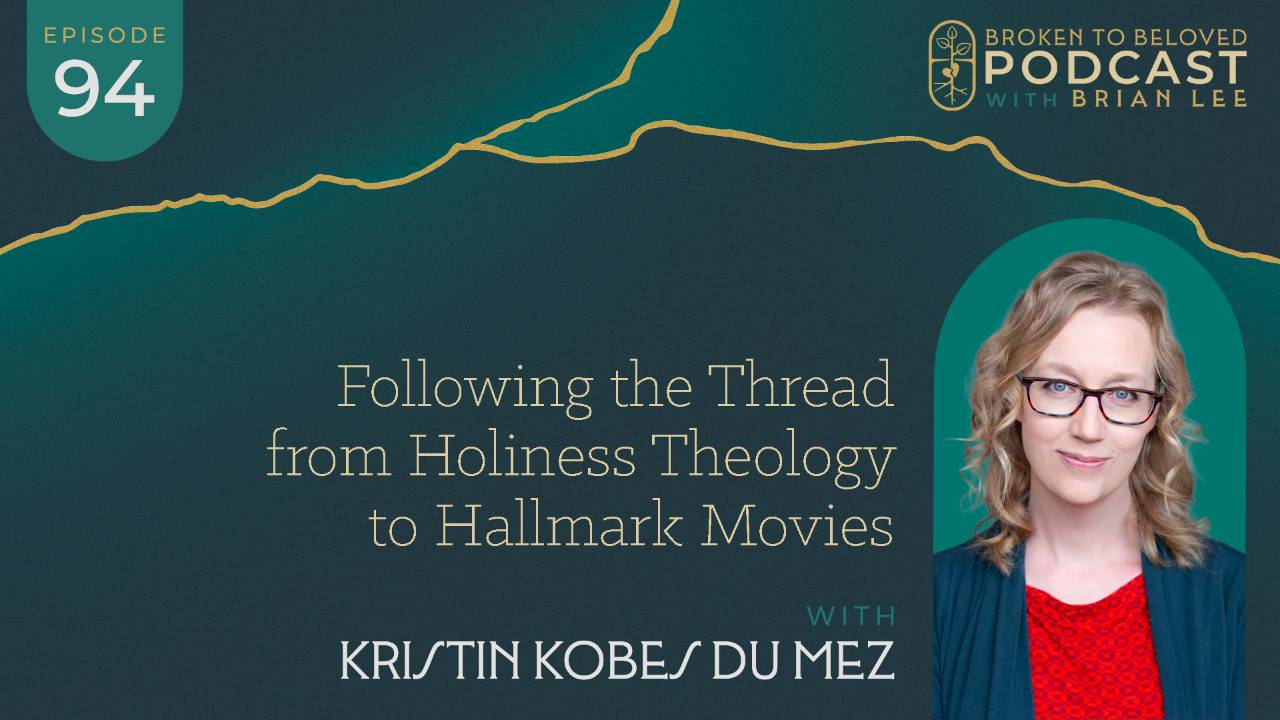
Can spiritual abuse actually be traced to a system that was centuries in the making?
What started as a fun project about mommy blogs and Hallmark movies became a staggering, meticulously researched narrative of how evangelical women's culture was engineered to suppress dissent and punish those who step out of line.
Kristin pulls the threads of New Thought philosophy and largely unknown figures like Hannah Whittall Smith and Henrietta Mears to reveal how they led directly to our present reality.
It’s an eye-opening and fascinating episode. If you’ve ever questioned how we got where we are today in the church, you won’t want to miss this conversation.
You’ll hear about:
- How hearing and understanding history can help us to
- How the “power of positive thinking” became synonymous with evangelical culture and how it keeps women silent, compliant, and loyal
- How understanding a long view of history can reveal a direct line from 1800s holiness theology to Hallmark movies, Thomas Kinkade, MLMs, and Turning Point.
Links & Resources 🔗
Website | Instagram | Facebook | Substack | BlueSky
- Live Laugh Love: The Secret History of White Christian Women and the World They Made by Kristen Kobes du Mez | Amazon | Bookshop
- Jesus and John Wayne by Kristen Kobes du Mez | Amazon | Bookshop
- “For Our Daughters” project and film
Don’t Miss the Next Episode!
Sign up for our Podcast Newsletter and subscribe on your favorite podcast app below and never miss out on these conversations with old and new friends. Is there a guest you’d like to hear from? Let us know!
Apple Podcasts | Spotify | Amazon Music | YouTube
Spread the Word. Leave a Rating and Review. It would mean the world if you would leave us a rating and review on Apple or on Spotify or share with your friends.
Broken to Beloved is a 501(c)3 nonprofit that works to provide practical resources for recovery from and safeguarding against spiritual abuse. Our programs like this podcast are made possible in part by the generous donations of our supporters. Consider joining our community of supporters with a gift of $25 today.
As an Amazon and Bookshop.org affiliate, I may make a small commission at no extra cost to you.
Episode Transcript 📄
[00:00:00.030] - Kristin du Mez
Let's not use the words brainwashing, and we don't have to talk about cults. We can just talk about how you were discipled into what value system, how you were taught to show deference, to protect the brand, and you were taught to do this with all sorts of beautiful language. You don't want to harm the witness of the church. You don't want to hurt the ministry of God's anointed one, like all of these things, but it ends up covering up So much manipulation that causes so much harm, and you don't see the harm until you step out of line, unless you listen to the voices of those who have stepped out of line.
[00:00:40.390] - Brian Lee
Hey friends, welcome back to the Broken to Beloved podcast. If you're looking for practical resources for recovery from and safeguarding against spiritual abuse, then this is the place for you. I'm your host, Brian Lee. I'm an ordained pastor and spiritual abuse survivor, and I know what it feels like navigating life after spiritual abuse. It's why Broken to Beloved exists, and we can't do it alone.
[00:01:02.630]
We need your help. Support our work by becoming a donor to make our podcast and programs possible. Just head to brokenbeloved.org/support or click the link to donate in the show notes. Just $10 a month would go a long way to making our work more sustainable. Today, I am thrilled to be talking with author Kristin du Mez about her newest book, which releases September 2026. It's called Live Laugh Love, and it is incredible. Author of the New York Times bestseller Jesus and John Wayne, Kristin is a writer, speaker, and scholar who explores the intersection of religion, gender, and politics. She's written for the New York Times, Washington Post, NBC News, Religion News Service, Christianity Today, and lots more. And she's been interviewed on NPR, CBS, BBC, among many other outlets.
[00:01:51.570]
An academic by training, du Mez holds a PhD in US history from the University of Notre Dame, but she writes and speaks for popular audiences in an entertaining style, which you will hear, that is equal parts winsome and hard-hitting. Her unflinching examination of the American church, however, is ultimately a call to confession, lament, and greater faithfulness, which I think you will also hear in this conversation. She teaches at Calvin University and lives in Grand Rapids, Michigan with her husband, 3 kids, and a dog named Paco. And now, here's my conversation with our new friend, Kristin. Kristin, welcome to the podcast.
[00:02:28.130] - Kristin du Mez
Thank you for having me.
[00:02:29.660] - Brian Lee
Yeah, it's an honor to have you here. Is it okay if we start at the end?
[00:02:34.450] - Kristin du Mez
Sure.
[00:02:36.310] - Brian Lee
The endnotes and what they represent to me are just staggering.
[00:02:42.690] - Kristin du Mez
Yeah, there's almost 50 pages of footnotes or endnotes. And I will say my editor was not thrilled as he reminded me paper isn't cheap, but he's like, they have to be there. There's nothing else that can be done. They have to be there. Yeah.
[00:02:58.190] - Brian Lee
Well, and I pride myself a little bit on not interviewing people unless I've actually read the book. And I'm the kind of person who likes to read the acknowledgments and the endnotes and like see the sources that you're pulling from. And so I recognize the vast amount of research and work that went into this book. I appreciate the acknowledgments and the, the teams of people who help something like this to come together. Looking through the notes, it's like you're citing letters and boxes and folders of things. It's meticulously cited. You clearly have the receipts on what we're about to discuss. What is it like to research something like this and then to make sense out of it?
[00:03:35.410] - Kristin du Mez
It was a massive undertaking, and when I started the project, I had no clue how massive it was going to be. The book grew with the research, and I kept adding chapters on the front end, and I kept just stopping and thinking like, what am I even looking at here? And so my research just brought me down so many rabbit holes, and I, I just needed to keep researching to figure out what it was that I was, that I was seeing and if it was true. And I will say that, I mean, the book took me 2 to 3 years longer to write than I had contracted with my publisher. My editor was so patient. He just, he, he could see, uh, you know, I sent him some early chapters and he just said, just keep doing this, right? Just keep at it. And when I sent him the full manuscript last fall, I really expected him to say like, Kristen, what even is this? This is 3 books here. And instead he is like, this is excellent, let's do it. And so, um, you know, shout out to my editor for letting this project evolve and expand into what I think is just an absolutely eye-opening book on not just Christian women's culture, but just modern American religion.
[00:04:48.450]
That's what I hadn't anticipated when I started, and I was so obsessed with trying to track this all down and fascinated with what I came up with. So yeah, sorry, I shouldn't be like, oh, this is a great book, but that was my experience writing it. Like, I, I love the creative process and the process of discovery. This is not a book I knew how it was going to end or even where it was going to start when I, when I set out to write it.
[00:05:13.200] - Brian Lee
Yeah, well, and I had a very similar conversation with Beth Allison Barr and Becoming the Pastor's Wife. It's like, I appreciate what you just said, the creativity behind something that so many people would consider just dry. Like most people, you think of history, you think of research, like never, never in a million years.
[00:05:29.300] - Kristin du Mez
Right.
[00:05:29.700] - Brian Lee
But there is so much life behind what you put into this. And I'm curious, how in the world do you make sense of these folders and notes and pamphlets and speeches and recordings to turn it into— and like, it's overwhelming how many characters and how many individuals are talked about and how many last names. I had to go backwards. I was like, wait, what was their first name again? Who was this? Where are they? Sorry.
[00:05:52.880] - Kristin du Mez
Yes.
[00:05:53.440] - Brian Lee
No, no, no. It's great. But how do you make sense of all that to turn it into a narrative? 'Cause it really reads so well.
[00:06:00.640] - Kristin du Mez
Oh, thank you. There are so many names. And I mean, one of the chief responses I got from thousands of readers of Jesus and John Wayne, the last book, was, you know, this is the story of my life, but I never understood how all these pieces fit together. And it's a book that brings the pieces together. Well, this book does that on steroids. Steroids, right? Yes. So many more pieces here. And I will say the book is divided into 3 parts. That was also my editor's idea, very good idea, because the first part is this deep history, and, and I guarantee at some point readers are going to be like, okay, interesting and all, but why? Why am I reading about this guy? Why am I reading about this idea? Um, but by, by part 2, you're gonna start being like, oh, okay, I see it. And by part 3, it's gonna be like, oh my goodness, everything fits together. So that's kind of the journey of, of the book for readers, I think. But how did I do it? Yes, those, those folders and boxes, that's, that's an archive, right? So you go to an archive and you submit your request, and they bring out boxes and put it on the table, and you look through them, and you can take pictures usually.
[00:07:01.780]
And, uh, you know, I was at an archive at the University of Utah, um, to trace the Mormon backstory here. Wheaton College archives were absolutely fabulous. So many other archives also, just, um, whether I went in person or they sent me materials. I just was really supported through archivists. But huge shout out to my team of research assistants. From day one, I worked with Calvin University undergrads to research this, and we had a blast discovering these, these threads together. And, um, the last research assistant worked with me for 3 and a half years starting at her freshman year, um, Meg. And without her, this book would still be another 2 years away, probably.
[00:07:44.690] - Brian Lee
Yeah, and I love that you acknowledged all of the people who went to do the work with you on this.
[00:07:50.220] - Kristin du Mez
Yes. So there's the students, and then there were the scholars who, because this book took me into territories that I did not expect to go, that were not my primary area of expertise, right into Mormonism, into the history of New Thought, back into the 19th century. So before I could publish this thing, I thought, I need to make sure I get this stuff right. So I sent it out to about a dozen scholars who read all or parts of the manuscript. And, you know, they all had constructive critiques, sometimes corrections, and sometimes thumbs up, but that was an essential part of the process as well. And so I'm really indebted to the scholars, and this is what we do for each other, right? You don't get paid, you don't, you know, you get a shout out in the acknowledgments if you're lucky, and it really is a kind of communal effort. And so I'm grateful to all of the historians, and then some insiders, some of whom are named and some are not, who also read portions of the manuscript or the whole manuscript and from the inside told me yes and then also no, you didn't get this quite right, this needs, needs to be changed.
[00:08:52.730]
So it was, it was a group effort. I'm so grateful for all of the people who participated.
[00:08:57.700] - Brian Lee
Yeah, and I imagine the book is just that much stronger for it, for the amount of collaboration that went into it. Yes. I mean, every page, like every time you, you change tack or you talk about the next topic, it's, it's the, oh my gosh, I can't imagine like how many more boxes or how many piles of books and how many things.
[00:09:13.840] - Kristin du Mez
Right.
[00:09:14.240] - Brian Lee
And for people who may not be familiar yet, where Live, Laugh, Love, right? And you say where Jesus and John Wayne was about Christian men behaving badly, this was going to be mommy blogs and Hallmark movies. And I love that you open the book with, this was supposed to be the fun book.
[00:09:29.620] - Kristin du Mez
It really was. It really was.
[00:09:31.900] - Brian Lee
Tell us what you were hoping or thinking it would be and then how we got to where we are today.
[00:09:36.020] - Kristin du Mez
You know, in Jesus and John Wayne, there's a couple of chapters where women feature prominently. But, you know, it is a book that focuses on evangelical masculinity and particularly the militant strain of that and, you know, intersections with Christian nationalism and political power. But I knew there was so much more to the women's story, you know, and it so bothered me that I had to kind of leave it at that. But a book can only do so many things. And so when my publisher came to me after Jesus and John Wayne published and said, that was great, what's next? You know, I kind of put them off for a couple of months. And then finally I was like, okay, if I were to do something, it would be about women. And then I knew it would be called Live, Laugh, Love, and they didn't balk at all. They just said, you essentially sign here. Yeah, just do it.
[00:10:18.670] - Brian Lee
Um, and then you just got to do it.
[00:10:20.280] - Kristin du Mez
Yeah. And then my editor, when we met to talk about it, the one thing he said that really stuck with me was just lean into the history. Don't be afraid to lean into the history. And as I, you know, in the, in the ensuing months and even years, I kept thinking about that and if he would curse the day when I turned in the chapters, and it's like, you know, did you— you told me, you told me to lean into the history. But I, yeah, like I said, I just kept adding chapters on the front end, trying to figure out what even is this and where did it come from.
[00:10:52.630] - Brian Lee
Yeah. And so much of that is evident. And going back to the creative craft of writing it, you mentioned something about the way that it pays off. And I was thinking of the writing— is it Chekhov's gun, right? Like, if you're going to show a gun in the first act, you better use it in the second. And like we said, there are just so many names and incidents and things that you dropped. It's like, okay, that seems important-ish, but I don't know if it was just a random— and then like pages or chapters later, you're like, and here is why. And I was like, oh my goodness. And you do that so well throughout the book.
[00:11:21.780]
There were so many names I didn't know or recognize at all. I don't consider myself a historian, but who were so hugely influential. Like Hannah Whittle Smith and like all these names and a few that I did recognize, like, okay, this is part of my history. I recognize that. Are there one or two who just jumped out at you in the research that you wish more people or just everyone in this world knew about?
[00:11:43.600] - Kristin du Mez
Well, one of the surprising figures in the book is not a woman. It's a man by the name of Frank Buchman. And, uh, he's influenced by the holiness evangelicalism of Hannah Whittall Smith and, and others. Dwight Moody, but he devises this incredible system of evangelism and control in the early 20th century. And it's well-intentioned, uh, you know, he wants to change lives and change the world by converting people to Christ. And he comes up with the idea that why waste time with people who don't have much influence? If you really want to change the world, you go for those at the top, go for those with the most power. And so he pals around with the millionaires and ends up building this massive movement in the 1920s and '30s and '40s that really does exert influence on a global scale. Hundreds of thousands of people are involved, prime ministers and, you know, members of Congress and so on. And it's, it's built on this system of individual cells or small groups, uses the process of confession. And shame and absolution to maintain order and control to build this vast movement. Like when you hear these things, you're like, ooh, you know, this all sounds too familiar.
[00:13:02.380]
It does. It does. So this, if you haven't heard of him before, his movement is first called the Oxford Group, and then he changes the name to Moral Rearmament. But then it is the, it finds expression, what we now know as the National Prayer Breakfast Movement. And that's something that will ring a bell for people. And so that's That's kind of this history that I trace. But it's not just this kind of political arm, the National Prayer Breakfast, but these ideas and these practices also shaped the post-World War II evangelical para-church world. So a figure like Henrietta Mears, really key in this story. She's the one who recruits Billy Graham and promotes Billy Graham.
[00:13:43.660] - Brian Lee
The names that came out of the Mears Boys was mind-boggling to me.
[00:13:47.330] - Kristin du Mez
Right. Dick Halverson, who goes on to head the National Prayer Breakfast, also known known as International Christian Leadership, also known as The Family or The Fellowship, right? This is the Jeff Charlotte stuff. And yeah, Bill Bright, Campus Crusade, right? Built on this model, uh, which, you know, it's for evangelism, and they have this structure of, of cells and of, of authority and deference, and it's all for the good, right? It's for conversion. And it's also, you go for those with power. And you can see how, you know, I bring in critics throughout, like Reinhold Niebuhr at a certain point saying, you know, the, the naïveté here. If you think that, you know, grasping for power is in any way compatible with biblical Christianity, right? The man in power is always, to a certain extent, the Antichrist, right? This is fundamentally like a mistake. And, and so you have these voices that come in, but what I end up doing is, is showing how ideas like these were used to devise elaborate systems of control. Um, and so elevating the authority of the man at the top and requiring deference, but also setting up this framework of you're either with us or you're against us.
[00:15:08.330]
You're an insider, or if you are disloyal, or if you question the system, if you are negative, if you complain, right, you are a threat. You need to be shamed. You need to be shunned. You need to be disciplined and either brought back in line. And by the way, everybody who's on the inside is the instrument of that discipline.
[00:15:27.270] - Brian Lee
Yeah.
[00:15:27.840] - Kristin du Mez
Right. And honestly, like, as I was teasing out where this, this structure of authority and discipline and control came from and how it was put to use, it was startling. And there's so much more to the story, as you know. But as I was reading it, I just kept thinking of so many of the stories that I have heard firsthand from people who have run up against these mechanisms of shaming and shunning and exclusion inside organizations and churches.
[00:15:59.020] - Brian Lee
Man, oh man. I mean, Buchman shows up, I think page like 57, and his name is just repeated throughout. Like we're talking about with these payoffs was like, okay, I'm going to introduce you to someone and this is going to stick with you leading up to Henrietta Mears, leading up to all the people she influenced and the institutions like Navigators, Young Life, Wycliffe, World Vision, Samaritan's Purse, the NAE, Fuller, Gordon-Conwell, Christianity— like, I was like, what in the— like, how does one name have that much influence? Because someone like Buchman said, no, no, no, let's not go for the least of these, let's go for the influencers and the people at the top, like you're saying, in the very early 1900s. And then by the end of the book, you kind of give us a recap in the, in the afterword. I almost felt overwhelmed. It felt like watching an instant replay reel where it's just like frame after frame is just like these news flashes of things that just felt like an avalanche of information that gave me the sense of inevitability. It was a, of course we ended up here. How could we not? And I had the same feeling with Jesus and John Wayne.
[00:17:02.870]
But this, like you said, this one's on steroids for sure. The events that and the names that keep piling up, it's like, this is how this person influenced this person, influenced this person, which is how we got to where we are today. And it's so current. I mean, the stuff in the book is like, it literally just happened and it's being published here. It's that sense of inevitability is what stuck with me.
[00:17:22.830] - Kristin du Mez
Hmm.
[00:17:23.320] - Brian Lee
The way that you treat and lay out history for us, just look at everything that came before leads us to where we are now. Obviously you're not a future teller or a prophet, but just with the amount of research that you've done, that has just so clearly for us, and again, the work that goes into making that a creative project to go, hey, let's lay this out in a way that makes sense for us and connecting the dots. Do you have a sense given where we are today and what you're seeing for what we might see in, you know, 2 years, 10 years, 50 years? Because you have such a long view of history at this point. And I know it's impossible to tell with technology, but just with personalities and the way faith has been structured and targeted and these different things, where is this going?
[00:18:04.470] - Kristin du Mez
I'm pessimistic, all right? Which will come as no surprise if you read this book, because, I mean, it has been building for so long. And one thing I will say is that the people who are piecing this together, in the early 20th century too, it's worth remembering that psychology was a new discipline. It was a new way of discovering, even in the 19th century, I talk about like New Thought or positive thinking and this obsession with understanding like the power of the mind, the power of the mind to control reality. And then in the 20th century, right? Psychology comes in, and, and religious leaders are students of psychology, and they want to understand how to use what we now know, or we're learning, about how the mind works and how minds are changed. And if, if the mind can control reality, if you can control people's minds, you can control the world, right? It's that in a nutshell. And so one of the things I realized as I was writing this is like, my goodness, there are some people who have been very, very deliberate and strategic about using the science of the day, and it changes over time, to figure out how best to control people.
[00:19:18.940]
And devastatingly, it was usually really successful. I guess that was the really humbling thing as I was writing this. I'm like, oh man, look where it got them. It worked and it keeps working. And I just see like the, the recent years and, and the erosion of our democracy and the radicalization of, you know, quote-unquote mainstream religious spaces, I just see, my, my goodness, this is a culmination. This is, this is what they were going for. And you see, you know, talk of Trump as God's anointed and, um, you know, don't touch the pastor, how dare you, all of that, right? This is just baked in. And so it's really discouraging to see how well that worked. And so that said, nothing is inevitable. As you said, there's new technology, there's new things. I mean, right now AI actually is, is working against us in terms of, you know, liberation and authenticity and so on. So everything is scary right now in terms of trends. But one thing I will say as a historian is that history is full of surprises, of unexpected turns. And so right now, any hope that I have is kind of hinging on— it's got to come from someplace where I'm not seeing.
[00:20:32.560]
Um, but I do think that there is power in exposure, that if you can show what is being done to us, around us, if you can pull back the curtain on some of these tactics of manipulation and control, then I think it massively diminishes the power of those. Tactics. That's my kind of faith as a historian. That's all I can do. I cannot take these systems down, but at least I can describe them so that— and once you see it, you're not going to be able to unsee it.
[00:21:12.380] - Brian Lee
I love that. When we're working with survivors and in our group cohort groups or when I'm coaching, like the framework that we use is to notice and name and then navigate. So like you're saying, it's like just the act of noticing And then giving it a name like, hey, here's what happened. Here's why it happened. Yeah, just that awareness piece makes such a huge difference.
[00:21:32.470] - Kristin du Mez
Yes.
[00:21:33.090] - Brian Lee
And I love the way that you do that in the book for us. And there's so much of this thinking that is based on this idea of new thought, which was new to me, but it, it plays throughout from page 1 to the end.
[00:21:46.030] - Kristin du Mez
Yeah.
[00:21:46.280] - Brian Lee
For people who are unfamiliar, because I mean, this really frames so much of why we ended up where we are. Would you give us a quick primer?
[00:21:55.270] - Kristin du Mez
Yeah. Yeah. You know, I was, I was afraid even to use in the book, like, jacket copy, like, New Thought. Nobody knows what that is. Nobody's going to want to read this book. It's essentially— it evolves into positive thinking, the philosophy of positive thinking, Norman Vincent Peale. But in the 19th century, it goes under different names: mind cure, mind power, and then eventually New Thought. It is the idea that the mind controls reality. This is the 19th century. There was new science, technology. The economy was going going under massive transitions, you know, transforming into an entrepreneurial and consumer capitalist economy, all of these things. Like it was a, it was a wild time. And with all of these other changes, you know, people started asking, well, what about the science of the mind? And, you know, what can we, what can we learn here and how can we control the uncontrollable? And so it was this very enticing kind of philosophy that influenced Transcendentalism, influenced religious traditions like Christian Science. It also began interacting with evangelicalism, holiness evangelicalism in particular, the tradition of Hannah Whittall Smith and Moody and others, but also then the offshoot of holiness theology, which is Pentecostalism, charismatic Christianity, and the prosperity gospel.
[00:23:12.940]
Because the idea is you can shape reality through your mind, a positive attitude, think positive thoughts and you're going to receive positive results. And there's a spiritual form of that that runs through Holiness, Charismatic, and especially Prosperity Gospel. Mormonism, which also emerges around the same time, has its own version of this kind of spiritual progression and so on. But then New Thought in particular, and these three strands are interacting with each other. So essentially it downplays circumstances, downplays systemic inequality, systemic injustice, and it says that success comes through a change in attitude. And within New Thought, there emerges a particular view of femininity, right? A lot of the New Thought literature around the turn of the century, like at first it's like you can think your way to better health. At first it was pretty much like health and, and peace. And then by the end of the 19th century, they're like, and wealth and money, right? You see the same thing in, in, um, holiness and charismatic spaces. First it's faith healing, and then it's like prosperity. You, you just see this happening. Well, so New Thought is behind a lot of the get-rich-quick books in the early 20th century that are selling millions of copies.
[00:24:23.890]
It's just perfect. Think and Grow Rich, right? These are the titles. But for women, it looked a little different. And so the New Thought kind of advice for women, which is to like take advantage of the spiritual laws and the law of attraction, is be beautiful, attract a man, and you will attract good things to your life. Be frilly, silly, feminine. You can see when Christians get a hold of this, they'll say, and also submit to a man, and blessings will follow. So the path to power is not changing your circumstances, not advocating for women's rights. Certainly that goes against this. You need to stay positive, don't complain, and your positive attitude will be rewarded with all good things. And if you submit Trust and obey, you're going to be blessed. And that is kind of in a nutshell this philosophy that takes hold in a lot of evangelical circles, takes hold in Pentecostal charismatic spaces, and across secular culture as well, in spaces influenced by New Thought and positive thinking.
[00:25:30.010] - Brian Lee
Yeah. And again, for such an old, quote unquote, old theory to see how much it has played throughout history to the explosion of MLMs during COVID right? And Facebook launching Facebook Live. I love that you put that together. I was like, oh my gosh, that makes so much sense. Again, feels inevitable.
[00:25:49.040] - Kristin du Mez
Yeah.
[00:25:49.440] - Brian Lee
And I love this idea of New Thought specifically for what— for how much influence a little pamphlet, A Fascinating Womanhood, would have on generations and centuries.
[00:25:59.560] - Kristin du Mez
Goodness.
[00:26:00.040] - Brian Lee
Of the way not only men treat women, but the way women treat themselves.
[00:26:03.640] - Kristin du Mez
Yes.
[00:26:04.370] - Brian Lee
Reading Elizabeth Elliott's like back and forth story, like I've, I've heard a lot of the recent pushback, but I forgot the whole middle piece where she's like, no, no, no, I'm done with this. This isn't—
[00:26:11.970] - Kristin du Mez
yeah.
[00:26:12.390] - Brian Lee
Like, what are we doing here? Again, just the way you put it together and connected the dots for us was just blew my mind. So thank you again. Back to the inevitability though, because we're naming it even while admitting pessimism in it, because I'm with you there, honestly. And normally I save this kind of question for the end, but what's the hope with this book? Like, why name all of these things and connect them and put in all of this monumental effort for us? What's the hope for those of us who find it and read it and are helped by it?
[00:26:43.570] - Kristin du Mez
You know, somebody just asked me, like, where do you get your courage? And, and I actually, that question, I get it because I got asked that question after I published Jesus and John Wayne early on. And people would say, wow, this is, you're so courageous. And I remember just I was like rolling my eyes like, oh, come on, it's a history book, right? It doesn't take courage to write a history book. But then as I got pulled into some of these spaces and saw the kind of pushback and understood better the power dynamics inside these spaces, like, oh, I hear what they're saying. Yes. No, I was just ignorant. I wasn't courageous. I didn't know what I was really dealing with. And so part of Live Laugh Love is trying to figure out what even is that? But mostly I don't write even with that agenda. My, my first and foremost, like I am motivated by curiosity. I want to figure stuff out. And this whole book just kept growing and kept getting longer on the front end because I, I was trying to figure out what this is. And so I was just driven by that compulsion and what I hope the book will do.
[00:27:50.120]
I actually think very little about a book's reception until the manuscript is in production and it's out of my hands. And, and then I just take a break and then I get ready to launch it. And then I start thinking, oh my gosh, what are people going to think? Right. But so honestly, I'm not even sure. But I again believe that when you see things, when you understand how systems were made, when you understand how things like quote unquote biblical womanhood or even scriptural authority, inerrancy, how they came to be and how, like, the deliberate manipulations and silencing of dissenters, including conservative Christian dissenters, all along the way, right, how that played out. I really do think, on the one hand, it is sobering because, like, yeah, I felt like, you know, by writing this book, by the end I was like, I had no idea idea what I was up against. And I think that's the case for many survivors of spiritual abuse. They experience it as a personal thing, like, and there's questioning, what did I do and what is wrong here? And honestly, in the years as I was writing this book, when I would see, um, people being piled on by evangelical gatekeepers or, you know, survivors of abuse just absolutely, you know, blasted by, by people who are supposed to be spiritual leaders, I would just reach out to them privately and say, I see what's happening and I need you to know that this is not about you.
[00:29:26.940]
The entire system was designed to do this for you because your voice is right now threatening this system. And this is exactly what you should expect to happen. And you wouldn't know that because you were thinking, you were believing the words that they cared about people and that they cared about you know, a purity, and they cared about morality, and they, you know, all of these things. And you were reading the Bible, and you thought they were reading the Bible in the same way. And then all of a sudden, the vitriol, because you have betrayed the system. And what I, what I traced in this book is the system and how it was deliberately designed to suppress dissent and to punish dissenters. And I just feel like if you know that when they come for you, it's gonna sting a lot less. Yeah. Um, and you're gonna know that this is not about you, although it will deeply affect you. Um, it is, it is the system coming for you. Yeah.
[00:30:28.330] - Brian Lee
And again, I think you make that so clear, and it feels like a grace, really, because there are many, many instances where you demonstrate for us whether it's Elizabeth Elliott or Amy Grant, Sandi Patty, or Jennifer Knapp, or any of these millions of names that you— there was, you know, Sarah Bessey and all of these people. It's like you pushed back a little bit, and so here's the consequences. That it is a system stacked, and you just happen to be the person who spoke up. Maybe this is a little bit more of a personal question, so feel free to pass on it, but you tell us right away in the introduction, you know, quote, I've seen these tactics close at hand. I've been called a child of the devil, denounced as an apostate. Sympathetic pastors, parachurch leaders, and ordinary Christians speak to me privately but often fear associating with me publicly lest they also face censure. You've been writing and speaking out about these kinds of topics for a while. Even though it doesn't seem like courage for you, it's— it's here are the facts, let's just lay out the history, which I love because there's a little bit of distance from that.
[00:31:26.350]
But you're also still a person and a human like the rest of us. So when you do hear the vitriol, when you do hear the pushback, because so many in our community are afraid to speak up, or they have spoken up and been shamed or outcast or excommunicated or whatever it is. How do you handle the name-calling, the pronouncements on your character, your faith, your identity, and just still keep going?
[00:31:48.670] - Kristin du Mez
Oh my goodness. You know, it was a rough few years out there on Twitter. Although what I did discover is I have a very thick skin and I just love meeting those insults and lies with evidence and truth. I just kept showing up and, um, I've, I discovered that I actually love doing that. But I also know that I, I am entering into this conversation from a position of privilege. I was then because I did not belong to one of these, uh, conservative organizations. Now I do teach at a Christian university and there were efforts. Lawsuits in the first couple of years after Jesus and John Wayne published to get me fired. And they failed, but it was a kind of wait and see for me. But I knew that going in, that I was taking on some risk, and I just accepted that. And fortunately, and I thank them in the acknowledgments for this, my university has always had my back and said there's something called academic freedom. And, you know, they— so those efforts have pretty much— well, we'll see if they start up again with this book. But so I had that position of power where many people inside these spaces do not have that luxury.
[00:32:59.300]
I also, as a woman, I loved engaging with these critics as a woman because they are very unaccustomed to dealing with women who do speak back to them, and they are entirely, it turns out, unaccustomed to dealing with the discipline of history. Everything in their world is apologetics, so they have the right answer, and they, they have every answer to any theological question. And that frustrated them so much early on. They're like, what's your view on inerrancy? What's your view on LGBTQ? What's your view on this? Because they wanted to cancel me. I was like, yeah, it doesn't even matter, but I'll tell you. But now deal with this history, deal with this evidence, right? And it just, it just changed the playing field, and, and they bungled over and over again. And, you know, hundreds of thousands of people were watching these conversations play out. And I thought there was something just really useful in that because these were men who had so much authority, so much respect inside their bubbles. And these bubbles were created to give them that authority and to protect them. And, you know, and, and now they had to engage with some of us.
[00:34:10.390]
From outside those spaces, including some women. At a certain point, I will say I started to worry because yes, they would call me names. They call me, you know, child of the devil. And honestly, at first I just laughed. I was like, oh my gosh, you know, really, really, like, we're getting to playground-level insults. But then I realized, like, I was coming from outside those spaces, and inside those spaces, those are not, you know, silly playground-level insults. They mean it.
[00:34:34.640] - Brian Lee
Yeah.
[00:34:34.970] - Kristin du Mez
And they expect people in their circles to hear it. Like, you know, they are essentially damning me and dehumanizing. The language is dehumanizing, calling me a wolf, a false teacher, uh, yes, a child of the devil, on the side of the devil. Well, in, in a world that is structured good and evil, what do you do with evil? What do you do with somebody who is allied with the devil? You try to destroy them. And then I— when that clicked for me, I started taking it more seriously, and I started pushing back. I was like, my outside field is the study of 20th Germany and the Holocaust. I've taught courses on genocide studies. And I was like, you do not jump to this dehumanizing language. Take on any of my scholarship, any of my interpretations. Do not dehumanize me. And, you know, they kept doing it. And then I worried about who their intended audience was, um, because I knew that they were performing. We were all performing. I was performing for everybody to see what they're doing, see who these men really are. They were performing as well for people inside their spaces. And I worried about women inside their spaces who had none of my power.
[00:35:44.930]
They didn't have an academic position. They didn't have a PhD. They didn't have a, an institution supporting them. And, um, they didn't have the resources I had to withstand this heat. And so I actually reached out to some women who had first reached out to me after Jesus and John Wayne published, women from deep inside this space who, when Jesus and John Wayne published, they, they just said, thank you. And if there's ever anything you need, like, come to us, right? And the reason they said was, it's too late for us. Like, we've made our choices. We're a part of this thing. Some of these women had positions of actual, you know, some, you know, power in women's spaces. It's too late for us, but we want something different for our daughters. And then I went back to them and I said, help me. You know, I know that they're trying to scare women, and I know that if they treat women in their spaces the way they're treating me, You know, women cannot stand up against it. And I think they're— this is intimidation. So am I doing harm by letting them continue to treat me this way?
[00:36:43.680]
And what they told me was just absolutely beautiful. They said, no, no, no, Kristin, we are all watching you and you show us that you can walk through the fire and not be burned. Keep doing it. And so that's why I kept showing up every time they'd come after me until, you know, Musk took over Twitter and the trolls really came out and like any actual conversation just ceased to exist. And then I kind of moved away from that space. But it was, it was a place where I was, I really felt called to kind of step up to the plate and do my history in public and put them on display for who they were and, and what they were doing.
[00:37:25.490] - Brian Lee
Yeah. Yeah. And I remember following quite a few of those conversations online.
[00:37:30.150] - Kristin du Mez
You know who I'm talking about.
[00:37:31.660] - Brian Lee
Yeah, you saying "for our daughters" just reminded me of that project. And I want to make sure we'll include that in the links as well. Yeah, for that. I love that project. Oh my goodness. It was such a beautiful work. And you also kind of know to expect it because you talk about— it was so interesting to me to read about the postwar response to the threat of communism and socialism, followed by the response like, "Let's just use those tactics in an evangelical world." And when you talk about like identifying insiders and outsiders, enemies, othering people, like dehumanizing. It's like, again, it feels inevitable. Of course, this is where we are. Of course, this is how we are acting today.
[00:38:09.690] - Kristin du Mez
Yeah.
[00:38:10.030] - Brian Lee
And so for people who are hesitant to pick up a book because it sounds like a history book, let me assure you, it is not just a history book. It is so much more than that. Yes, it absolutely covers history. But again, just there's so much that help— will help you to name and understand. It's like, Oh, I'm not the crazy one.
[00:38:28.540] - Kristin du Mez
Yes.
[00:38:29.270] - Brian Lee
Oh, I wasn't just born into this. The system was made this way to make me think this way, act this way, purchase this way, sell this. Like all of the things you— there are 50 questions we'll never get to today, but you cover so much ground.
[00:38:45.070] - Kristin du Mez
Yeah.
[00:38:45.550] - Brian Lee
In this book, you know, CCM, MLM, it's like the whole, like from Amway all the way through LuLaRoe and like the whole piece in between. I want to end, if we have time, for two more questions. I love that you talked to Robert Callahan, who we've had on our summit and talked to in the past. But I really appreciated this point of view that for these evangelical white women, specifically, because that's who this book is for and about, sort of, that we don't want to use terminology like brainwashing.
[00:39:14.870] - Kristin du Mez
Yeah.
[00:39:15.360] - Brian Lee
Because that shifts blame, quote, to a shadowy puppet master behind the curtain, that gives us a sense of comfort, but no one here is being drawn in against their will, and how he identifies that people are willingly choosing to go with the beast. And then this phrase killed me. He says, "This isn't brainwashing, it's discipleship." Yeah, holy cow, Kristi and Robert. And to say that, you know, American Christians had been discipled into a faith that baptized nationalism and called it family values, and a faith that preached white supremacy and taught believers to tithe their fear and call it faith.
[00:39:50.100] - Kristin du Mez
Wow.
[00:39:50.900] - Brian Lee
Wow.
[00:39:51.410] - Kristin du Mez
My goodness. When I read Robert's words this last summer, um, you know, I was wrapping up the book, I was coming and I was like, exactly this. Exactly. And so I took his words and I do that a number of times in this book. I use kind of ordinary people who have extraordinary insight. Mm-hmm. From the inside. So many really, really smart women and men who were on the inside were participants in this culture. I think that's the other kind of difficult thing that I'm already hearing from readers who have early copies, that it is both liberating and it is also in some cases deeply troubling because they realize that they were participating in these systems, not just as victims, right? But also enforcing the rules. And so. You know, I hope that readers who experience that also can show themselves grace because you see how you were drawn in. And yes, let's not use the words brainwashing, and we don't have to talk about cults. We can just talk about how you were discipled.
[00:40:54.050] - Brian Lee
Yes.
[00:40:54.750] - Kristin du Mez
What value system and how you were taught to show deference, to protect the brand. And you were taught to do this with all sorts of beautiful language. You don't want to harm the witness of the church. You don't want to hurt the mystery of God's anointed one, like all of these things, but it ends up covering up so much manipulation that causes so much harm. But the system only works by drawing good people into it, and you don't see the harm until you step out of line. Yeah, thank you. Unless you listen, right? That's it. Unless you listen to the voices of those who have stepped out of line, and that's what has has frustrated me to no end in recent years in evangelical circles, where, you know, good people, people who are not like abusive themselves, and, um, are just so intent on somehow preserving the image of, you know, evangelicalism writ large instead of paying attention, because, and, you know, who, who themselves have been treated well, which is often the for people who hold positions of power, right? This is how this works. If you hold positions of power, you are going to see the kinder, nicer, sweeter side of evangelicalism.
[00:42:18.200]
The more power you have, the more deference you are going to be shown, the more respect you are going to be given, right? So if you are in one of these positions, it is your duty to listen to the voices of those who do not have the power. And those who, um, you are trying to do good things, um, and to work for, for justice, to care for their neighbor, to do these things. And then what happens to them if you just discount all of these stories as, oh, they're deconstructing because they wanted to sin, or, you know, or just usually it's even more— it's not even that direct, right? What happens to over and over again survivors of abuse They are the ones who end up on the outs, and the pastor is restored, quickly forgiven, moved on to another church. And maybe initially they'll, you know, pay a little attention. But then if you, if you keep like arguing for, no, no, we need to reform the system, we need to make sure— like, every survivor I have ever talked with is motivated by one thing, and that is to prevent other women and children from being abused.
[00:43:27.110]
Yep, right? But those voices are seen as, at a certain point, inconvenient, making us look bad, like, move on and let's, let's not, you know, we need to perpetuate the system. And to me, uh, that's where I part ways, and I think that's, that's a source of friction. Um, so even if you are in a position where your experience is a lovely one, pay attention to the voices of those around you who have other stories to tell.
[00:43:56.210] - Brian Lee
That's really good. Thank you so much. Last question. I imagine you have had a lot of these conversations or preparing to. Are there any particular darlings of yours that you haven't had a chance to talk about or ideas you've wanted to share but no one's asked about?
[00:44:11.030] - Kristin du Mez
Oh, so, so many, so many stories in this book that I absolutely love. But one is just, you know, she only appears on a couple of pages and that is Anita Bryant. And so, you know, Anita Bryant, you may know, she was this kind of beauty queen, singer, all-American girl in the 1960s and then in the 1970s. And she becomes a popular Christian writer. She helps recruit Maribel Morgan to write The Total Woman for Revelle Publishing and plays a really instrumental role. And then she takes on the crusade against LGBTQ rights in Dade County, Florida, and she becomes the face of the anti-LGBTQ movement in American Christianity and American culture writ large. So she's, she's just known for that. And, and so she has a, in, you know, progressive communities, not a stellar reputation. Among conservative Christians, she's kind of seen as a hero. Well, her story is, is just more complicated because she was building this massive ministry and had an incredible platform, and she had, uh, like, was able to raise money for conservative causes like no other. She was like celebrity Christian, politicized, all these things. And then she divorces her husband, and there's a fundamentalist marriage counselor, pastor, and her husband who are in cahoots.
[00:45:32.380]
They have control because they had insisted on having male control over her ministry, over her finances. They punish her, they cancel all of her invitations. She turns to her supporters, and guess what? They're like, well, You know, it's kind of your own fault. And then what is, what is really poignant is how she comes back around. And in an interview in the aftermath of all of this, she says, yeah, I needed to rethink some things. The things that, you know, I thought about, quote unquote, the gays and the feminists and all of these things like, no, you know, you know, less judgment, more love, more humility. And, you know, that's the kind of arc that I love including. I didn't know that was her arc. She was already a character in the book. It was while, you know, learning more about her, I realized that was just a beautiful place to land. So somebody who did great harm, arguably, who was still caught up in the system and came up against the limits of female power inside patriarchy, and then found, you know, literally had a come-to-Jesus moment at the end of it all. And so there's even kind of beauty in the ashes there.
[00:46:40.930] - Brian Lee
Yeah, I love that. Thank you for sharing that.
[00:46:43.180] - Kristin du Mez
Yeah.
[00:46:43.840] - Brian Lee
Kristin, thank you so much for doing this. If people want to find or connect with you online, where do they go?
[00:46:48.980] - Kristin du Mez
I'm on most social media platforms @kkdumez, K-K-D-U-M-E-Z. And then I write on Substack very regularly, so you can find me there as well, Du Mez Connections. Yep.
[00:46:59.480] - Brian Lee
And we'll have all of those links in the show notes for people. Thank you again for doing this. Again, everyone, this is not a history book. You just need to read this if you want to understand how how we got to where we are today. Live Laugh Love: The Secret History of White Christian Women and the World They Made. We'll have links for everything. Kristen, thank you again so much for being with us.
[00:47:17.330] - Kristin du Mez
Thank you for having me. And thank you for all of the conversations that you host and really for the ministry that you do here. Thanks.
[00:47:24.790] - Brian Lee
My goodness, I loved that conversation. If you also enjoyed it, be sure to follow Kristen and say thanks for being on the show. You'll find links links and all the things in the show notes. Be sure to pre-order Live Laugh Love, which will release this September. Subscribe or follow the show to get new episodes automatically. If you enjoyed this episode, please leave us a rating and review or share with your friends. It really helps us to grow and continue providing quality content for you.
[00:47:51.810]
And a special thank you to our listeners who make the show possible through their financial support. If you find the show valuable, consider donating today at brokenbeloved.org/support. Support, or at the link in the show notes. This episode was hosted and executive produced by me, Brian Lee. Editing by Heidi Critz. Thanks for taking the time out of your day to listen. I hope it's been helpful. Here's to moving toward healing and wholeness together. I'll see you next time.