096: Measuring Spiritual Safety with Lianna Chong & Abram Kielsmeier-Jones
Sep 22, 2026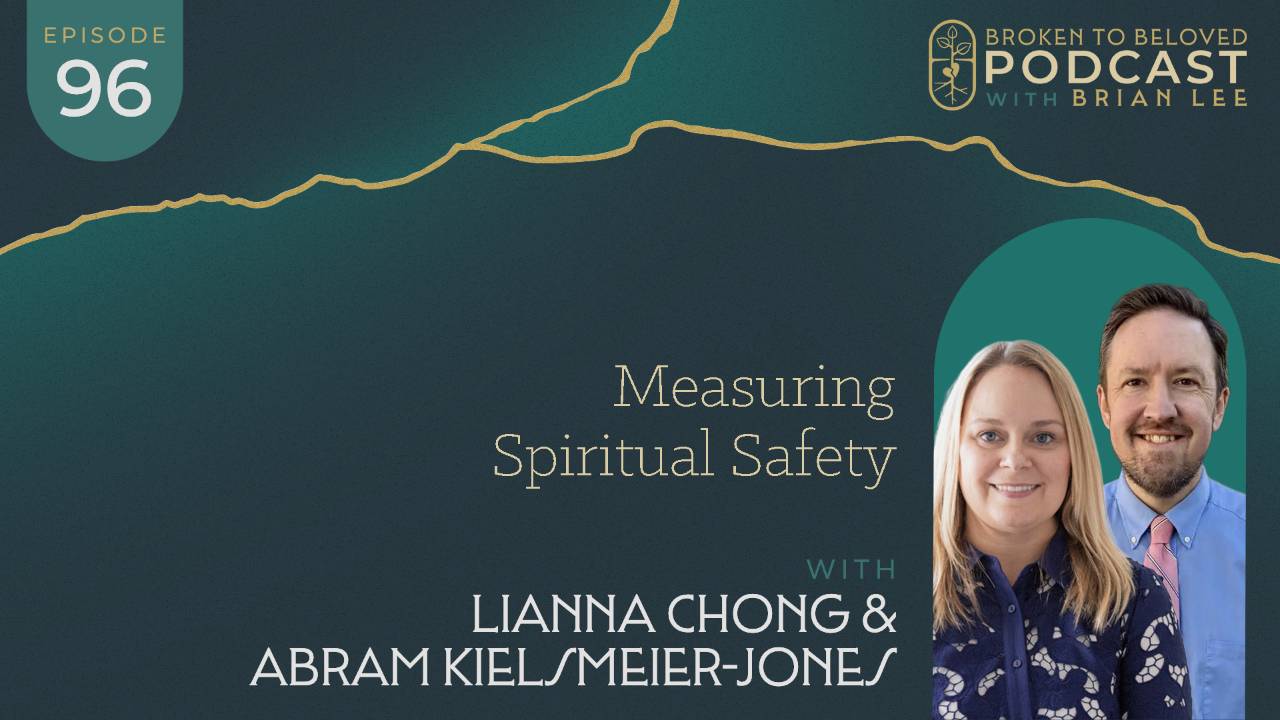
What if you could actually measure how unsafe your church was? What if you could know how severe your spiritual abuse was?
In this episode, Brian sits down with Lianna and Abram, co-founders of the Spiritual Safety Center, to unpack their newly peer-reviewed Spiritual Safety Survey and the science behind its scoring—plus a first look at their upcoming book, Building a Safer Church, and the training cohorts helping people move from harm to healthy, spiritually safe communities.
You’ll hear about:
- how and why the Center and Survey were created
- the validation process and what it means for using the Survey
- how trauma scores reveal spiritual harm
Guest Spotlight ✨
Lianna Chong has over a decade of experience in ministry and consulting around compassion fatigue, resilience, and psychological safety. She brings a systemic lens to organizational assessments. After watching her church divide over questions of spiritual abuse, she developed the Spiritual Safety Scale (forthcoming) to help people recognize signs of healthy and unhealthy environments.
She holds a Master's of Theological Studies, an MA in Organizational Psychology, and certification in psychological safety.
Abram Kielsmeier-Jones pastors a racially and economically (and personality!) diverse Christian church in the heart of Boston. He has spent more than twenty years in youth and pastoral ministry, working at small, mid-sized, and large churches in Illinois, Virginia, and Massachusetts.
He studied philosophy at Wheaton College (IL) and earned his M.Div. from Gordon-Conwell Theological Seminary, with an emphasis in Urban Ministry, using every last elective to further study Greek and Hebrew biblical texts.
Together, they co-founded the Spiritual Safety Center, a nonprofit dedicated to helping church members and leaders build safe places of faith.
Links & Resources 🔗
Website | Instagram | Facebook | Substack | BlueSky
- resource on Amazon | Bookshop
Don’t Miss the Next Episode!
Sign up for our Podcast Newsletter and subscribe on your favorite podcast app below and never miss out on these conversations with old and new friends. Is there a guest you’d like to hear from? Let us know!
Apple Podcasts | Spotify | Amazon Music | YouTube
Spread the Word. Leave a Rating and Review. It would mean the world if you would leave us a rating and review on Apple or on Spotify or share with your friends.
Broken to Beloved is a 501(c)3 nonprofit that works to provide practical resources for recovery from and safeguarding against spiritual abuse. Our programs like this podcast are made possible in part by the generous donations of our supporters. Consider joining our community of supporters with a gift of $25 today.
As an Amazon and Bookshop.org affiliate, I may make a small commission at no extra cost to you.
Episode Transcript 📄
[00:00:00.110] - Lianna Chong
By having this tool, the Spiritual Safety Scale, you can actually put your experience into a tangible, measurable, quantifiable format. And I think for some people, that's necessary for them to understand what's really happening and just how harmful it really is. We're hoping that we give people a way to process what they're going through, but also something to do about it.
[00:00:25.030] - Brian Lee
Hey friends, welcome back to the Broken to Beloved Podcast. If you're looking for practical resources for recovery from and safeguarding against spiritual abuse, then this is the place for you. I'm your host, Brian Lee. I'm an ordained pastor and spiritual abuse survivor, and I know what it feels like navigating life after spiritual abuse. It's why Broken to Beloved exists. And we need your help.
[00:00:46.920]
Support our work by becoming a donor to make our podcast and programs possible. Just click the link to donate in the show notes. $10 a month would go a long way to making our work more sustainable.
[00:00:58.110]
Today, we're talking with my friends Lianna and Abram about the Spiritual Safety Survey and the work they're doing together at the Spiritual Safety Center. If you've been around, you'll recognize Lianna from previous episodes of the podcast and from past summits.
[00:01:11.020]
Lianna has over 15 years of experience in ministry and consulting in psychological safety, compassion fatigue, and resilience. She brings a systemic lens to organizational assessments. After watching her church divide over questions of spiritual abuse, She developed the Spiritual Safety Survey to help people recognize the signs of healthy and unhealthy environments.
[00:01:32.010]
Abram has spent more than 20 years in youth and pastoral ministry, working at churches in Illinois, Virginia, and Massachusetts. He cares deeply about safeguarding children and people of all ages who've been impacted by abuse, racism, and injustice. Abram studied philosophy at Wheaton and earned his M.Div. from Gordon-Conwell with an emphasis in Urban Ministry. Together, they co-founded the Spiritual Safety Center and will have their first book, Building a Safer Church, published in 2027. And now here's my conversation with our friends, Lianna and Abram. Lianna, Abram, welcome to the podcast.
[00:02:06.130] - Lianna Chong
Thanks, Brian. Hey, Brian.
[00:02:07.270] - Brian Lee
It's good to see you both again. Lianna, we first connected, I think it was late 2024. We had you as a guest at both our 2025 and 2026 Summits. You've been on the podcast previously talking about measuring spiritual safety. Abram, our audience is not as familiar with you. Would you introduce yourself for us?
[00:02:25.810] - Abram Kielsmeier-Jones
I would love to. Thanks so much for having me here, Brian, and hello everyone. Longtime listener, first-time guest. I have— I live in Boston. I'm married to Sarah. I've got 3 awesome teenage kids. I pastor a small, diverse urban church right in the heart of the city. I've been in ministry for about 25 years. In my free time, I love to run marathons now. I also play guitar and write the occasional song. I have also just finished authoring the manuscript to a book with Lianna, Building a Safer Church. And together with Lianna and Gillian Foster Wilkinson, we have co-founded the Spiritual Safety Center, which is a nonprofit that kind of emerged alongside the book that we were writing. So we've, we've been excited to already have some training cohorts and talk to people in these spaces and learn from them as well.
[00:03:16.680] - Brian Lee
Yeah, love it. And we're talking about measuring spiritual safety and building safer churches today. So tell us why the interest? How did you guys find each other, work together, all of the things?
[00:03:29.820] - Lianna Chong
Yeah, I believe we got connected in the fall 2 years ago through a mutual friend and somehow just figured out that we were both on parallel journeys with researching, writing about, trying to understand spiritual abuse, but also how do we prevent this from happening. So I'll let Abram speak for himself in terms of his story.
[00:03:54.900] - Abram Kielsmeier-Jones
Yeah, like Lianna said, a mutual friend introduced us. And I think one of the first messages I got from Lianna was asking for feedback on her survey in one of its early stages. And I think my reply must have been at least halfway decent because almost the next time or the time after that that we were meeting, she was inviting me to write this book with her. But we, yeah, we have had similar experience. I think for both of us, we have been in spiritually abusive environments. I've been on the receiving end. Also, as a pastor, I have walked with lots of people who have experienced all kinds of abuse. And so to me, this is something that I wanted to do not just for myself, but for other people especially. And knowing that our experience, though it maybe feels unique at the time, we are far from alone.
[00:04:45.450] - Brian Lee
Yeah, unfortunately. Abram, you said it was okay to mention you were part of our cohort, one of our early ones. I think it was season 6, cohort group 11. This was fall of 2024, which I think, Lianna, is when I had connected with you shortly before that. So we shared your survey with all of our cohort members at the time. I think I even remember, because you were early in the process of developing all of this stuff, you had a goal for like, hey, I'm hoping we can get 100 responses this week, and you got 100 in a day.
[00:05:13.210] - Abram Kielsmeier-Jones
Yes.
[00:05:13.610] - Brian Lee
After that first podcast episode release, which really spoke to the hunger and the need for this kind of validation. On the old website, I think you mentioned the 7-step process. You know, you've got this item development, going through expert and peer review, a small-scale pilot test, which I think is what we were part of with the first cohorts, 2 large-scale pilot tests. And I think you mentioned over 800 responses for one of those, which is amazing. and then public access to the survey, and then finally publishing your research and findings. Where are you in that process now?
[00:05:47.110] - Lianna Chong
Well, Brian, I am so thrilled to share that we are almost at the end of that entire process now.
[00:05:53.640] - Abram Kielsmeier-Jones
Yay!
[00:05:54.120] - Lianna Chong
So the research study has been completed. The survey tool has been validated. It's, um, we had over 800 in total, so we had about 330 in the first and over 500 in the second, which was phenomenal numbers. So just to have that much data, to have that many people's lives and experiences represented in the trends that we're seeing of how spiritual abuse shows up was pretty amazing.
[00:06:26.800] - Abram Kielsmeier-Jones
Wow.
[00:06:27.710] - Lianna Chong
So I'm so grateful to you. I'm so grateful to your listeners and your community for participating in the research study, because without that, none of this really could have happened. But at this point, I'm super excited because the research study has been published in a peer-reviewed journal called the Journal of Religion and Health. And that was quite a process, but definitely just gives it, you know, that much more of a check in terms of was the research process sound?
[00:07:00.000] - Brian Lee
Yeah.
[00:07:00.210] - Lianna Chong
You know, can we trust that this is a reliable measure of spiritual safety? So to have it go through that, academic peer review process is kind of the last step in terms of credibility. So I'm so, so thrilled that we have that to share now.
[00:07:18.030] - Brian Lee
Yeah, congratulations. That is a huge thing. We've talked about it before, I think, both on the podcast and at our summit sessions. But your background is as an organizational psychologist. And this whole process of research and writing the right questions with the right responses and making sure it's measuring the right things, and then going through this peer review is such a rigorous thing, so to finally have it published with all the data and the charts and the notes, and here's what this reference is, and this— we use this style of, you know, collecting and all this, and here's the sample pool and all that kind of stuff is really a big, big deal, and I'm going to attempt to read the paper that you shared with me and try to understand any of it, and I think part of making that work accessible and understandable for the general public— for the survivors of spiritual abuse, for the pastors who say, I want to make sure this doesn't happen in my church or in my environment, I think is where the heart for this upcoming book is coming from. Correct me if I'm wrong.
[00:08:19.560] - Lianna Chong
That's right.
[00:08:20.520] - Brian Lee
So partnering with Abram as a pastor, both of you who have experienced and seen the harmful effects of spiritual abuse, tell us about the book.
[00:08:30.630] - Abram Kielsmeier-Jones
Yeah, from the very beginning, I think something that we appreciated about this book was that we both were coming at this from potentially different vantage points in the sense that Lianna is an organizational psychologist and I'm a pastor. At the same time, Lianna has a ministry background and I have some consulting in my background. So we were also able to, I think, see each other's vantage points pretty easily and pretty smoothly. So I think it was a good combination of having a lot of overlap and yet also some distinctives that we brought.
[00:09:00.690]
But throughout the book, I think there's really this focus on we want this to be rigorous in terms of the research and the grounding and the citations and the endnotes. We also want it to be accessible and pastoral and approachable. And so we tried to blend that. Readers can let us know if they think that works for them. But, you know, I think part of the reason for that is that spiritual abuse, even naming it and recognizing it, can be potentially contentious or Or some people just don't want to say that it's even a thing. So we really wanted to do our homework in this book in terms of establishing a baseline of what is spiritual abuse.
[00:09:39.380]
What are some specific behaviors that indicate that spiritual abuse is present or could be present? And then also at the same time writing with survivors in mind who may be well past the point of needing to define it because they feel it every single day. Definitions maybe help or maybe they already know.
[00:09:56.320] - Lianna Chong
Right.
[00:09:56.560] - Abram Kielsmeier-Jones
what it is, and so we tried to speak to that too. So there's a lot of theology and biblical studies kind of unpacking some of the theological beliefs and practices, cultural systemic stuff that enables abuse. We try to name that and go after it in our book.
[00:10:11.880] - Brian Lee
Yeah, I love that. Lianna?
[00:10:14.070] - Lianna Chong
And I think what we're hoping to contribute with this book and this measure is a way for people to cut through the haziness of navigating spiritual abuse, Mm-hmm. Because it can be so confusing and ambiguous, and it can devolve into he said, she said. So not only is it hard for you to discern what's really happening if it's happening to you, but it's very hard for a whole community, a whole church, to navigate when someone or some people are starting to raise the alarm and say, hey, I experienced something with my pastor and it seemed off, or, um, you know, I'm, I don't feel good about this. By having this tool, the Spiritual Safety Scale, you can actually put your experience into a tangible, measurable, quantifiable format.
[00:11:11.860] - Brian Lee
Mm-hmm.
[00:11:12.440] - Lianna Chong
And I think for some people that's necessary for them to understand what's really happening and just how harmful it really is, even though it might not cross a physical boundary ever, or even though a spiritual abuser, you know, might look like and seem like a really really great guy to most people, or girl.
[00:11:32.720] - Abram Kielsmeier-Jones
Yeah.
[00:11:33.260] - Lianna Chong
And so, we're hoping that this tool, as well as many of the tools and frameworks that we provide in the book, give people a way to process what they're going through, but also something to do about it. And that's what we really wanted to, to communicate through the book, is that no matter who you are, no matter what position you hold, you don't have to be a top leader to influence change and to create more spiritual safety in your church or your organization. So the book is really packed with tons and tons of actions that you can try. We're not saying, we're not guaranteeing that it's gonna have the end result that you're hoping for, but we do really believe that if every person uses their voice and their own capacity to speak up for these things, that we will start to see larger systemic shifts.
[00:12:29.310] - Brian Lee
I love that. I mean, so much of what we do here at Broken to Beloved is all about those practical resources. And I've been so impacted by— I think when I first gained the language for spiritual abuse back in 2021, after leaving 3 different environments with it, I did a deep dive trying to find as many resources and books as I could that defined it, that explained it, that told me what do I do after it. And so many of those books did a great job offering definitions, often very long, confusing definitions, because there's just, there's no one common definition for spiritual abuse yet. And that's okay. And a lot of them did a great job validating stories of, hey, this is what happens in experiences of spiritual abuse. So I don't feel alone. And I don't feel crazy. I can count, I think, on one hand back then how many books offered, but what do I do now?
[00:13:21.990] - Lianna Chong
Mm-hmm.
[00:13:22.360] - Brian Lee
That offered a practical step forward, and so I love that your book is going to be including those things. I think for me, those are the most useful things that get to the heart and the mission of the work that we're trying to do is to offer those practical resources for both recovery from and safeguarding against spiritual abuse, and so for you, Building a Safer Church, addressing spiritual abuse, how do you both define spiritual abuse?
[00:13:49.240] - Lianna Chong
So what we do in the book is we look at a couple of the, those very long blocks of text definitions that are out there, which, you know, I do think that it's important to have a thorough definition, especially one that names specific behaviors that show up as spiritual abuse.
[00:14:10.210] - Brian Lee
Mm-hmm.
[00:14:11.060] - Lianna Chong
I know in my story and my background, those definitions were really helpful for people to recognize. They might not have known if they were experiencing spiritual abuse, but they could They could say, oh, but I have felt intimidated, or I have felt a controlling, a manipulativeness from my leader. So those descriptors are really important. At the same time, we do boil it down to a very simple definition, and that is that spiritual abuse is sustained emotional or psychological harm in a spiritual environment. Mm-hmm.
[00:14:47.750] - Abram Kielsmeier-Jones
Hmm.
[00:14:48.010] - Lianna Chong
So this idea that, you know, it is, it is a form of what is typically known as psychological or emotional abuse, but it, because it's happening in a Christian environment or a faith environment, there's an added layer to that. Now, sometimes that layer is very explicit. You know, people might use those Bible verses to say, this is what God says, or this is, you need to obey me, you need to listen to me, but Sometimes that control and manipulation is much more subtle. And so, for example, you take a pastor, just by that person's position as a spiritual authority, whatever they say or do carries an implication that this is what God really wants me to do, or this is what God is telling me to do, whether or not they say that explicitly.
[00:15:41.690] - Abram Kielsmeier-Jones
Yeah.
[00:15:42.410] - Brian Lee
Abram, anything you want to add?
[00:15:43.870] - Abram Kielsmeier-Jones
Yeah, just to emphasize that it can range from subtle, uh, to explicit. And I think even for people who are familiar with spiritual abuse, even who have read some of the literature, who have some experience with it, even so it can still be hard to spot if you're the one in the environment. I write in the book about how I had been years into this stuff and felt like I had a pretty good understanding of what's spiritual abuse was, what are some warning signs, what are some dynamics to watch out for. I was serving in a role, a volunteer role, where some of those dynamics were present. I was kind of keeping an eye on it, but I was going slow in terms of getting out, which was easy for me to do. It was a volunteer position, so I could just kind of leave, you know, without a lot of ramifications. But it really took talking to my wife to realize that this was actually a spiritually abusive environment. And as soon as she said that, and I think she used the word toxic, and there were just a couple of things she said that I thought, oh my gosh, you're right.
[00:16:45.240]
Like, I've been in wait-and-see mode, almost like wait and see if it gets worse. Like, I don't know what I was waiting for, but it already was rising to the level of spiritually abusive and certainly not spiritually safe. I mean, I knew that much. I knew that I did not feel feel spiritually safe in that environment. But I share that just to say, you know, I don't necessarily see myself as an expert, but I do think I had a ton of knowledge and information and experience. I had walked with a lot of people at that point, and still it took somebody else outside of me to say, hey, this is what you're experiencing. So I hope that for folks that we're interacting with, we can kind of serve that role for them, just as I know they're serving it for others. I know we've We've had moments in our trainings where we'll share like an example thing that a spiritually abusive leader might say. And one of our cohort members might just sort of say, oh my gosh, that was exactly what I heard 3 weeks ago. How did you know? So I think really walking with other people as we try to discern what spiritual abuse is, is really necessary no matter how many good definitions we have.
[00:17:50.750] - Brian Lee
I mean, I think just having multiple Yeah, and I think you're right, uh, that the longer definitions, although bulky, provides kind of more clarity and more parameters around, like, because it can be, it can be really nuanced, it can be really subtle, to really just overt and explicit. And there's this whole spectrum in between.
[00:18:09.860] - Lianna Chong
Mm-hmm.
[00:18:10.400] - Brian Lee
And we were just talking with Colleen Ramser, is a therapist who just released her book, The Shattered Soul, about, you know, it, it ranges so widely. And then there are things that are not spiritual abuse, but they can be perceived because part of her definition includes whether real or perceived.
[00:18:27.000] - Lianna Chong
Hmm.
[00:18:27.880] - Brian Lee
And that sometimes we perceive things that really are spiritually abusive. And then we perceive things that are just being held accountable for something, but we don't like the way it feels. So we call it abusive. And so being able to kind of discern and distinguish between those kinds of different things, I think, is also really helpful. I think, Abram, you mentioned the cohorts, and I want to make sure we talk about that later. But I want to go back to the survey a little bit. One of the things I appreciate so much about the survey, and obviously, Lianna, so much thought and intentionality has gone into this, but I think the way that you ask the questions, the way that it's laid out really provides very clear parameters.
[00:19:05.070] - Lianna Chong
Mm-hmm.
[00:19:05.940] - Brian Lee
And then the way that it's scored afterwards, right? So for people who might take the survey, which again is going to provide really clear markers for what constitutes spiritual abuse, and then the way that the summary shows up and says, okay, Here's— you're in a green zone, yellow zone, red zone.
[00:19:20.920] - Lianna Chong
Mm-hmm.
[00:19:21.890] - Brian Lee
I took it again. You shared it with me again, and I scored a 33 out of 100. We talked about this, I think it was at the last summit, which is considered red zone. And I think that will surprise a lot of people who are like, 33%, that's like an F. It's like, no, no, no, this is red zone. Tell us how the scoring and the weighting works, because it's different, I think, than what people are used to. Why is 33 a red zone? And kind of explain like where those ranges fall and why it works that way in the survey world.
[00:19:49.420] - Lianna Chong
Sure. So there's 3 different scoring zones. The green zone is the zone of healthy indicators. So that's showing that there's not the signs of spiritual abuse that are in the survey. And there are signs of what we're calling spiritual safety, which is like psychological safety, the ability to speak up with questions or concerns, feeling valued regardless of your position in the church or in the organization. So those are the good things that we want to be seeing that are sort of a counter to the spiritually abusive things. There's also the yellow zone, which is the unhealthy zone, and this is an area where you are seeing some signs of spiritual abuse, but it hasn't quite reached that level of this deep ongoing, deeply harmful levels that you see in the red zone. So that red zone is one where we can say with confidence that spiritual abuse is happening. And not only is it happening, Mm-hmm. but it is causing deep and extensive damage. So the way that the zones cutoffs were correlated was that I also I also had my round 2 participants take a measure for PTSD, and that's called the International Trauma Questionnaire.
[00:21:20.700]
So I was able to look at the incidence, the reported occurrence of all the symptoms of PTSD or at least one symptom of PTSD. So in the green zone, the healthy zone, we saw very low signs of traumatic stress. We saw about 4% reporting the full symptoms of PTSD and 13% reporting one or more of the 3 markers, and those are re-experiencing, avoidance, and sense of current threat.
[00:21:56.330] - Brian Lee
Mm-hmm.
[00:21:57.110] - Lianna Chong
So, you know, those numbers in the healthy zone, that trauma could be coming from something else. The survey does not ask about other types of abuse that could also be occurring. It doesn't ask about physical or sexual, financial, elder abuse, other types of those very valid, you know, types of harm. In the unhealthy zone, the middle zone, we saw about a moderate risk of traumatic stress. And so what that means is that we had 12% reporting the full symptoms of PTSD and 47% reporting at least one symptom of trauma.
[00:22:39.450] - Brian Lee
Wow.
[00:22:40.590] - Lianna Chong
So about 1 in 2 people in the yellow zone are experiencing some trauma. About 1 in 8 are experiencing the full PTSD. Now, when you jump down to the red zone, the harmful zone, those numbers go way up.
[00:22:55.820] - Brian Lee
Mm-hmm.
[00:22:56.440] - Lianna Chong
And so there was 89% of participants reported at least one symptom of PTSD and 46% reported the entire full symptomatology of PTSD.
[00:23:11.330] - Abram Kielsmeier-Jones
Wow.
[00:23:11.830] - Lianna Chong
What that means is that those 46% of people are saying, we're having re-experiencing thoughts, we're having avoidance thoughts, we're having sense of current threat, and it is impairing our functioning in some way, shape, or form. So the bar is pretty high to reach that PTSD cutoff, and almost 1 in 2 people in the red zone did.
[00:23:34.010] - Brian Lee
Wow.
[00:23:34.600] - Lianna Chong
So that is what I'm hoping that this measure in a more tangible way demonstrates, that this is not just a matter of a conflict or different personalities or different leadership styles. These are behaviors that are very sinister, that are causing people similar levels of post-traumatic stress as other types of documented abuse, like intimate partner violence, like sexual abuse, higher than reported rates in combat veterans. So we need to be paying attention to the harm that this is causing, and, and we need to start doing more about it. Wow.
[00:24:19.140] - Brian Lee
Yeah, thank you for explaining that, Lianna. Are you able to share kind of number-wise, what does it look like to be green zone, yellow zone, red zone, so people kind of have an idea?
[00:24:27.890] - Lianna Chong
So the green zone, you're gonna get a score out of 100 total. It's a simple sum score. There's a little bit of math that happens that we do behind the scenes on the survey portal. It's not that complicated, but basically if a survey item is negatively framed, so it's a behavior you don't wanna see, then agreeing with it gets you a lower score, disagreeing with it gets you a higher score on that item. If it's a positive item, Agreeing with it gets you a higher score. Disagreeing with it, saying it's not there, gets you that lower score. So all that to say, a total score that is higher is better, and the maximum score is 100 and the minimum score is 20. The reason for that is that there's 20 questions and that 1 is the lowest score for each question.
[00:25:19.370] - Brian Lee
Got it.
[00:25:19.790] - Lianna Chong
So out of that 20 to 100, the green zone is 80 to 100. The yellow zone is 65 to 79, and the red zone is 20 to 64.
[00:25:38.610] - Brian Lee
I think that'll help a lot of people who are like, I don't understand why, why it works this way. And that makes a lot of sense that 20 would be the lowest score because the 20 questions and all that kind of thing. And with the release of this podcast, Public access is open for the survey. We have the link in the show notes for anyone who's interested. I love that the results email you immediately with, hey, your score is this, you are in this zone with the scores outlined, and just very clearly, hey, your church organization exhibits this kind of behavior. There's a strong likelihood. Here's what you want to do. And then you even offer possible next steps, which I love.
[00:26:16.240] - Lianna Chong
Mm-hmm.
[00:26:16.700] - Brian Lee
You have also mentioned this cohort for training. Abram, would you tell us about that? Because I think we'll have— you guys obviously have a waitlist available, but I think you're opening up another cohort and a training soon. So what is that about? What, you know, what is involved? What's going on with it?
[00:26:33.870] - Abram Kielsmeier-Jones
Yeah, we've so loved already the cohorts that we've done and the folks who have come and just the insight that they bring. What we want to do is share what we've learned about spiritual abuse, spiritual safety, and even going a little bit more in depth on the survey itself. So really, this is like a 101 spiritual safety cohort, I guess you could call it. We have also found that so much insight comes from just asking questions and having people respond to each other and connect with each other. So our hope is that Yes, it is about some, you know, validated content and some hopefully good theology and some action steps, and also that people could come and make connections. So as part of the cohort, everyone who goes through the cohort can come to once every 2-month gatherings, which by the time this airs, they might be more frequent given how well I think they've gone. But right now they're once every 2 months. So all alumni from any cohort can come and we just have open conversation.
[00:27:38.580] - Lianna Chong
Okay.
[00:27:38.900] - Abram Kielsmeier-Jones
We'll do introductions and we'll offer a potential framing question. And then I think last time I said, feel free to respond to this question or respond to another question or ask your own. And we just find that people coming from different walks of life and different professions have experienced this and then share. And so I think a lot of the value in the cohort is in the kind of measure that we can offer some of the definitions, the research that we can share. I also think a lot of the value comes from the interactions and the connections that people make with each other.
[00:28:10.360] - Brian Lee
Yeah, that's awesome. Who is the cohort designed for so people know? Like, is this right for me?
[00:28:15.900] - Abram Kielsmeier-Jones
Hmm, if you are wondering if this cohort might be right for you, it probably is. I would just, I would just say it that way. I think ideally, I mean, already the more we're in this work the more upstream we want to go, the more preventative we want to be with spiritual abuse.
[00:28:32.230] - Lianna Chong
Yeah.
[00:28:32.360] - Abram Kielsmeier-Jones
And I think that happens with everybody who's in abuse prevention of any kind. You know, I have some connections in the world of child sexual abuse prevention, and I see the same thing there, that people maybe start at doing social work or one-on-one or response, and then maybe they continue that their whole lives, and that's totally necessary.
[00:28:52.430]
At the same time, prevention, you know, if you can get ahead of this, like, that's awesome too. So I think in terms of who could come to this, you know, ideally people who are in somewhat spiritually safe spaces who want to make sure they stay in spiritually safe spaces. Also people who have experienced spiritual abuse, people who have scored very low, we want them to come too. Really the best target audience, in my opinion, for preventing spiritual abuse is the spiritual abusers. It is not the responsibility of the spiritually abused to stop being spiritually abused. It is the responsibility of the spiritual abusers and the community around them, the ones that hold them accountable, to stop the spiritual abuse.
[00:29:31.790]
So that would be my dream audience, would be a room full of people who have exhibited spiritually abusive behaviors and who are willing to sit down and listen to this. That seems like a pipe dream.
[00:29:43.330] - Lianna Chong
Yeah.
[00:29:43.490] - Abram Kielsmeier-Jones
So, you know, call that our big, hairy, audacious goal maybe. But yeah, I think people kind of across the spectrum would, would be our target. I think we've probably drawn more people who have had firsthand experience with this rather than just coming from a prevention standpoint. But, um, yeah, anyone and everyone. So if you're thinking about if this is right for you, please come check us out. We'd love to sit with you.
[00:30:06.570] - Brian Lee
Yeah, it reminds me of that quote which we use all the time here from Desmond Tutu: there comes a point where we need to stop just pulling people out of the river, we need to go upstream and find out why they're falling in.
[00:30:16.930] - Lianna Chong
Yeah.
[00:30:17.100] - Brian Lee
And that's that whole— and you guys are kind of taking that same two-armed approach where you want to be both on the recovery side for people who've experienced it and on the prevention and safeguarding side. And I love that you are also taking that approach because for me, it's not a zero-sum game. The more people that are in this work, the better. And so I'm so grateful for both of you stepping into this and Doing what you can from both the organizational psychology side, the research side, the measuring side, the number side, and the pastoral and ministry side. And you both kind of come with both of those things, and I can't wait to see what continues to come out of it. Lianna, I mean, we've been doing stuff together and checking in for the last 2 years, I think from the beginning of the survey.
[00:30:59.860] - Lianna Chong
That's right.
[00:31:00.100] - Brian Lee
And it's so exciting to hear about it and what's happening and where this is going and all of these things. Abram, like hearing about it from kind of the beginning of the journey and seeing what it's progressing to and your connection with Lianna, now this work with the book. The book releases, I think, in April of '27. Is that right? That's right.
[00:31:17.600] - Abram Kielsmeier-Jones
Yeah.
[00:31:18.220] - Brian Lee
And we already have preorder links available. We'll have all of that in the show notes. Survey is open to the public. We'll have the link for that in the show notes as well. As you continue to collect this information, Lianna, what do you do with the incoming survey results now that you already have the paper and peer review published, you have the book on its way? What is the purpose of continuing to collect the surveys and the information?
[00:31:43.960] - Lianna Chong
Well, Brian, there's still so much more work to do in terms of understanding spiritual abuse, who it happens to, by whom, where. And I've been collaborating with some other researchers in the field. So we are hoping to do more research studies. And when folks go online to take the survey, they will have the option. It's completely their choice to take the survey. To participate in some upcoming research. So what that means is that they will agree to donate their data to be used for future studies. It is still completely anonymous, the entire process. But what that will allow us to do is to just have a wealth of information to continue looking at what exactly is happening with these spiritual abusive trends. And how do we continue developing preventative measures?
[00:32:42.830] - Brian Lee
Yeah, I love that. And then Abram, you mentioned the cohorts. We'll have the links as well to either join the waitlist or to apply, uh, once you have those dates set. Keep an eye on the show notes and/or just on the website there for any information that you may be looking for. Anything else you guys wanna tell us about? Anything that we haven't talked about that you're excited about or that you wanna share?
[00:33:05.460] - Abram Kielsmeier-Jones
I just want to give props to our other co-founder, Gillian, who is awesome. I've just met her recently too, but I think she's probably already one of the best co-workers I've had. So it's been great having her involved with the trainings, you know, as a co-facilitator. As soon as she takes over a portion of the training, I just like let out a deep breath and relax and just let myself be led by her. So, um, just want to give her a shout out and say that she's been part of this work too. So if you come to one of the cohorts, hopefully you'll, you'll have the pleasure of meeting her too.
[00:33:35.410] - Lianna Chong
Yeah, and Gillian comes from a background in international Christian NGOs, and so it's been really helpful to collaborate with her because she'll often say, okay, well, it might show up in a church setting this way, but it might show up in a Christian mission organization a little bit differently. And so we have some really rich discussions about that.
[00:33:59.280] - Brian Lee
Yeah, very cool. Abram, Leanna, thank you so much for taking time. This work is so important. I love again that it's being validated, that there's data to back it up. It's not just the stories of survivors going, yeah, this happened to me, being refuted by someone else saying, I've never experienced that with this person. But now you have solid numbers that you have specific measures to say. And now you have these processes and practices in place to go, okay, and if that's happened to you, here are things you can do. To identify it, to name it, to choose a path to move forward. Again, it's just so much part of the heart of what we do here as well. So I'm so glad to share and partner in the work with you. Thanks so much for being with us.
[00:34:41.030] - Lianna Chong
Likewise, Brian.
[00:34:42.480] - Abram Kielsmeier-Jones
Really appreciate you.
[00:34:43.620] - Lianna Chong
And we're so grateful for everything you're doing over at Broken to Beloved.
[00:34:47.410] - Brian Lee
If you enjoyed this conversation, be sure to follow Lianna and Abram and say thanks for being on the show. Subscribe or follow to get new episodes automatically. If you enjoyed this episode, please leave us a rating and review or share with your friends. It really helps us to grow and continue providing quality content for you.
[00:35:04.070]
And a special thank you to our listeners who make this show possible through their financial support. If you find the show valuable, consider donating today at brokentobeloved.org/support or at the link in the show notes. This episode was hosted and executive produced by me, Brian Lee. Editing by Heidi Critz.
[00:35:22.460]
Thanks for taking the time out of your day to listen. I hope it's been helpful. Here's to moving toward healing and wholeness together. I'll see you next time.