087: Identifying, Addressing, and Healing from Misogyny with Dorothy Greco
Mar 17, 2026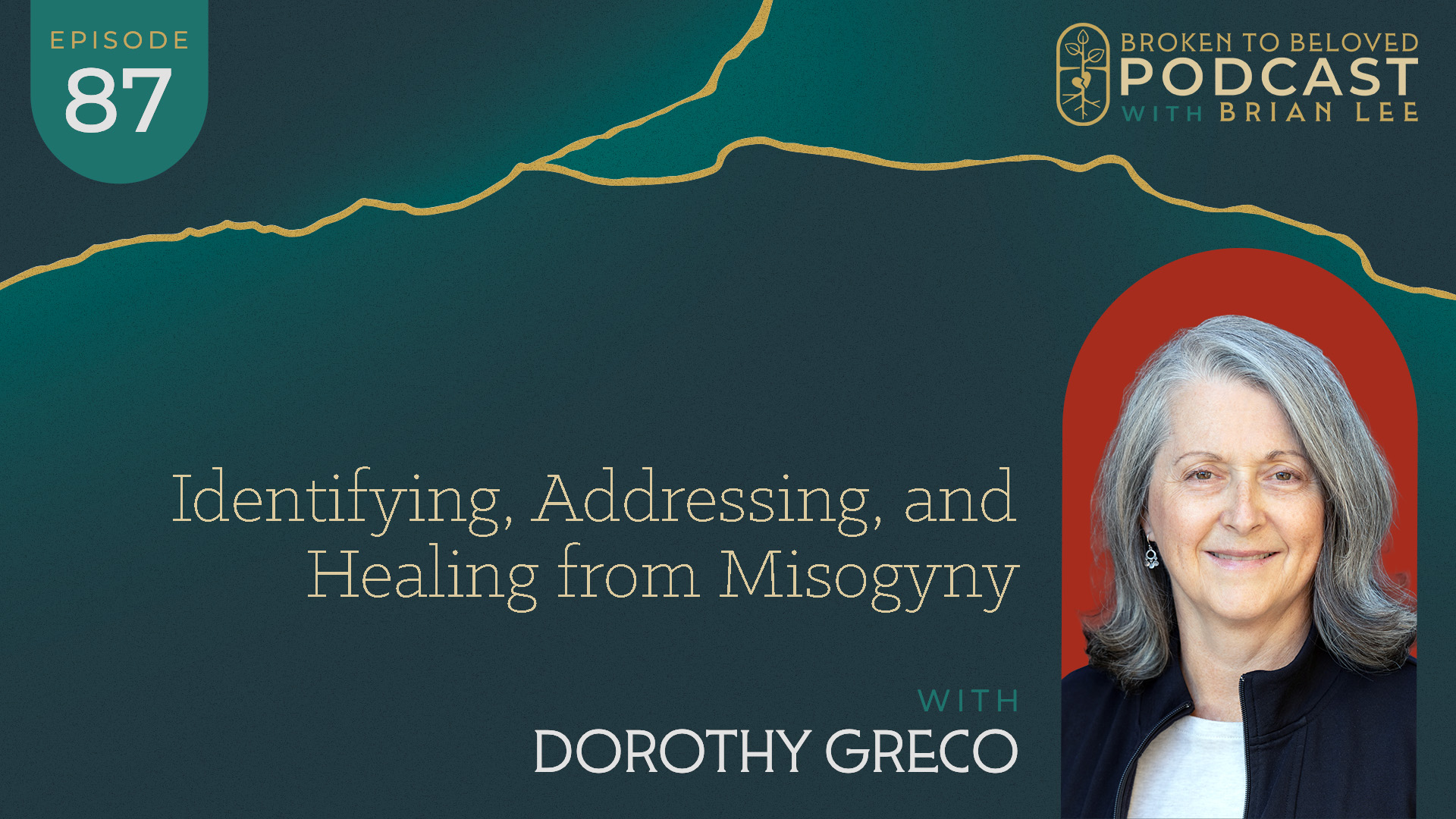
Have you ever heard people using a word that sounds important and like something you should already know about?
Misogyny can feel like one of those words, and this week, we’re talking with author and journalist Dorothy Greco about her newest book, For the Love of Women: Uprooting and Healing Misogyny in America. She expands the definition of misogyny beyond “hatred of women,” explores how it permeates everyday life—including the church—while offering a path toward healing and change.
We talk about the spectrum of misogyny from subtle bias to overt abuse, how power and theology get misused in spiritual spaces, and practical ways men and communities can become allies, advocates, and interrupters. The conversation closes with hopeful practices for healing, boundaries, and cultivating beauty.
You’ll hear:
- How misogyny shows up across culture—especially in churches—and why power dynamics matter
- The difference between patriarchy, complementarianism, and misogyny—and where they overlap
- Practical steps to confront misogyny: allyship, advocacy, and real-time interruption
- How entitlement fuels harm and how men can begin with grief, empathy, and listening
- Why anger can be a faithful, constructive response to injustice—and how to process it
- A healthier approach to forgiveness, boundaries, and avoiding re-traumatization
- Hopeful practices for healing: naming harm, therapy, imagination, and pursuing beauty
Guest Spotlight ✨
Dorothy Greco has worked as a photojournalist for more than forty years. She is a three-time author and has written for many publications including Christianity Today, Missio Alliance, Christians for Biblical Equality, and The Common Good. She is the mother of three grown men and a wife to one husband.
Links & Resources 🔗
Website | Substack | Instagram
- For the Love of Women: Uprooting and Healing Misogyny in America by Dorothy Greco | Amazon | Bookshop
- A Well Trained Wife by Tia Levings | Amazon | Bookshop
- RIFT by Cait West | Amazon | Bookshop
- Making of Biblical Womanhood by Beth Allison Barr | Amazon | Bookshop
- The Soul of Desire by Curt Thompson | Amazon | Bookshop
Similar Episodes You Might Like
- Episode 42: Safeguarding the Church against Sexism and Abuse with Dr. Andrew Bauman
- Episode 41: Ordinary Women of Faith and Ministry with Beth Allison Barr
- Episode 21: Deconstructing Deconstruction with Scot McKnight & Tommy Preson Phillips
Don’t Miss the Next Episode!
Sign up for our Podcast Newsletter and subscribe on your favorite podcast app below and never miss out on these conversations with old and new friends. Is there a guest you’d like to hear from? Let us know!
Apple Podcasts | Spotify | Amazon Music | YouTube
Spread the Word. Leave a Rating and Review. It would mean the world if you would leave us a rating and review on Apple or on Spotify or share with your friends.
Broken to Beloved is a 501(c)3 nonprofit that works to provide practical resources for recovery from and safeguarding against spiritual abuse. Our programs like this podcast are made possible in part by the generous donations of our supporters. Consider joining our community of supporters with a gift of $25 today.
As an Amazon and Bookshop.org affiliate, I may make a small commission at no extra cost to you.
Episode Transcript 📄
Dorothy Greco
When I see misogyny showing up in church spaces, it's what grieves me the most, because the church should be the safest place for women. It should be the place where women are honored and respected and flourishing. And it's not.
Brian Lee
Hey friends, welcome back to Season 4 of the Broken to Beloved Podcast. It's good to be back, and I've missed being with you and sharing these conversations. If you're looking for practical resources for recovery from and safeguarding against spiritual abuse, then this is the place for you. I'm your host, Brian Lee. I'm an ordained pastor and spiritual abuse survivor, and I know what it feels like navigating life after spiritual abuse. It's why Broken to Beloved exists, and we can't do it alone. We need your help. Support our work by becoming a donor to help make our podcast and programs possible. Just head to brokenbeloved.org/support or click the link to donate in the show notes. Just $5 or $10 a month would go a long way to making our work more sustainable.
Today we're talking with author and journalist Dorothy Greco about identifying and addressing misogyny in the church. It is a needed conversation. Dorothy has worked as a photojournalist for more than 40 years. She's a 3-time author and has written for many publications, including Christianity Today, Missio Alliance, Christians for Biblical Equity, and The Common Good. She is the mother of 3 grown men and a wife to 1 husband.
And now here's my conversation with our new friend, Dorothy. Dorothy, welcome to the podcast.
Dorothy Greco
Hi, Brian. It's good to be with you this morning.
Brian Lee
It's really good to have you. I'm looking forward to this conversation. We're talking about your book, For the Love of Women: Uprooting and Healing Misogyny in America. We were just saying before we hit record that misogyny is one of those words that gets thrown around a lot. And I think it sounds important because it is important. But also because of that perceived importance, a lot of people just think I should know what it means, even if I don't really, so I'll just kind of go along with it. Would you help us by giving us a definition for misogyny?
Dorothy Greco
Yeah, and I'll actually read it from the book. It's a little bit long.
Typically, misogyny is defined simply as the hatred of women. And the reason I felt like I needed to create my own definition for it was that feels a little bit too narrow because it's easy for people to say, well, I don't hate women, you know, I'm married, I love my wife, I have daughters, I love my daughters, I love my sister, etc. And then people can think this doesn't apply to me. So I felt like in order for us to really understand the fullness of the term and the fullness of the issue, that I wanted to create a definition that was a little bit more robust. So this is what I have in the book: "a persistent, insidious belief that men's ideas, wants, needs, and experiences are important than women's, and that legal, religious, and social systems, as well as intimate relationships, should uphold this principle. This belief system subsequently influences the laws, policies, practices, and ethos of a given culture."
Brian Lee
Yep. And I think that clarity offers a lot. It covers so much more than just that simple binary— the hate of women. And I love that you write in the introduction that misogyny isn't a problem of the past, it's a present tense ongoing reality and affects every aspect of our culture. And the book just kind of takes this high-level view, but also really close, detailed stories and looks at— I think you cover healthcare and medicine, the workplace, in our government, in our media and entertainment, in our sexual relationships, and in our churches.
Dorothy Greco
Yeah.
Brian Lee
That's a lot.
Dorothy Greco
It is pervasive. It's not simply that it shows up in one particular place. It is everywhere. It's an adaptable issue. So though it's been around, it's an ancient problem. You know, when you go back to the ancient Greek literature, you can see evidence of misogyny, can see evidence in certain cultures, African cultures where they perform female genital mutilation, or some Asian cultures where women's feet were broken and, you know, really wrapped tightly because they thought that made a woman more attractive. The reason that I kept the book specific to North America, even though the issues extend way beyond any cultural boundaries, is because I felt felt like it's too easy for people to say, yeah, that's a problem for folks over there, the women who have to wear burqas, you know, that's their issue. And it seemed very important to me to stress, no, this is a problem here in the United States, and it's a problem that's happening right now.
Brian Lee
Yeah, I imagine you may have had a hard time narrowing down those categories.
Dorothy Greco
Yes, there were, there were several that had to get cut. Education—I wanted to have a whole chapter on education initially. I had a whole chapter on fashion because I think there's so much, and, you know, people only read a book that's so long, so there were some things that had to go.
Brian Lee
Well, and that's, that's one of my questions, and just diving into all the things that you do already lay out for us, writers always have to cut something. So I love hearing that, you know, education, fashion— what were some of the other categories where you were exploring or researching?
Dorothy Greco
Those are the ones that stand out because, in particular, the education one felt like a hard loss because that is such an issue that when women are blocked from education, then they're It's clear that that's a top-down hierarchical system because education provides so much of freedom, right, that allows women to, to have understanding. And to, to that understanding and knowledge, it brings power, brings us opportunities. And when we're denied that, that to me is a very clear form of misogyny.
Brian Lee
Yeah. And so when you're saying education, you're talking about access to, not workplace in?
Dorothy Greco
Yes.
Brian Lee
Because I think I was thinking immediately of like, I can imagine people pushing back and saying, but oh, so many of our educators are women. And that's like, but you're talking about like access to education and higher education.
Dorothy Greco
Yeah. And even historically in the United States, how women were blocked from medical schools and they were blocked from Ivy League schools. And, you know, I just on the way home, I was in Florida for a couple of days this past week and was watching Hidden Figures. And what a powerful story that is, right? And here's the one character who couldn't become an engineer because she couldn't get a graduate degree because she was a woman and she couldn't get into school. You know, there you have a patriarchal hierarchical system that is abusing power to keep women in a one-down position.
Brian Lee
And then even on the other side of it, where so many of our educators are women, there is that ceiling to which positions they can get into.
Dorothy Greco
Exactly, yeah. When I start the chapter on the workplace, I interviewed a friend of mine who is a principal or superintendent now. She talked about how hard it was for her as a woman to go from a principal position to a superintendent position, and how often when she goes to conferences, people assume that she's a secretary or that she's an administrator. They don't immediately think, here's a woman who's at this conference, she must be a superintendent too.
Brian Lee
Yeah. I also appreciate that you help us to see how misogyny can vary on a spectrum. You say from unfriendly to outright hostile.
Dorothy Greco
Yes. Yeah.
Brian Lee
And I think that's one of those examples of just that unfriendly misogyny of just like those base-level assumptions that people make of a pair of people where one is a man and one is a woman. And you just assume that the woman is not the one in charge.
Dorothy Greco
Correct. Yeah. Or that she has less education or she has less whatever.
Brian Lee
I think that helps people to understand and see how hard-baked misogyny is into our culture. Into our North American culture, and just to understand the ways that we have taken on all these cultural assumptions, expectations, all of these things.
Dorothy Greco
Yes. Yeah. Agreed.
Brian Lee
And so in a book like this, you know, you talk about uprooting and healing. The uprooting is a lot of work.
Dorothy Greco
Yeah, it sure is. And the first step, of course, is helping people understand what misogyny is, how they participate in it. And I think in particular, you know, it's similar to racism that folks oftentimes are just— their first response is defensiveness. So to even engage in a conversation that's honest and that's truthful, there's a lot of barriers that one has to get through. And I certainly have encountered that again and again and again as I wrote the book, as I have been trying to promote the book. There's just a lot of resistance for people to admit, you know what, I might be part of the problem. And that feels particularly egregious to me in a Christian community, because our community is supposed to be one where we're willing to be humble, where we're willing to say, I didn't get this right, and I want to understand how I can.
Brian Lee
Later in the book, I forget which chapter it is, but you kind of go on to describe misogyny, saying, quote, the ongoing systemic devaluation and exploitation of women and their work can easily become a precursor to more consequential forms of abuse, such as verbal and sexual harassment and violence. And I think this is where we move now, right, from the unfriendly to outright, right? Yeah. So this is the experience of so many of the women in our community. Do you see a clear line on how that misogyny that's baked into our cultures, experiences, faith spaces, environments connect to their experiences of spiritual abuse?
Dorothy Greco
Yeah. So in the chapter on the church, which honestly, Brian, was the hardest chapter to write— so I have been a believer now for 46, 47 years and been part of churches that whole time. And when I see misogyny showing up in church spaces, it's what grieves me the most, because the church should be the safest place for women. It should be the place where women are honored and respected and flourishing unequivocally, like in all regards, whether they want to stay home and be a mom or whether they want to be a CEO, like whatever it is that we feel called to do, the church is the place that should be best supporting us and it's not. So part of that obviously is abuse of power.
And I referred to David Fitch's book where he talks about two different types of power, worldly power and spiritual power. And the worldly power is the top-down hierarchical that the ways that generally men, you know, this again, not to throw all men under the bus, there's amazing, wonderful men out there, but generally it's men who are abusing worldly power. And it's used to harass and to coerce and to subjugate and to harm, where spiritual power is always used to bless, is always used to help people flourish.
And so in a church setting, I think one of the just inherent problems is it's a system that is patriarchal by, you know, by nature. Mostly men are pastors, mostly men are the ones who are in authority, and we're told as women again and again to trust men. We're told that men have backs. We're told that men want us to flourish, but then when abuse happens, so often these same men who are saying that we need to trust them and we need to submit and we need to etc., etc., are silent. They don't say anything when the abuse happens.
And in fact, far too often what happens is that they perpetuate the abuse by protecting the abusers. And we've seen that in the Catholic Church, We've seen it in the Southern Baptist. And, you know, is there a week, a month that goes by that we don't hear of yet another high-level pastor who has finally been exposed as someone who's been abusing their power? So I think the system itself breeds misogyny, and it makes us as women just very vulnerable, because what we get told is you're not, you're not doing it right, or you're not being a good Christian woman if you don't submit to men.
And inherently, like if all men were Jesus, we'd be okay. But that's not reality.
Brian Lee
I'm going to say, but they're certainly not. It is so difficult and insidious in these spiritual spaces and churches because of the way that we're taught, because of the way that theology idolizes— I think is a good word— these men in leadership positions or in positions of authority. How do you kind of distinguish deliniate— I'm not sure what the right word is I'm looking for— the differences between, like, I imagine there are differences between patriarchy, complementarianism, and misogyny. Do you kind of separate those in your mind? Are they all connected? Do they lead to each other? How does that work for you?
Dorothy Greco
Yeah, I think that if we had a Venn diagram, there would be a lot of overlap.
Brian Lee
Yeah, for sure.
Dorothy Greco
There can be patriarchal systems that are not misogynistic. I think those are pretty rare, but I think that they can exist. In the context of church settings where there is a clear hierarchy and women are at the bottom. And it's— I know, let's be honest, at least here in North America, it's white men who are at the top. Generally, they're the ones who have most of the power. How we separate that out feels really complicated to me because there is so much overlap and they feed off of each other. You know, the patriarchy says that men should be at the top and that men should have all the power. The church structures— what was the third one that you said?
Brian Lee
It was patriarchy, misogyny, and complementarianism.
Dorothy Greco
Complementarianism. Um, again, you know, there can be complementarian churches or marriages that function really well where both, both the husband and wife are about each other's flourishing. But in general, I think that sense of, um, defaulting to the man, of saying the man just inherently is smarter, inherently has a closer or deeper connection to God, I don't think that we can support that spiritually. I don't think that we can support that scripturally. I think that there's a lot of cultural influence that comes in there and bends and distorts what the scripture actually says.
And again, that's the problem, right? Like that if women aren't given the opportunity to receive an education or discouraged from going to seminary, and then the men are the ones who supposedly have all the insight and all the knowledge, and what they communicate perpetuates the system, then women can just get very stuck inside of that. And it's very difficult for us to break out and to say, no, wait a minute, That isn't what scripture says. That isn't who Jesus was. That isn't the full arc of the Bible. And so let's, let's eliminate the cultural influences in the Bible, in the way we live out the Bible, so that women can have direct access to God and flourish.
Because to me, that's what scripture is all about, right? How can we become like Jesus, and how can all of us look out for each other and make sure that all of us are flourishing, not just the white men in power, but everybody.
Brian Lee
And I appreciate that you do point out in the book that complementarian relationships and marriages are not inherently misogynistic, and that egalitarian marriages, churches, and institutions are capable of misogyny.
Dorothy Greco
Absolutely.
Brian Lee
And you say, quote, "Not so much what a person or church believes theologically, but how they live it out," right? The practice and how they understand that following topic. And I think that's really helpful. Because like you say, we can get so quick to become defensive about what we choose to believe, how we choose to live it out, saying, oh, but that's not the way we do it, or whatever it is.
Dorothy Greco
Yeah.
Brian Lee
This is not at all where I thought the conversation was gonna go. But here we go anyway. It's like, I'm guessing you're familiar with the idea of like tradwives.
Dorothy Greco
Yeah.
Brian Lee
What's your take? Like, for people who choose that kind of a lifestyle, to put themselves under the absolute authority of a male figurehead, to live in that kind of a patriarchal, staunchly complementarianism life, what do we do with that? Because it's obviously perpetuating these misogynistic cultural norms.
Dorothy Greco
Yes.
Brian Lee
And yet it seems like it's a very active and conscious choice.
Dorothy Greco
Yeah, that's a good point. The active and conscious— how active and how conscious are the women when they're making these choices, right? Yeah, I would definitely— I'm sure you're familiar with Tia Levings, but anyone who perhaps wants more information, Tia's book A Well-Trained Wife is phenomenal. And she is really a remarkable woman who has come through a really hideous experience in churches and in her marriage of being part of that.
So I don't know, Brian, it's so complicated because I feel like if there are women who really do have the opportunity to make choices and to say, you know, this is what I want, I want to be home with my kids, I want to defer to my husband, there's a part of me that feels, well, who am I to say that you're— that you shouldn't do that, right? But I think that your point about what is their choice, so if, if these are girls who are raised in brought up in a system that communicates to them ever since they were 2, where they could really begin to start to take in information that they're less than, that the man is the one who needs to be deferred to, that their thoughts, their bodies, everything belongs to their husband.
And I talk about coverture early on in the book, and that's where all of this comes from.
Brian Lee
Yeah, that was really helpful.
Dorothy Greco
Yeah, the sense that the man subsumes the wife, that if you read the ancient literature, that's actually what it that the woman becomes part of the man. It's sort of like a reverse creation story that's a little bit broken. I'm not sure how much choice they really have. Like, that to me could be their only option that they— that feels viable to them. If they're told that they shouldn't go to school, if they're raised as teenagers to believe that their primary goal is to get married and to have children— again, you know, if that's what someone wants, that's awesome.
But I don't know how much choice really is part of, of that for many women. I think that it's probably just funneled down in such a way that maybe they don't even see that they have options. And of course, the, the ironic thing, right, is that so much of the tradwife thing which we see online, these women have careers, right? Their career is making money off of perpetuating a system that says to them that they're supposed to be happy just in their home raising children. So there's something that's inherently a little bit off about it.
And I think that it can lead to just horrifying abuse of men who don't take their calling to love their wives as they love their bodies and as they love the church and as they love Jesus. As soon as they get into that, you know, that power dynamic of being— I don't even know how to— enlivened, I guess, by the abuse of power The system has just, you know, gone awry. And women— and men will get hurt too, because then, like, they don't understand what it means to grow up, and they don't understand what it means. Sure. And they don't understand what it means to love, um, as equals. Because I, I don't know, we haven't talked about whether or not you're married, but I think in a marital relationship, if the two are not equal, then there's not going to be the kind of intimacy and vulnerability that a marriage is meant to have. And that's a loss for both the and the wife.
Brian Lee
Yeah, yeah, I am married. And it's, it's one of those hard lessons I think we've both been learning because we grew up in very— I don't want to say misogynistic, but they must be because they were very complementary and patriarchal cultures. So we certainly brought a lot of that into our own assumptions of what marriage was supposed to be, or kind of like untangling and figuring out a lot of that today, right? And then especially in the way that we parent our two sons, to not continue those kinds of things.
Dorothy Greco
Amen.
Brian Lee
That this is not going to be normal in our house, or this is not how you are going to treat girls or women, or, you know, whatever that is. Another weird thought that pops into my head as we've talked about kind of these tradwives, I also think of Cait West and her book RIFT, which was also really excellent.
Dorothy Greco
Yes. Yeah.
Brian Lee
And her experience of growing up in that kind of a household and trying to break free of that. Is this idea of— the best word that comes to mind is liberation for these women who have no idea that they may or may not be stuck or trapped or caught in this kind of a lifestyle.
Dorothy Greco
Yeah.
Brian Lee
So for women who, like we say, we don't know how active or how much of a choice it is for them, but who are caught in that or who are living that or choosing it, whatever word we want —use, that we can't also just force our will and go charging in to shut down or break down or call out all of these things. Right. What do you do when you see someone you are in relationship with? Because you also talk about the different, you know, these allies, advocates, and interrupters, right? For men, yeah. When we see misogynistic behavior at play in church, in family, at work, what are some options that we have as an ally, advocate, or interrupter?
Dorothy Greco
Yeah, what comes to mind first is— yeah, and I don't, you know, I don't want to go down the road of politics because that's a completely different thing. There's a lot of misogyny there. But just the first thing that comes to mind is the way that Trump has so demeaned other female reporters in the context of the press room or on the airplane, you know, the "quiet piggy." Right? Not a single male reporter spoke up.
Any of the times that this has happened, there has not been a single man who has said, "Um, wait a minute. We're all going to walk out of this room if you don't stop doing that," or, "President Trump, that is not appropriate, and I will not allow you to treat my female peers in that fashion." Yes, that would be a risk for them, but I think until men are willing to take those kind of risks— and that's a pretty small thing, because it's not as if their livelihood depends on whether or not Trump throws them out of the room. They're still going to have their job, right? But for them to be willing to say, this moment right now is an opportunity for me to speak up and to say, no, this is not going to happen here.
This is not going to happen on my watch. Being in a corporate setting, because I've heard this from many friends who do corporate work, that they'll be around the table where there's a lot of high-powered people, and they might be one of a few women. And repeatedly in the course of that meeting, they will be interrupted. Men will talk over them. Men will not listen to them. So for a man to be able to say, hey, you guys, have you noticed that every time she speaks, somebody interrupts her? What is that about? And can we just, can we really reflect on that and make an environment in our workplace where we ensure that that is not going to happen? She is in this room because she deserves to be in this room, and therefore we are going to listen to her. So those kind of, um, the ability to recognize the willingness to take a risk and to stand up for a woman and to say this is misogyny, to call it out, and then to, to say we're not gonna— that's not gonna be part of what this culture is, this church, this corporation, whatever it is.
Advocates, you know, it's sort of another level of being able to say I'm going to make space for a woman My husband has done this so many times where a woman, one of his peers, his supervisor where he works, will have an idea, and rather than him taking the idea and running with it, he says, "Great, I want you to talk about that at the meeting this week. I'll make sure that I leave space at the top for you." Pastors who quote women from the front rather than just using some of their material, they quote them and they give attribution.
Even the book that I mentioned before, David Fitch on power, One of the things that was so interesting to me is I always look through the bibliography to see like who are they, who are they, you know, turning to for their information. If I'm not mistaken, out of like 50 different authors or speakers, there were only 5 or 6 women. And I just think, David, come on, you're going to talk about power, boy, you got to have a little bit more female input there for you. And then interrupters are people who actively come in and say, like in the midst of a situation or scenario where there's violence being done, or there's something happening that's dangerous to a woman where they might put their lives on the line.
I think of the Brock Turner situation at Stanford back in the late, I think it was 2017 or 2018, where there's two men who came across Turner as he was attempting to rape that woman. And they stopped him. They pinned him to the ground, chased him, pinned him to the ground until police could come. Like that sort of a willingness to go above and beyond to say, I'm going to, I'm going to put my life on the line to protect a woman, I think is really— it's important in this culture because we see so much abuse happening.
Brian Lee
Yeah. Yeah. I've recently finished that book. Is it Know My Name, I think, by Chanel Miller, who tells her story? I think it was two Swedish men, I think, who came in and interrupted that whole thing to save her from who knows what. But even that in a completely— I guess you could just call it secular book that doesn't have anything Nothing to do with church or spiritual abuse, but just her experience of rape and rape culture by Brock Turner, of how much she was minimized and dismissed and silenced. And this is how misogyny plays out in our culture. And, you know, you say, quote, that for people in positions of power, that there's little to no motivation to fix the system because disrupting the status quo might cost them. And that example in the press room and on the plane is exactly right. And when he tells the other female, he's like, Oh, you never smile instead of answering a question. And every person who's experienced abuse or misogyny feels that in their body. It's like, I know exactly what this feels like and what you're doing right now. Yes. Or in the locker room on the phone with the men's hockey team of, well, I guess we've got to invite the women too.
Right. So we see it playing out. And when you see it at the highest levels of power and authority, it's no wonder that everyone else feels like they have permission to perpetuate it. Absolutely.
Dorothy Greco
Yeah. When the person at the top is a racist, is a misogynist, then everybody underneath them him will feel like, well, if he can do it, then I can do it too.
Brian Lee
And I think you capture it perfectly with that word entitlement. Yes. Because you say, quote, entitlement is one of the dark ambitions that emerges in a misogynistic culture. Yeah. Tell me about why you call it an ambition. Because I think that's what it is, right?
Dorothy Greco
An ambition is something that we seek after, we desire, or we work towards, in the sense of entitlement being something that feels like it's conferred upon men. And at the same time that they pursue it because it, it benefits them, right? When men feel like that they are entitled to women's bodies in particular, then they can ask for sex on demand. They can tell a woman that she needs to smile because they don't like the way she looks when she's not smiling. I think that entitlement is so deeply woven into the system of our culture that it's, it's painful. Like, it's painful to me to see it growing up, you know. Starting to date boys in 8th or 9th grade, and their immediate assumption is that I will give them my body, that they can do whatever they want with my body because they are entitled as men to expect that a woman will offer her body to them without thought, without equivocation. It's, yeah, it's really, it's, it's ugly, it's painful. I think for us as women, it's such a heavy burden to push against that sense of entitlement that men have again and again and again.
And it's not like it's gotten better as I've, as I've aged. I mean, I'm certainly, you know, don't have catcalls anymore. But the sense of even just being in Florida this past week and seeing men ogle other women's bodies, it's just, it's painful. I don't know how to talk about it, but it's just very painful.
Brian Lee
Yeah. Yeah. And I think for men who don't know how to see that, because of how baked in it is to their family, environment, culture, whatever. And again, I wonder if another way of saying entitled for people who are having a hard time with that is just like this sense that after a date or two or three, that you owe me this thing. You owe me your body. You owe me a kiss, a trip to bed, to the room, to whatever it is. And that's same thing. We hear that played out so often.
Dorothy Greco
Yeah. Even in marriage, right? Even within marriage. That a woman is supposed to say yes to her husband whenever he wants sex. And then, you know, the, the narrative is that men are more visual than men. The, the narrative is that men have a higher sex drive and that if women don't provide the kind of sex that the husband feels like he needs, then if he strays, it's her fault. When in reality, we're a completely oversexed culture, and I would say we're a sex-obsessed culture, and that more often than not, it's not like a God-given sex drive it's an addiction, and that women are supposed to then provide their bodies so that men don't act out in ways that are not acceptable in culture. Which again is just, you know, that's male entitlement, and it's a refusal to see that what's happening— the desires that I have in my body are not for true intimacy, they're just for an orgasm, they're just for me to deal with the amount of anxiety or fear or whatever that I'm carrying.
Brian Lee
Yeah. Which is why I love so much the work of Sheila Gregoire. Yes. And especially her latest book, The Marriage You Want. I think there's just so much data. Yeah. And statistics of how marriages have been affected by this kind of a thing and how untrue a lot of that is. Yes, I agree. And she's done so much good work on that front to help untangle a lot of those lies that have been perpetuated for so long. Yeah, I think we're hearing a lot now about James Dobson, Focus on the Family, and all the bad advice that was given. The fact that he's been quoted by Epstein in the files, like, hey, if you want to— if you want to, you know, cover up this thing, just go quote this thing and say, hey, Dr. Dobson says— it's like, well, that's not a great look for anybody. And so much of it has been hardwired and hard-baked into evangelical North American Christianity. And so just just being willing to see it and to acknowledge it is a start. You talk about how healing is just that. It's like it starts with just noticing and naming it.
Yes. And I also love that you say that, you know, just recognizing misogyny is a lose-lose system. No one wins, not even the men who are idolized and supposedly successful. Right. So for men who are listening, because you also say like the quote, the treadmill only increases in speed and has no off switch. One must consciously and bravely jump off. Yeah. And we've already talked about the risks and the costs that are involved in speaking up, whether you become an ally, an advocate, or an interrupter. And you also tell the story of Andrew Bauman, who we've had on the show before to talk about his book and just that idea. It's like, yeah, okay, I saw this thing. I saw how it was baked into me, my dad, the stories, all these things. And I needed to do something different. Yeah. What is a first step for the men who recognize it and just don't know what to do next?
Dorothy Greco
I think be willing to grieve. Hmm. Be willing to get in touch with your heart, because that's one of the problems with misogyny, one of the loss or the cost for men. Misogyny tells men that they can't access those tender parts of their heart. Yeah, they have to be strong. That if they cry, if they show vulnerability, then they're gay or there's something wrong with them. That's really deadening for men. And I think that it causes them to sort of cauterize those parts of their heart that the Lord has given them. Like, we are, all of us, meant to have a full range of emotions from anger to sadness to grief to joy. But for men in particular, misogynistic system says you can be angry, anger is great. Not so much for women. So for them to be able to get into, to finally begin to get in touch with what their heart is really saying and how much of their, you know, behaviors, whether it's acting out sexually or quick access to anger that's maybe a little bit unhealthy, how much of that is really covering up the grief that they feel because they haven't been allowed to be fully themselves.
So for me, that first— the first step is being willing to feel, being willing to feel their own pain and their own losses, and then being willing to listen to women and to develop a sense of empathy. What is it like? I was having an interaction with someone on Substack the other day about how never in my life have I had a man other than my husband say to me, what's it been like for you to exist in spaces where there is misogyny, maybe particularly the church? How hard has it been for you? What are your sources of pain? What are the burdens that you've been carrying as a woman? How often do you have to shut yourself down in order to not get in trouble in this misogynistic system? Like, if men could be more curious and more empathetic, I think that that would help them move towards seeing misogyny is not a good thing, that it harms all of us. But until they get to that space where they are curious, and they are empathetic, and they are willing to deeply feel, I think that it's going to be business as usual.
Brian Lee
Yeah, that's really helpful. You also talked about that idea that if we want to heal, we must recognize and address our shame. Yes. And I feel like that's another really important layer and step in that process. And like, Who wants to deal with shame, right? And yet we all, if we're willing to recognize like, yeah, we all absolutely carry it. Right. And a lot of times for men, I think the shame comes from that inability or that they weren't allowed the permission to have those feelings, to feel grief, because grief would be sad. And if I'm sad, I'm going to cry. And if I'm crying, I'm not a man and all of these things. And I love that you talked about using that, that it propels us toward maturity and wholeness. And as an agent of grief, you know, you're talking about processing this grief and allowing space for it and seeing the way that it has affected so many women in our life. If it weren't for women, none of us would be here. Right? Right. I think that's really helpful for the women who are listening, because our audience is primarily made up of these women.
I was really struck by this quote that you have from Dr. Judy Herman, that quote, not until the women's liberation movement of the '70s was it recognized that the most common post-traumatic disorders are those not of men in war, but of women in civilian life. Isn't that just sobering?
Dorothy Greco
Yeah. Yeah. I came across that quote. I thought, oh my goodness, she's right. Yeah. Nobody talks about that.
Brian Lee
And I'll bet every woman who's listening immediately gets it. Yeah. Yeah.
Dorothy Greco
So again, I think that for us as women, one of the things when I was writing this book, so talking about 18 months to write this book. And it was, it was unequivocally the most difficult assignment I have ever had. And I'm in my mid-60s, and I've been working since I was 22. So that tells you something. There was a combination of deep, deep grief, you know, as I talked to women and listened to stories, talked to men and saw how this has impacted them. But there was also a lot of anger, like just so much anger that we have been expected to exist and be happy and smile in these systems that are so broken. Again, particularly the church. So I think for women, you know, where for men it's focusing on, for some of them, developing the capacity to be in pain and to not act out, I think for women we have to first acknowledge the amount of pain that we're carrying, the amount of anger that we're carrying, and what is that— what does that do to our bodies? What does that do to our spiritual health? Like, how often do we shrink ourselves so that we can conform to what's being expected of us?
As a woman in midlife— past midlife now, I guess, now that I'm over 65— when I look back over the course of my life and I think there are so many times when I just immediately could read the room and think, I can't be my full self here. I can't really articulate the wealth of knowledge that I have in, in this particular topic even. And that really does bring up a lot of grief. So this past summer I did— so I went into therapy again to do some EMDR because I felt like these traumas were being triggered by the writing of the book. And I had to really reckon with like, how is this still impacting me? How are these things that happened to me as a child, as a teenager, as a young woman, some of the things that I talk about in the book while I was a journalist, they live inside of my body. And until I can name them and begin to find ways of healing, they're going to continue to have an adverse impact on me. Yeah, so women really need to be able to acknowledge, yes, this happened to me, to name it, you know, to find people who are willing to be empathetic witnesses to their process and to listen to them, to not try to talk them out of or minimize or, "Well, at least," you know, because people have said that to me.
I have never been raped. And as I talk about some of the ways that misogyny has adversely impacted me, there are multiple people who have said to me, "Well, at least you were never raped." And I think, well, yeah, but you're kind of missing the point there, right? Like, so it's a journey. Like, it is a long journey for us as women. And I think that we have to have space for it too, because we can't just like drop into this for 15 minutes on a Saturday afternoon. There has to be a place where we can say this— I need to embark on a season of healing because of what's happened. And for some of us, now is not the right time. So even just recognizing, I'm going to bookmark this, I'm not going to forget about it, but this particular season is not the right time for me to engage in the in-depth healing that I need to do. Yeah, that's helpful too.
Brian Lee
I appreciate how you do the work to destigmatize anger, particularly for women, when it carries such a stigma in our society, especially the trope of the angry woman, let alone an angry woman of color. Yes. Right. The angry Black woman or the, you know, whoever. It's like there's such a caricature that is made of that. Yeah. And so I love that you talk about this idea that anger could be a God-given response to injustice that we must not ignore or shut down. Yeah. And how, uh, is it Cathy Kang, right, who references A Wrinkle in Time and just that idea of, hey, stay angry, little Meg, and how we need that anger to propel us forward to take action.
Dorothy Greco
Yeah. And at the same time, we have to balance it because anger can consume us if we're just angry all the time. That's exhausting. Like, our cortisol levels stay at a peak space. And so how is it that we can acknowledge the anger, speak of the anger, but also do the work where it doesn't stay resident in our bodies? So whether that's, you know, exercise or singing or vagus nerve, whatever it is, that we have to find the particular unique ways for us to move that anger through us, to learn what it's trying to tell us, but to also not allow it to make us captive to it.
Brian Lee
Yeah. Something that was really helpful for me was Dr. Chip Dodd talks about the 8 feelings and how these emotions, one of them being anger, when we're willing to acknowledge them and put in the work over time, that they offer us a gift. And the gift of anger is that you will recognize the things that you are passionate about, because you recognize, hey, I'm angry because this value of of mine has been violated. And so being able to harness that anger in that positive way, to turn it into action on behalf of the things that I value, yes, that move us toward that action to become that ally or advocate or interrupter, is really helpful. And I think when it comes to the work of healing and moving forward from the effects of misogyny on our individual and collective lives, I appreciate that you say that, you know, quote, "Those wounded by acts of misogyny need to set both the pace and the terms of forgiveness." This is such a weaponized thing in our church today. And so many survivors of spiritual abuse have experienced this forced forgiveness, right, or forced reconciliation. And you even say authority figures tend to rush victims through this process, even in cases of rape or domestic abuse, that, hey, you should just go return to your husband.
You should just continue to submit and see, you know, it's because you were non-submissive, you know, whatever it is. And this danger of being re-traumatized. Say a little bit more about what that forgiveness process can look like in a culture that is trying to move away from misogyny.
Dorothy Greco
Yeah, gosh, this is so hard, Brian, because it is, um, so often, and this again is not simply women. Any, any person who has been, who has suffered from abuse, maybe particularly in family systems, oftentimes never gets an apology, never has someone come to them and say, you know what, I've been reflecting on how I disciplined you, or I've been reflecting on the ways that perhaps I touched you inappropriately, and I am so deeply grieved by that. That doesn't often happen, right? And I think that there's only I could be completely wrong here. You can refute my thoughts. I don't know how far we can get in forgiveness when we never have that acknowledgment. Yes. I'd like to think we can totally do it. We can finish the process. But I think if we never have that acknowledgment and we never have the apology, there's like this little place in inside of us that just so longs for the other person to say, I'm so sorry. And without that— again, this is just my experience— I wish that I could be like Jesus and completely forgive, totally be absolutely finished with it. But I think that it's very difficult.
There still remains a little, like, abscess almost that can only be lanced when we get that. Forgive, apology. It's a long process. The times that I have been deeply, deeply hurt have taken me years, like no joke. And I feel like that I'm very active in the process. I'm not passive. I'm not waiting for some miraculous moment where, you know, I feel tapped on the shoulder by the Holy Spirit and, you know, and said, here's your moment, it's time for you to fully forgive, and I'm going to give you all the grace and the mercy that you need. I do the work, I voice forgiveness, I work towards— I think one of the ways that I think about how far am I in the process is, do I want good for this other person? When I hear of something good happening for them, is my first response, I'm so glad, or is my first response resentment or bitterness? That tells me a lot about how far I've gone on the journey. And then rather than judging myself and saying like, oh, that was a response that communicated that you're not done, but just say, well, I've got more work to do.
I'm not finished yet. And so I'm just going to continue to move forward as best I can. Forgiveness, you know, withholding forgiveness can be a form of protection, right? Because it feels like when we really forgive someone, we're opening our heart to them again. So there's the forgiveness, but then there's also, I think for many of us, the need to have better boundaries. Of being willing to say, I'm actually not— I can't be in relationship with this person anymore because they continue to hurt me. No matter how many times I communicate, no matter how many times I try to protect myself, they're not listening and they're not, they're not about my flourishing. So my boundary is going to have to be, I'm not in relationship with you any longer. And I think for many folks within the church, that can feel like, well, you haven't forgiven. I think, no, no, no, it has nothing to do with forgiveness and everything to do with me valuing myself as a child of God and not putting myself in situations where I'm going to be continually re-traumatized.
Brian Lee
Yeah, and continuously harmed. We have a great conversation with Scot McKnight about Matthew 18 and the way that it's weaponized and forced forgiveness, and he offered Luke 17:3 as an alternate because Matthew 18 is really only when it's peer-to-peer, and anytime there's a power differential, he's like, nope, just throw it out the window. But Luke 17:3 offers is like this, it's conditional forgiveness, that if they repent, then you forgive them. And so often, like you're saying, we don't get that apology, we don't get that demonstration of repentance. And so it's not just to say that you're off the hook, like you can certainly still choose to forgive if you want, but it's not something you're forced to do, that you don't have to force yourself back into a relationship or reconciliation with this person. Especially if it's going to cause you further harm.
Dorothy Greco
Yeah. And, you know, forgiveness is good for us. There have been many studies, right, that show that holding on to unforgiveness can make us bitter and could cause all these kind of health issues. So I think there's finding the balance between taking care of ourselves and that not being the highest priority. Honestly, I think becoming like Jesus is the highest priority for me as a person of faith. I realize that's true for everybody. But again, yeah, I can't— there are people that I no longer am in relationship with because it just— there was just too much rewounding that kept happening.
Brian Lee
Yeah. Yeah. I love that you close us out with hope, which I'm sure people who are listening are like, please give me something to hold on to. Because misogyny sounds terrible because it is terrible. Yeah. And so you talk about this I love this idea of transforming our minds, interrogating our stories, discerning which beliefs have been corrupted by bias and brokenness. These practices of learning from people whose experiences are different from us, cultivating imagination, cultivating beauty, curiosity. I love all of these ideas. For people who are feeling stuck or lost, what is just one practical thing that they can start to do to kind of pull themselves out of this black hole of misogyny?
Dorothy Greco
Hmm, one thing. I mean, you can do a few if you want, but I mean, I'm sitting here looking out my window where I have multiple bird feeders and it's snowing again, and but it's beautiful, you know, it's absolutely beautiful. So for me, one of the most important components of healing has has been pursuing beauty, whether that's music or good theater or excellently made food. Being out in nature, to me, is the way that I most connect with God. It's not in church, it's not singing hymns, it's not listening to worship music. It's being in nature, because to me, all of nature reveals the Creator, and it all calls to me and speaks to me in a way that it's just so profoundly healing. There have been times last year, I remember, in the midst of writing the book that I would go to— I love the ocean— and I would go and I would put my little beach chair so that the waves would come and just wash over me. And that would just— that in and of itself, no books, no, no iPad, no phone, like just sitting there and just receiving the waves, the gentleness of the waves, as a form of the Lord saying I'm here, I'm going to keep healing you, I'm going to keep being present to you.
So I think finding those unique things that for you as a person allow you to take down your guard, allow you to be present, fully present to yourself, fully present to God, that to me feels really, really important. And again, it's a space thing, and to some extent it's a privilege thing. Like, I realize not everybody has the opportunity to spend half a day at at the beach, right? But what are the little things that you can do? Is there a place in your house, a little corner in your house that you can create that is a safe space, that's a beautiful space where you have art, where you have plants, whatever it is? Yeah. And then being willing to dream, to engage your imagination. You know, one of the things that I wrote in the book was if we can't imagine there being brothels or there being prostitution or abuse in whatever, you know, your imagination will bring you for the afterlife, then we should be working to end those things here. So I think for me, Brian, it's been a combination of trying to find healing and trying to find a place of taking care of myself, but also advocacy.
What is it that God is asking me to uniquely do? And that's what this book was, right? This book was all born out of my love for women and my belief that God God loves women. So how is it that I can do just my— this is just a little part, it's a very, very, very small part in bringing that clarity and the awareness that I feel like I have at this point in my life as a gift to others so that other people can say, okay, I'm not crazy, or oh my gosh, I didn't realize that I was doing this thing and it was harming people.
Brian Lee
That's a beautiful answer. Thank you. And I just want to close by saying that, you know, we want to wholeheartedly and unapologetically share that love for women to continue to elevate platform however and whenever we can. I so appreciate the book and your work. If people want to connect with you or find you, where can they do that?
Dorothy Greco
Yeah, so I have a website, dorothygreco.com. It's Greco with one C, and you can email me through that. I am on Substack, and it's titled What's Faith Got to Do With It? I spend some time on Instagram, but increasingly these days it just feels like it's so, it's so toxic. It's overwhelming. I think it's just Dorothy Greco, or it might be Dorothy L. Greco. Okay, people can contact me that way.
Brian Lee
Great, and we'll put all the proper links for that in the show notes. Dorothy, thank you so much for taking the time to be with us today.
Dorothy Greco
Brian, thank you. You— gosh, I could not space out at all in this conversation. You were so on point the entire time, and I appreciate that you clearly read the book and are, you know, are an advocate for women. So thank you for doing that work.
Brian Lee
Yeah, thank you. If you enjoyed this conversation as much as I did, be sure to follow Dorothy and say thanks for being on the show. You can find links and all the things in the show notes. Subscribe or follow the show to get new episodes automatically. If you enjoyed this episode, please leave us a rating and review or share with your friends. It really helps us to grow.
Next time we'll be talking about counterweights with the one and only Shannan Martin. I love this conversation and I can't wait for you to hear it. A special thank you to our listeners who make this show possible through their financial support. If you find the show valuable, consider consider donating today at the link in the show notes. This episode was hosted and executive produced by me, Brian Lee. Editing by Heidi Critz.
Thanks for taking the time out of your day to listen. I hope it's been helpful. Here's to moving toward healing and wholeness together. I'll see you next time.