089: Reimagining Faith through Reconstruction
Mar 31, 2026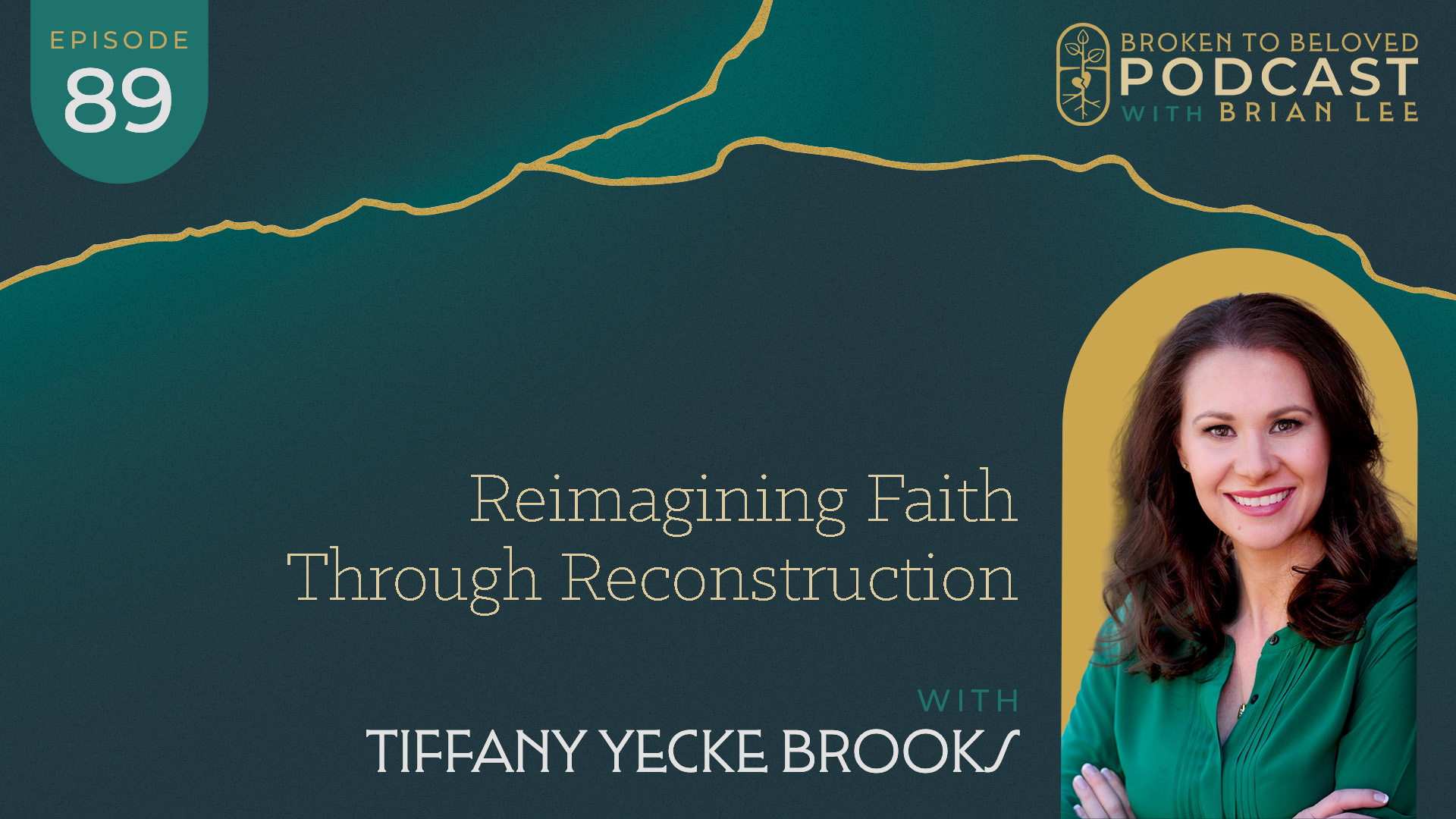
So I’ve deconstructed. What now?
In her latest book, “To Rebehold the Stars,” author and professor Tiffany Yecke Brooks guides us into a hopeful path of reconstruction. Drawing on Dante, psychology, and spiritual formation, she invites us to reimagine faith with wonder, curiosity, and courage after spiritual abuse or disillusionment.
Explore how naming experiences creates categories for healing and helps form a new, life-giving spiritual lexicon. Differentiate between discomfort that grows us and pain that harms us—and challenge spiritual teachings that keep us hostage to harm. Learn how to “audit” traditions, discern what aligns with the heart of God, and practice spiritual differentiation: forming your own faith while remaining in relationship if you wish.
You’ll hear about:
- Why deconstruction can be an essential step in maturing faith—and how to move forward
- Why naming experiences reduces shame and increases agency
- The difference between growth discomfort and damaging pain
- How “sanctified suffering” can be weaponized—and what healthy theology looks like
- Three options for navigating harmful contexts
- Why sunk-cost thinking keeps us stuck—and how to let go responsibly
Guest Spotlight ✨
Tiffany Yecke Brooks is the lead or contributing writer for more than three dozen books, including multiple New York Times bestsellers. She writes about issues facing the modern church in Gaslighted by God: Reconstructing a Disillusioned Faith; Holy Ghosted: Spiritual Anxiety, Religious Trauma, and the Language of Abuse; and her latest book, To Rebehold the Stars: Reimagining Faith and Formation After Deconstruction (all published by Wm. B. Eerdmans). She has also cowritten many books and written numerous articles for publications such as Smithsonian, New York Archives Magazine, and various peer-reviewed journals.
Tiffany holds a PhD from Florida State University, an MA in Classics from the University of Bristol (UK) and an MA in Spiritual Formation from Portland Seminary. She has taught literature and writing at Florida State University, Abilene Christian University, McMurry University, and the University of South Carolina-Beaufort and currently teaches nonfiction writing at the Gaylord College of Journalism and Mass Communication at the University of Oklahoma.
Links & Resources 🔗
Website | Instagram | Substack
Books
- Gaslighted by God: Reconstructing a Disillusioned Faith ****by Tiffany Yecke Brooks on Amazon | Bookshop
- Holy Ghosted: Spiritual Anxiety, Religious Trauma, and the Language of Abuse ****by Tiffany Yecke Brooks on Amazon | Bookshop
- To Rebehold the Stars: Reimagining Faith and Formation After Deconstruction ****by Tiffany Yecke Brooks on Amazon | Bookshop
- I’ve Got Questions by Erin H Moon on Amazon | Bookshop
- The Critical Journey by Janet Hagberg and Robert Guelich on Amazon | Bookshop
Similar Episodes You Might Like
- Episode 7: Forced Forgiveness: Misinterpreting Matthew 18 with Dr. Scot McKnight
- Episode 36: Burning a Path to Renewal with Erin Moon
Don’t Miss the Next Episode!
Sign up for our Podcast Newsletter and subscribe on your favorite podcast app below and never miss out on these conversations with old and new friends. Is there a guest you’d like to hear from? Let us know!
Apple Podcasts | Spotify | Amazon Music | YouTube
Spread the Word. Leave a Rating and Review. It would mean the world if you would leave us a rating and review on Apple or on Spotify or share with your friends.
Broken to Beloved is a 501(c)3 nonprofit that works to provide practical resources for recovery from and safeguarding against spiritual abuse. Our programs like this podcast are made possible in part by the generous donations of our supporters. Consider joining our community of supporters with a gift of $25 today.
As an Amazon and Bookshop.org affiliate, I may make a small commission at no extra cost to you.
Episode Transcript 📄
Tiffany Yecke Brooks
One of the big hurdles in my own deconstruction process was learning how to let go of that need to always have an answer, that need to know, that spiritual bypassing that so many of us do when it gets uncomfortable. And so rather than saying, I don't know, or maybe there's something bigger here, we just figure out a way to talk around it and never actually open ourselves up to the idea that God could be bigger than we were ever allowed to imagine that God could be.
You can't really go through a deconstruction process if you weren't deep in the faith the first time around. So for those of us who, who have been so deep in the faith that we are now able to go through this deconstruction process, which is really honestly an essential step in the maturation of faith, what can we then do to take all these words and ideas and images and metaphors that we've been given, that we know, and sort of unknow them, see them through new eyes.
Brian Lee
Hey friends, welcome back to the Broken to Beloved Podcast. If you're looking for more practical resources for recovery from and safeguarding against spiritual abuse, then this is the place for you. I'm your host, Brian Lee. I'm an ordained pastor and spiritual abuse survivor, and I know what it feels like navigating life after spiritual abuse. It's why Broken to Beloved exists, and we can't do it alone. We need your help.
Support our work by becoming a donor to help make our podcast and programs possible. Just head to brokenbeloved.org/support or click the link to donate in the show notes. Just $5 or $10 a month would go a long way to making our work more sustainable.
Today, we're talking about what to do after deconstruction with Tiffany Yecke Brooks. Tiffany is the lead or contributing writer for more than 3 dozen books, including multiple New York Times bestsellers. She writes about issues facing the modern church in Gaslighted by God, Holy Ghosted, and her latest book, To Rebehold the Stars: Reimagining Faith and Formation After Deconstruction.
She's also written numerous articles for publications such as the Smithsonian, New York Archives Magazine, and various peer-reviewed journals. She holds a PhD from Florida State University, an MA in Classics from the University of Bristol, UK, and an MA in Spiritual Formation from Portland Seminary. She's taught literature and writing and currently teaches nonfiction writing at the University of Oklahoma. This is a fantastic conversation. We have so much fun together. And so here is my conversation with our new friend, Tiffany. Tiffany, welcome to the podcast.
Tiffany Yecke Brooks
Hi, thank you so much for having me.
Brian Lee
I'm looking forward to this conversation very much. To Rebehold the Stars: Reimagining Faith and Formation After Deconstruction. This was so helpful because I feel like we have so many books and resources or just people talking about deconstruction, about the value of it, about the woes around it, about pastors who are railing against it or conflating it with deconversion, all these things. I haven't found many resources that offer, okay, what happens after deconstruction and offering a path forward through reconstruction? What does that look like? So just thank you for doing that and offering it to us.
Tiffany Yecke Brooks
Well, thank you. It was a joy to write, honestly. I think, like, I agree. I think that there's so much out there about these important conversations because deconstruction matters and that is such a huge, important step in faith. But then there's the "but what now?" question.
Brian Lee
Yes.
Tiffany Yecke Brooks
And that's what I wanted to— that's what I wanted to speak to with this book.
Brian Lee
Yeah. Which I so appreciate. I mean, it drives so much of the work that we do at Broken to Beloved are just those two words is, okay, what now? And it's why our mission statement is to provide practical resources. So it's not just more information. It's not more research. It's not more stuff. But it's like, what's one thing I can actually do? And you mentioned that this book is the third in a series. Would you tell our listeners if they're unfamiliar about the first two?
Tiffany Yecke Brooks
Sure. Yeah, my first book was called Gaslighted by God: Reconstructing a Disillusioned Faith. And that came out in 2022. And that was really, um, in some ways just an exploration of what does it mean to deconstruct while still holding on to faith. The main question I wanted to answer with that one is, what do you do when the God of the Bible does not match the God of experience? And when those two things misalign, how do you make sense of that and, and still exist as a person who who believes, who wants to believe. So that was that book.
And then the second book that came out in 2024 was called Holy Ghosted: Spiritual Anxiety, Religious Trauma, and the Language of Abuse. Um, so that title was a bit of a mouthful, um, but what I wanted to do in that book— it was really sort of an outgrowth of the first one— was exploring spiritual anxiety and what that looks like for people who, you know, like myself, didn't really understand things like the joy of my salvation. What does that mean? Because faith was so rooted in fear to me. And so I look at things like involuntary internalized legalism.
And I am, in my other life, I'm an author and an editor, but I'm also a literature and writing professor. And so I'm very interested in how language functions in how it shapes faith, how it shapes conversations around our faith. And so what I really wanted to do in that book was break down some of the just bad rhetoric that's used in spiritual abuse in high-control faith environments and to look at how language is manipulated to mess with your head, to mess with your emotions, and what people who want to hang on to faith can do to sort of recognize when that manipulation is being used against them, recognize what's happening, and then understand, okay, and this is how I can now again, move forward with something that's healthier.
Brian Lee
Yeah, I love that. And I love the titles.
Tiffany Yecke Brooks
Thank you.
Brian Lee
And we'll have links for all three of those in the show notes for everyone. I appreciate that you welcome us not into knowing more and learning more, but actually an unknowing of what we've been taught and of what we picked up over the years. It's like this invitation to wonder and curiosity. Tell us more about that posture.
Tiffany Yecke Brooks
Well, I grew up in a fundamentalist tradition. And so there was so much rooted in the knowing, you know, the hard concrete, you know, we, we only do what the Bible says. And then that means that God becomes no bigger than the 66 books of the Bible. Right. And so we have now fenced in God with God's own word. And how ironic is that? And so for me, one of the big hurdles in my own deconstruction process was learning how to let go of that need to always have an answer, that need to know, that spiritual bypassing that so many of us do when it gets uncomfortable. And so rather than saying, I don't know, or maybe there's something bigger here, we just figure out a way to Christianese talk around it. And never actually open ourselves up to the idea that God could be bigger than we were ever allowed to imagine that God could be. And so for me, that process of unknowing, of remystifying the faith became so central in terms of what the reconstruction process could look like. So like, for example, when I teach poetry to students, one of the things we talk about, and I talk about this in the book as well, is that poetry, one of the things that makes poetry so magical linguistically is that it takes something common and puts it in unfamiliar terms and makes us see it in a new way.
And that's my goal with this book is how can people who have been so, you can't really go through a deconstruction process if you weren't deep in the faith the first time around, you know? And so for those of us who have been so deep in the faith that we are now able to go through this deconstruction process, which is really honestly an essential step in the maturation of faith, what can we then do to take all these words and ideas and images and metaphors that we've been given that we know and sort of unknow them, see them through new eyes? And so I talk about something called jamais vu, which is sort of the opposite of déjà vu. So as opposed to, well, this is— I've never experienced this before, but it somehow feels familiar. How do you take something that's incredibly familiar and experience it as if it were the first time, experience it anew?
And so that's really what the overall goal is with the book, is to help us figure out how to create a new spiritual lexicon for ourselves as if we are approaching our faith for the first time, and to bring in that sense of wonder and curiosity rather than just the concrete knowing that shuts shuts down not just doubts, but any kind of question or any kind of openness to learning more and to growing, which faith should be a process rather than just a state of being. So yeah, that's really— that's the goal of this book.
Brian Lee
I love all of it. I love all of it. And I think— I don't know if you said it or if you're quoting someone else, but you say "When faith becomes more about having the right answers instead of asking the right questions, it loses the very thing that makes it divine."
Tiffany Yecke Brooks
Yes.
Brian Lee
And I think that covers it.
Tiffany Yecke Brooks
Yes, exactly. And I think, I think that's where so many of us have landed now. And part of that is just getting comfortable with having questions and not having to have all the answers. And gosh, it's freeing to be there. You know, like it's so many of us were taught that it was so scary. Doubt was catastrophized or pathologized even. And then it turns out that, oh no, wait a minute. Faith is supposed to be a conversation. It's supposed to be asking questions. It's supposed to be a process. And that's, that's a living faith. That's so much more exciting than something that's just ossified.
Brian Lee
Yeah, yeah, agreed. We are in the middle of one of our cohorts right now. And there's a week where we just talk about liminal space, and that weird in-between, untethered, I'm not here anymore, but I'm also not there yet. And you open the book with Dante's Inferno, right? And this idea of this journey that we can't walk out of hell the same way we walked in or fell or were dropped or pushed into it. And I ended up talking about it with the cohort. I showed them the book. I was like, listen, I'm reading this book. It'll be out soon. You can go preorder it. But it just opens with this idea because we're talking about moving through these liminal spaces and how do we find our way out? We also talk a lot about The Critical Journey, which you also cite in the book, and being in stage 4, the journey inward and hitting the wall. Tell us about that idea of— I think you quote, is it Robert Johnson who says, you don't come out of hell through the door you entered, you go through it and out the other side. Tell us more about that.
Tiffany Yecke Brooks
Yeah, so to me, the title of the book, To Rebehold the Stars, it actually comes from the final line of Dante's Inferno. And it's Henry Wadsworth Longfellow's 1867 translation of it. And I love the wording, you know, that Dante and Virgil have just gone through this, this huge ordeal. You know, they've just traversed all 9 circles, but then they don't go back up. They, they climb down Satan's very, like, very hairy leg. It's a weird description. Yeah, but they climb down his leg, right? And they emerge on the other side of the Earth in the predawn hours of Easter morning. And they're at the base of the mountain of purgatory, right? You still have the mountain to climb before you get to— we've got the purgatorio, we've got the paradiso still to come, right? But at this moment, at the end of the Inferno, Dante says, and it was from there, you know, from hell, that we emerged to re-behold the stars. And I just thought that moment was so profound because I think that's where so many of us are right now, that we've just gone through, in some cases, really a hellish experience.
It can be heartbreaking and difficult and terrifying at times. And we emerge again, not, not the same way that we came in. We emerge the other— in the other direction. And then we stop. And the thing that lets us know that we survived it is that we look— Dante looks up and he beholds the wonder of creation. Right? He has this moment where he just sees the stars and he marvels at this beautiful thing that tells him he's out of hell. And that's the moment that I wanted to capture for those of us who have gone through this process, is where we have emerged and we, we pause and we have a chance to stop and just marvel at creation, both what we have been through and knowing that something is still ahead of us. But this is a moment to pause and to reflect and then to choose what comes next. Because with deconstruction, you know, nature abhors a vacuum. So any blocks that we've pulled out, something is going to fill that back in. And so do we want to choose what that's going to be or do we want to leave it to accident?
And so, you know, what I have found is, is the easiest thing that can fill in those gaps are the old scripts that we just spent months or years or decades trying to deconstruct, trying to break down. And then suddenly we have these gaps in our deconstructed faith. And there, that's the easiest thing to plug right back in because it's something we know, it's something that's familiar. And so I love the idea of taking a moment to pause and to be deliberate about what we choose to go back into those spaces, even if the thing we choose to go in is a question mark. And it's to say, I don't know what this is right now, and I don't have to know. I don't have to have an answer to move forward. But that, all of that, that's my really, really long-winded answer to that question of that's what to re-behold the stars really means to me is, is that it's this moment post-deconstruction and looking at what's ahead to stop and decide what this journey is going to look like and to marvel in the process.
Brian Lee
We often offer this framework when I'm working with coaching clients or with people in the cohort, or just whatever it is, that there's this pattern that I've recognized and all the stuff that I've learned over the years, that part of the process of moving towards that healing and wholeness is to notice, to name, and to navigate. And you talk a lot about naming and language. And I love the idea of linguistic relativity. That you mentioned. I thought it was so helpful. I thought the story about the color orange, which I had heard a long time ago and forgot till I read it again in the story, and I shared that with the cohorts as well. I was like, listen, when you've got a name, you don't know something, it's like you don't know. Tell us about linguistic relativity. Talk about— tell us about naming and language.
Tiffany Yecke Brooks
Absolutely. Yeah. So the orange story for your listeners, if they're not familiar. So orange was the last color category to be introduced into English. And so prior to that, anything that we call orange was referred to as yellow-red. You know, I mean, the color halfway between yellow and red. And so, and we see linguistic fossils of this and things like a robin redbreast, which is marked, it's orange or red hair, right? That's orange. But those words, those terms have sort of stuck around post-orange being introduced. And it was, it first came into the English language right around the beginning of the, like the 1500s. And What's so interesting about it is suddenly you have a word, and so you have a category. And so linguistic relativity is— it's also called Sapir-Whorf hypothesis, which is the idea that language shapes thought. And so when you have a term for something, that gives you a category of thought that you can now use to define it, to encapsulate it. I sometimes call it like the Rumpelstiltskin effect, right? Like once you name something, you have power over it, you can define it. And so In terms of faith, what I think is so important, you know, there are— I was in this situation.
I've spoken to a lot of people about it who were going through the deconstruction process for a decade before we even had the term deconstruction for it, because all we knew was, oh, this is doubt, or this is backsliding, or this, you know, whatever terrible word we had been given for it in the church, as opposed to, no, this is a healthy part of a faith journey that is maturing and growing and being bigger than it was ever allowed to be. And so what I want readers to do with— by introducing the idea of linguistic relativity is to say, like, let's create a spiritual lexicon for your newly emerging faith so that you have terms to make sense of these new spiritual ideas that you're entertaining, or bigger definitions for some of these words than the very narrow or legalistic definitions that some of us were given. So I look at some of the Greek and Hebrew translations, not to get into the, you know, the scholarly weeds of it, but to say this is what the essence or nuance of that word was in the original language that English doesn't quite capture. So we've approximated it in our translations, but it doesn't necessarily capture the full idea of what this word really means.
Plus, we bring our own cultural context and experience with words and concepts that are going to color our own understanding of it, the way we receive it, the way we translate it in our own lives. And so, something that I try to make a point of in the book is that this is not creating God in our own image. This is paying attention to how we're— how is our soul uniquely created to receive God? How did God uniquely, you know, for each of us as image bearers of God, how were we created to relate to the divine in ways that maybe were shut down or forced into, you know, into narrow little boxes that, that limit our understanding of what faith can be?
Brian Lee
Yeah. And I think that's an important distinction that we're not creating God in our image. But untangling ourselves from, like you're saying, all the cultural things that came along with it, or I think you also say, quote, "Many of the familiar go-to concepts don't work anymore either because they were twisted and misrepresented, or they're tied to painful feelings that stir up ugly memories of a faith that doesn't seem consistent with the spirit of Christ," and I think you also reference Scot McKnight and Tommy Phillips' book, right, Invisible Jesus, that people aren't deconstructing and leaving the church because they want to go sin and do life their way. It's because they're not seeing Jesus in the churches as he was taught to them.
Tiffany Yecke Brooks
Exactly. And something I actually talk about in Holy Ghosted is, you know, seek ye first the kingdom of God. Seek is a verb that's active. That's saying if God is not where you are, go somewhere else to find that. Don't, you know, don't think you have to stay stuck in a church where this— where nothing is aligning with the Spirit of God. Like, actively go out and pursue God. And that verse is often used to shame people who, who are looking elsewhere, or, you know, saying, I need to, I need to step back from church for a minute, or I need to, need to visit another church. That verse is sometimes twisted when really it's, it's saying we should be pursuing this if we're not seeing the Spirit of God where we are.
Brian Lee
Yeah, thank you. The chapter on Receive, you share this incredible metaphor of a pearl that we've heard so many times, that this little grain of sand, this irritant that gets in there, and look at the beauty of the pearl and the value of going through hard things. And you asked a question that I don't think I've ever heard anywhere else, is who benefits from the pearl? I think that's going to stick with me for a long time. I think you also say, quote, the value of the pearl is only enjoyed by the person who extracts it. Usually without a second thought, for the oyster itself. And if someone were to poll an oyster bed, I imagine they would find that the vast majority of bivalves solicited would rather avoid the pain altogether than have to go through the laborious process of making a pearl for which they don't have any use and never wanted in the first place. My goodness, Tiffany, tell us where that came from because that was amazing.
Tiffany Yecke Brooks
Thank you. I mean, it came from, as I'm sure all of your listeners can empathize, it came from the painful, going through some really painful experiences and being told, well, you know, rejoice in all circumstances and you should be happy about this. And the problem is that sometimes that keeps you locked in the very circumstances that are harming you.
Brian Lee
Yeah.
Tiffany Yecke Brooks
You know, we're told, oh yes, well, you know, Christ sanctifies through suffering. Yes, that's true. But suffering is not the only means to sanctification, right? And unfortunately, so many of us have been victims of bad theology, harmful theology, abusive theology, because we are told, we are taught that staying in an abusive situation, staying in a toxic situation is somehow glorifying God. When I would argue instead that the gospel teaches us completely the opposite. In Gaslighted by God, I talk about this in more detail, where I talk about the idea of healthy, holy, and happy. Because I remember seeing a post on social media that said, God cares more about your holiness than your happiness. And I thought, okay, but God cares more about your healthiness than your holiness, because we see over and over where Jesus says like, people are mad because he healed on the Sabbath. And he's like, that's— you're missing the point if you're upset that somebody was healed. If you're putting the law over people, you're missing the whole point of it, right? And we see throughout Jesus's teachings, over and over, he's prioritizing human life, human well-being, human thriving over the minutia and the legalism that harms people.
You know, if your child falls in a pit or your ox on the Sabbath, wouldn't you pull them out? You know, Jesus is saying Guys, you missed the point. And I think that unfortunately for so many of us, that was weaponized against us, that we were told, you know, yes, you have to suffer, this suffering is going to make you better. And as I think I say in the book, something along the lines of, you know, not all fire is the refiner's fire. Yeah. And that we, if we have the option to remove ourselves from a dangerous situation, wouldn't God rather have us do that than to allow ourselves to be abused and diminished for who's good. You know, you should always ask, as I, you know, as in the quote that you, that you read, like, who, who's asking you to make that pearl? Who benefits from it?
Brian Lee
Yep. And I think you end, I don't know if this is at the end of the chapter or not, but you kind of sum it up saying, ask yourself who's demanding that you remain hostage to your pain and what they might have to gain from it. And if your suffering does yield pearls, certainly don't toss them before swine. Yes, I love it. There are so many people who do feel trapped in their circumstances or their situations or whatever it is. And so I appreciate that there is this invitation that I think you say you can exit, you can endure, or you can ease it. In terms of differentiating or navigating situations. And I also appreciate your invitation to discern between discomfort and pain. I thought that was a really important distinction. Tell us more about that difference between those two.
Tiffany Yecke Brooks
Yeah, so really started thinking about this when I broke my arm and had to go— in a really dumb ice skating injury, and I had to go through physical therapy afterward. And my physical therapist told me, like, you will know the difference between something that is making you stronger and something that's harming you. You know, that there is, there is discomfort that can come as you're trying to regain mobility or, you know, rebuild those muscles from atrophy. There's, there's going to be some discomfort in that process. Growth involves discomfort, but pain is your body's way of letting you know something is wrong. And you should stop doing that. But unfortunately, in the church, so many of us were taught that faith should hurt, right? Serving God, give till it hurts, right? Or, you know, serve until there's no more left of you. And I don't think that's really consistent with the heart of God. I really think that there's a difference between the things, again, you know, that which does not kill you makes you stronger, right? But sometimes, like, does it have to? And again, that's something that's so weaponized in the church sometimes by abusive leaders who are trying to extract value from people or extract obedience.
And so if you can distinguish between, is this something that's helping me grow as pain can, or as discomfort can do, or is this something that's actively harming me? And just being able to, again, even just having the words, the vocabulary to sit down and say there really is a difference here and they're not interchangeable. And I should pay attention to that nuance between them. That's so important for moving ourselves into a place of a healthier spirituality.
Brian Lee
I think that distinction is going to be really helpful for a lot of people. We are so often taught, and usually not always, but the more fundamental the church or environment, sometimes it's families, sometimes it's school, sometimes it's workplaces, the more we are taught to ignore and repress our bodies and to dismiss what they're saying. And or that it's made holy, that to feel pain and to suffer is the holy thing. So just stick with it and stay there. And so I think that distinction between pain and discomfort is going to be really important and helpful.
Tiffany Yecke Brooks
Yeah. And I think just to add on to that, a lot of times we're taught, many of us were taught that trusting your gut is akin to trusting in the flesh. And that forces, like, that teaches you to extinguish your intuition. And, you know, the nudges from the Holy Spirit, and that keeps so many people locked in abusive situations as well. Because that's, that's a way to control people. And so just to add on to that, I think that's another important distinction, because again, like you said, the physical body is tied to so much shame and And we should be suppressing.
Brian Lee
So yeah, yeah, yeah, right on. You offer us a chapter on forgiveness, which you both recognize is not nearly exhaustive or enough. And there are plenty of books on forgiveness across the spectrum, let's say. And I appreciate that you break it down into four kinds of areas, right? Seeking forgiveness, forgiving yourself, forgiving others, forgiving God. I want to zero in on one passage where you you write about Matthew 12:31-32. It was a fascinating idea. It's the passage where Jesus declares, therefore I tell you, people will be forgiven for every sin and blasphemy, but blasphemy against the Holy Spirit will not be forgiven. And it goes on. And so of course it's been weaponized or used as a tool of fear or anxiety, of warning against blaspheming against the Holy Spirit. And you offer this completely different take on it that I need to think about for a long time. Tell us about this kind of spin on that passage.
Tiffany Yecke Brooks
Sure. So my thought process behind it was— because again, as somebody who, who had tremendous spiritual anxiety, I don't want to tell you the, the nights of sleep I have lost turning over that passage and what does that mean. But what occurred to me as I was working on this, this chapter about forgiveness is that if a fellow believer has intentionally demeaned your humanity to the point that your spirit was broken into pieces so that you question as to whether you deserve love or basic dignity, or you doubt your worth as a child, an image bearer of God, then maybe Jesus is saying that he doesn't expect you to easily forgive that person. Maybe he's saying that if somebody is so abusive toward another person made in the image of God, that the behavior harms the sacredness of the soul to the quick, then he acknowledges that forgiveness might not be a possibility. And so to me, what's so interesting about this is that that passage comes in the middle of a story about healing, where Jesus said— he calls the Pharisees who are opposing him a brood of vipers, like he's literally calling them toxic.
And so maybe the verse isn't about placing a burden of fear on us, but about freeing the victim of abuse to feel however they need to feel without any unrealistic pressure to forgive something that is essentially unforgivable, that their soul has been so harmed, their soul that where the Holy Spirit abides has been so harmed and blasphemed. That maybe Jesus doesn't expect us to be able to easily say, oh, it's all good, forget about it.
Brian Lee
Yeah. And I love that you get there by asking. It's like, well, then who's the Holy Spirit? Or what is the Holy Spirit? And what does it mean to blaspheme the Holy Spirit? And if the Holy Spirit is— the term is sometimes understood to be the divine wisdom, the comforting presence of God, the breath of God that exists in each person. So you blaspheme. And if we agree that human life is inherently sacred, sacred, then the thing that animates us to life must also be sacred. And if blasphemy is the defamation of something sacred, then blasphemy against the Holy Spirit might look like the degradation of the Spirit of God within other people. I love that you take us there and make those connections. And so you kind of conclude that section, and this I think will offer people also a lot of relief and hopefully some freedom. You say, quote, rather than re-victimizing the victim, By declaring them a sinner, if they struggle to get over whatever sins were committed against them, what if Jesus is actually freeing the victim to feel exactly how they need to feel without any pressure to forgive the unforgivable?
Yeah, man, oh man. We also have a whole episode with Scot McKnight about how Matthew 18 is weaponized. Oh man, and forgiveness. And we had a great conversation where it's like, yeah, forgiveness can be conditional. That doesn't always have to be offered and all these things. And it's always been one of our most popular episodes. And I'm just so grateful every time I hear someone who not only doesn't weaponize Scripture to perpetuate fear and anxiety and power and control, but offers us different paths forward that whether you agree theologically or not, that invitation to just be able to ask those kinds of questions and say, but what if?
Tiffany Yecke Brooks
Yes, absolutely. Because I mean, I think it's so interesting when people love to say, well, love keeps no record of wrongs. But if, if you read the whole scripture, it says love keeps no records of wrongs, but it rejoices in the truth. Like, truth-telling is— should be part of forgiveness. We don't just pretend it didn't happen. We should speak to what, what happened. We need to acknowledge it and not just sweep it under the rug.
Brian Lee
Yeah.
Tiffany Yecke Brooks
And that needs to be part of the forgiveness process. Absolutely.
Brian Lee
Yeah. And this kind of wraps us back to the beginning of the conversation, this invitation to wonder and curiosity, that another part of that process is being invited into the process of creation. And I love that you say that forgiving is not just wiping out or deleting or taking away. It is adding to, and by its nature, forgiveness is an act of creation. And even if you decide not to forgive, or you say, quote, rather than standing at the rim forever tossing rocks into the divide, to pursue life elsewhere by focusing on other pursuits and other reconnections, this too is an act of creation.
Tiffany Yecke Brooks
Yeah, because I mean, I think it's so important to remember that forgiveness calls us into something new. And even if the thing that it calls us into is, again, not just being like, oh, you know, I'm perfectly healed, as if that never happened— it doesn't have to be perfect, but it should lead us to a point where it no longer triggers so big a response to us that we can't be in control of ourselves. And so creation, like, it forgiveness calls us to creation, whether it is repairing that relationship, or whether it's saying, I am going to go and build something new and beautiful beyond what I have experienced.
Brian Lee
Yeah, yeah. And it's such a good invitation, an important one. I think I want to end with this idea of traditions, as we kind of move towards a close and this idea of spiritual differentiation, right, as an essential part of our spiritual reformation. And psychologists call that differentiation the process where an individual is able to assert and develop their own identity apart from parents or caregivers while remaining in relationship if they so wish. Tell us this idea about spiritual differentiation.
Tiffany Yecke Brooks
Yeah. Well, so one of the main ideas of this book is one of the questions that I kept returning to when I was writing it is, how do you create a faith that you built rather than one you simply inherited? Yeah. And I think, you know, that's really hard for a lot of us because so many of us received a faith that was tradition packaged as doctrine. And so one of the things that I try to encourage readers to think about is the fact that tradition is always optional. Tradition is always— you can always stop and say, no, I'm not going to participate in that. But the challenge then becomes recognizing what is tradition. And so I explore, you know, the different— again, I'm a language nerd, so I explore the difference between traditional and ritual, you know. So like, what are, you know, norms? Like, what are cultural norms? And then what are rituals that we go through? And these are, these are both traditions that sort of shape the way that we function as a society, as a family, as a church, as any different kind of unit. And what I think has led so many people into the deconstruction process is that realization that things that they believed were, you know, the immutable law of God were really just traditions, were really just somebody's preference somewhere along the line that got calcified into church doctrine.
And so we have a responsibility to ask, like, what do we owe tradition? But what does tradition owe us? You know, at what point do we look at things and say, that's a beautiful tradition and I'm going to keep that because that's meaningful and I love that that connects me to centuries of believers. But we also have a responsibility to look at tradition and say, that tradition is rooted in systemic harm. To the marginalized. That tradition is rooted in something that stands antithetical to the heart of God. And if we, if we do run a tradition audit on ourselves and really look carefully and hold up each piece next to the heart of God, we're going to find the things that we need to let go of and the things that, you know, that maybe it's okay for us to carry forward. And I really want to challenge people to Sometimes, it's easy to hold up the big ones like, "Oh, racism, homophobia," some of these things that you can say, "Okay, you know what? That's something that I— it's easy for me to recognize the problem and move past." But other times, you can— there are really comfortable things where you think, "Okay, there's not really a tradition here." And that's where I think we have a responsibility to really stop and examine ourselves.
Because it's in the comfort and the convenience that a lot of us have just learned to overlook some of these harmful traditions that we may have never even realized were embedded theologies for each of us.
Brian Lee
Yeah, that's really helpful. There's two quotes that you end with. One's from Richard Rohr saying, if change and growth are not programmed into your spirituality, if they are serious warnings about the blinding nature of fear and fanaticism, your religion will always end up worshiping the status quo. And I think we're seeing the effects of all of that right now.
Tiffany Yecke Brooks
Absolutely.
Brian Lee
But I think my favorite from that section is you saying we need to let go of the fallacy of sunk costs when it comes to traditions, that I just have too much invested time, energy, resources, whatever, to let this go or to change it. It's like, No, no, no, you have permission to let it go and change it.
Tiffany Yecke Brooks
And I'd say not even permission, we're commanded to, you know, we really are called to, like, we have a responsibility as believers to stop and say, is my faith harming someone else? Is my faith harming myself? Um, you know, like that, it's, it's not just an option. It really is, is a requirement to be truly living into the call of the Gospel.
Brian Lee
Yeah, that's, that's so good, Tiffany. This has been incredible. I'm sure we can go on for hours more talking about this, which I would love to, but if there's kind of one thing that people can walk away with, like, what are you hoping people hear or receive as they read this book?
Tiffany Yecke Brooks
I want people to feel hopeful that there is a path forward for them in faith. Because so many people, when you, when you leave the tradition in which you grew up, that can be so painful, because sometimes it's not just leaving a belief system, but family and friends and relationships, and ways of being and, you know, and all of that. And that, that prevents a lot of people understandably from, from making that final step out of toxic spirituality. And I just want to encourage people to, to recognize that there is hope to do this and to emerge on the other side with a bigger faith and a bigger sense of God than, than we were ever allowed to have. My favorite scripture is Romans 12:21 of, do not be overcome by evil, but overcome evil with good. And that's really I think that's what the deconstruction process can be, is that it, it can be overcoming damaging things with good, with beauty, with a faith that is more closely aligned to the heart of God. And I think that's, that's what people going through this process, that's what seekers want, is we, we want to leave this process better than we started it.
And so that's, that's what I would encourage people to do, is to just keep looking ahead because you can do it. You can still hold on to faith and let go of the damaging beliefs. And there's healing in that.
Brian Lee
Yes, there is. If people want to connect with you, where can they find you?
Tiffany Yecke Brooks
You can find me— I'm on Facebook with the old Tiffany. What is it? Tiffany Brooks, PhD, or Tiffany? Yeah, you know, I should probably know that.
Brian Lee
We'll have the link down.
Tiffany Yecke Brooks
You can find me on Facebook. I'm also on Instagram. I don't do a whole lot there, but I've been doing some book promos there very awkwardly. It's @tfyeckebrooks. And then also Substack. I have a Substack called The Lēros Project, and that is, it's a monthly newsletter that's me kind of talking about these issues, but in sort of a funny, silly way. And so, I mean, these are very heavy subjects. So it seems ironic to say yes, and I put in funny memes and captions that crack myself up, but it's really designed to bring some levity back to the conversation and say, you know, faith is joy. We can laugh at these things. Like, that's That's part of, that's part of what this should be. So yes, also Substack, The Lēros Project. And yeah. And then my website is, uh, TiffanyYeckeBrooks.com.
Brian Lee
Yeah. Thank you. I love that balancing. We just talked to Shannan Martin and her book Counterweights. Oh, this idea is like the world is heavy enough and sometimes you just need to put an extra weight on the other side to balance yourself out so you don't fall over. And so I love that balancing joy and looking for counterweights wherever we are. Thank you so much for taking the time to have this conversation, Tiffany. It was incredibly helpful. Everyone go get a copy, To Rebehold the Stars. We'll have all the links for the places to find everything in the show notes. Thank you again for being with us.
Tiffany Yecke Brooks
Thank you so much. I really enjoyed it.
Brian Lee
If you enjoyed this conversation as much as I did, be sure to follow Tiffany and say thanks for being on the show. You can find links and all the things in the show notes. Subscribe or follow the show to get new episodes automatically. If you enjoyed this episode, please leave us a rating and review or share with your friends. It really helps us to grow and continue providing quality content for you.
And a special thank you to our listeners who make the show possible through their financial support. If you find the show valuable, consider donating today at brokenbeloved.org/support or at the link in the show notes. This episode was hosted and executive produced by me, Brian Lee. Editing by Heidi Critz.
Thanks for taking the time out of your day to listen. I hope it's been helpful. Here's to moving toward healing and wholeness together. I'll see you next time.