091: A Survivor's Guide to Recovery and Hope After Religious Trauma with Tia Levings
May 05, 2026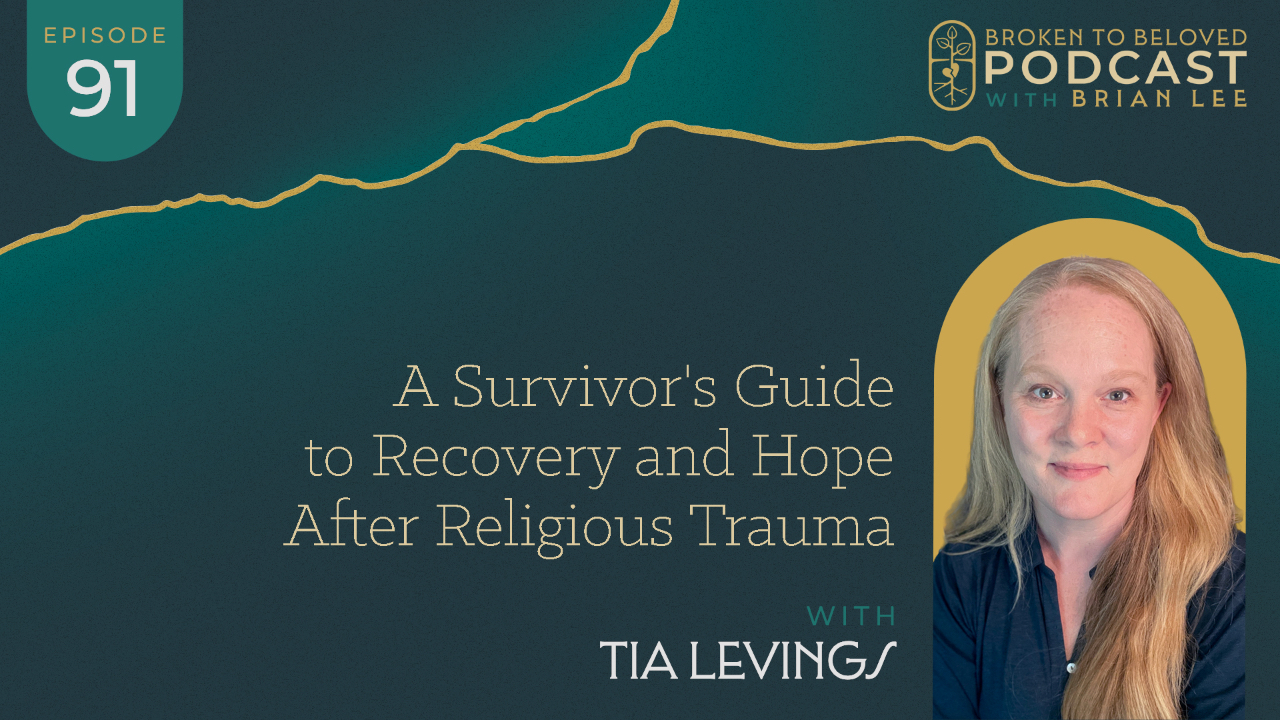
What does it mean to own yourself after years of being told your body, voice, and choices belonged to someone else?
Join us for a conversation with New York Times bestselling author Tia Levings as she unpacks the concept of autonomy as both a psychological milestone and a direct act of resistance against cult control.
We talk about reclaiming autonomy in our minds, hearts, and bodies, how “should” is one of the most dangerous words in the recovery space, and how fundamentalism is a structure of thought that can show up along any spectrum. We explore the tension between silence as both safety and complicity, and how survivors can learn to wield their voice (and their quiet) with intention and autonomy.
You’ll also hear about:
- What fundamentalism actually is at its core
- How to identify when a religious environment has become harmful
- How pressure to share your story can replicate religious coercion
- How religious indoctrination interrupts natural psychological development
- Why belonging should never require surrendering your individuality
Guest Spotlight ✨
Tia Levings is the New York Times Bestselling author of A Well-Trained Wife, her memoir of escape from Christian Patriarchy. She writes about the realities of Christian fundamentalism, evangelical patriarchy, and religious trauma. Her work has appeared in Teen Vogue, Salon, the Huffington Post, and Newsweek. She also appeared in the hit Amazon docu-series, Shiny Happy People. Based in North Carolina, she is mom to four incredible adults and likes to travel, hike, paint, and daydream.
Links & Resources 🔗
Website | Instagram | Substack
- I Belong to Me by Tia Levings | Amazon | Bookshop
- A Well-Trained Wife by Tia Levings | Amazon | Bookshop
Don’t Miss the Next Episode!
Sign up for our Podcast Newsletter and subscribe on your favorite podcast app below and never miss out on these conversations with old and new friends. Is there a guest you’d like to hear from? Let us know!
Apple Podcasts | Spotify | Amazon Music | YouTube
Spread the Word. Leave a Rating and Review. It would mean the world if you would leave us a rating and review on Apple or on Spotify or share with your friends.
Broken to Beloved is a 501(c)3 nonprofit that works to provide practical resources for recovery from and safeguarding against spiritual abuse. Our programs like this podcast are made possible in part by the generous donations of our supporters. Consider joining our community of supporters with a gift of $25 today.
As an Amazon and Bookshop.org affiliate, I may make a small commission at no extra cost to you.
Episode Transcript 📄
Tia Levings
My memoir is, it's a coming-of-age memoir that, you know, a lot of people do when they're 12 and 13. I did it, you know, to my 30s and 40s. But I take hope from that. Like we can still pick it up, but it, how more wonderful it is to recognize what's going on, change the cycle for the next generation and allow them to develop freely, you know, with autonomy and agency so that then they can be actualized adults with agency before they are tasked with so much of this big decision-making and ideology-carrying representation.
Brian Lee
Hey friends, welcome back to the Broken to Beloved podcast. If you're looking for practical resources for recovery from and safeguarding against spiritual abuse, then this is the place for you. I'm your host, Brian Lee. I'm an ordained pastor and spiritual abuse survivor, and I know what it feels like navigating life after spiritual abuse. It's why Broken to Beloved exists, and we can't do it alone.
We need your help. Support our work by becoming a donor to help make our podcast and programs possible. Just head to brokenbeloved.org/support or click the link to donate in the show notes. Just $10 a month would go a long way to making our work more sustainable. Today we're talking about A Survivor's Guide to Recovery and Hope After Religious Trauma with Tia Levings. Tia is the New York Times bestselling author of A Well-Trained Wife, her memoir of escape from Christian patriarchy. She writes about the realities of Christian fundamentalism, evangelical patriarchy, and religious trauma. Her work has appeared all over the place, and she appears in the hit Amazon docuseries Shiny Happy People. Based in North Carolina, she is mom to 4 incredible adults and likes to travel, hike, paint, and daydream.
And now here's my conversation with our new friend, Tia. Tia, welcome to the podcast.
Tia Levings
Thank you so much for having me. Looking forward to this.
Brian Lee
Same, same, same, same. The book was so helpful. And I know we connected a while ago talking about wanting to provide really practical resources for survivors of religious trauma, spiritual abuse, all of these things. This is a big book.
Tia Levings
It is.
Brian Lee
And there's a lot of really practical stuff in it. I really appreciate you taking the time to write it, to share it. I love the question you ask right at the beginning of, when did the source of your comfort become the source of your pain?
Tia Levings
Yeah.
Brian Lee
I thought it was so well-worded because I think for our community, I hear that so often, never phrased that way, but I think it captures it so beautifully and it's so invitational to curiosity and compassion and kindness and all of these pieces. And I think that's what permeates the book is like, how do we pause long enough to, to make space to ask these kinds of questions?
Tia Levings
Yeah. Thank you. I'm really glad that that was your take on it. Um, it is a nice thick book. I'm really grateful to my publisher for letting me tell the whole story. It's warm and conversational. It's not academic or abstract and theoretical. This is the path that I took through a very trailblazing era of my life to put myself back together, not be broken anymore. I didn't really buy into that idea that I was going to always be broken for the rest of my life just because I'd lived through breaking experiences. But there wasn't a lot of hope available in 2007, 2008 that you could be whole again. You know, it was the idea was you'd be scarred. And so I just didn't really accept that for my life. And there was not a book like this out there. There still is not a book like this out there. So like getting to write it and with the patience and the depth that I really feel is part of that journey meant a lot. And I'm really looking forward to survivors getting it and feeling seen, heard, and challenged and supported because, you know, we're not alone in this.
And yeah, that's one of the first feelings that we feel and are made to feel. Yeah.
Brian Lee
I also appreciate because one of our first stated values at Broken to Beloved is Agency over Prescription.
Tia Levings
Mm-hmm.
Brian Lee
And it's so easy, I think, for other survivors coming out of the space who position themselves as experts or just a couple of steps ahead to come off as really prescriptive.
Tia Levings
Yeah.
Brian Lee
Here's what you need to do, or here's what you should do. And I appreciate that your book comes across as here's what helped me. Here are other options and resources and you use whatever is helpful to you.
Tia Levings
That's deeply meaningful. It was really hard to write a self-help book and not be prescriptive, but I was like, not only am I not a prescriptive person, but I also can't become some guru and be authentic and have integrity in the space. That's when I preach against gurus. Um, you know, I don't want anyone to have a replacement guru. So I knew I couldn't tap into the "you should" voice, which is, I think, should's the devil. Um, anytime should comes up, you're in dangerous territory for idealism. So yeah, I just I just really, really imagined I was sitting down with a friend and telling them, here's what it's like. And you can, maybe it'll help you. Maybe it won't take what you like, leave the rest, come to it at different places in your journey. Like we all on-ramp at different places. Right. Um, and I wanted that. I wanted to write a book that you didn't have to be fresh out of your escape to enter. You didn't necessarily have to be ways down the road. You could come to it at any point and, and feel have it be accessible.
Brian Lee
Yeah.
Tia Levings
Yeah.
Brian Lee
And another idea I've been thinking a lot about over the last, I don't know, 2-ish, 3-ish years, I've had conversations with people like David Gate and Kate Boyd and a couple others who tackle this idea of fundamentalism isn't tied to the right or conservatism or any of these things, but you can leave fundamentalism on a conservative side and become a fundamentalist progressive or liberal. And I appreciate that you tackle the idea of fundamentalism. You provide a definition for it. The talking about indoctrination and arrested development and all these pieces, which is where I want to start. But tell us about your definition of fundamentalism.
Tia Levings
This is, um, it's so interesting that this is where you're starting because this is where I started and it was years before I even escaped. I picked up on something. Um, it might, if you're, if you've read A Well-Trained Wife, then you know about Trapdoor Society and, and my first discovery to this secret place online where I could be honest and ask questions and read broadly. And it was, it was a good little escape for me when I was living in fundamentalism. And I had this rebellion in my spirit that was like, I can't stand it when we put ideas over people, like the idea is more important than the people. And so I just started saying, I want to put people before ideas. Now, this was about 7 years before I escaped and definitely like, you know, almost 25 before I started talking about it online. Um, but to me, that is what fundamentalism is. Fundamentalism is a rigid binary. Ideology for anything, in anything, embedded in our bodies that values purity of something over the human who has to enact it or carry it. So, you know, simplified down, there are many academic explanations of what fundamentalism is.
For me, it's ideas before people and, you know, measured sense of rigid binary, a measured formula that results in a pure ideology. It can be in SoulCycle, it can be in your food, it can be in your politics. And the right does not have a corner on it. The right has just blended it with religion really well. And in the '80s and '90s, we called it legalism more often, you know, but I don't hear that tossed around so much anymore.
Brian Lee
Yeah. Yeah, that's helpful. I love the way that you tie or connect— maybe not tie, but connect the fundamentalism with this idea of arrested development.
Tia Levings
Oh, yeah.
Brian Lee
And how important that becomes in just recognizing what happened to us and approaching ourselves with curiosity. Empathy and compassion to say, yeah, it makes sense why you have a hard time doing these things or speaking in your own voice without the prosody and the, right, all the pitching up and these things and keep sweet movement, all these pieces. Tell us a little bit about that connection between fundamentalism and arrested development.
Tia Levings
Yeah. So this will be familiar to anyone who was indoctrinated as a child to believe a certain thing. And those from an evangelical tradition are very familiar with little children who pray to get saved. They make a major spiritual decision for their entire lives as preschoolers, and they're expected to carry that through their whole lives. Religious indoctrination is intended to produce a certain result, and it directly interferes with natural child development, which is not something I really understood until I was a mother going through that with my children and seeing, oh, they have developmental stages and they have milestones they're trying to reach. And there's skill sets and ways of thinking that the brain has to develop in, in stages. And then realizing the human brain isn't actually fully developed until you're 25. And by then I already had 4 children, 4 pregnancies, you know. Um, so like just focusing on how much youth focus is on, um, the indoctrination cycle and how much they want to keep you truncated. They want to keep you childlike and sweet. They want to basically skip the adolescent phase where kids are differentiating and gaining, you know, independence.
Instead, you're supposed to, you know, stay the way you were pre-sexually, um, and obey. And, and stay down. So, um, this, like, to carry it over, when I escaped, the hardest part was not dealing with the violence that I had to unpack and deal and confront. The hardest part was that I had no sense of self. And I was hearing people say, you need to— it's— you did this because you had low self-worth or low self-value. Or I actually had no idea who Tia was. I looked like a 33-year-old woman with 4 kids, but I had no idea who I was, what I was here for, what I like. Um, there was no way I could self-advocate without that information. So when I'm going through therapy and I'm going through this these years stages, and I'm raising my kids, the thing that I came back to was like, oh, my development is actually way back here in 13 and 14 years old. And I really didn't develop beyond that. Um, because I was trusting and obeying, you know, it wasn't, it wasn't, um, really developing. Yeah.
Brian Lee
It's such a big part of my own story too, of looking backwards and feeling a lot of initially shame of like, man, I was full-blown college student, adult after college, growing up and living, recognizing how far behind I look now.
Tia Levings
Yeah.
Brian Lee
Relationally, emotionally, just having none of the tools, having none of the practical things of just like, how do I live life? How do I relate to people? How do I do these things? Because it was all living life by should and ought and all these fundamentalist ideas of right and wrong, black and white. And catching up now and say, I have two kids who are much younger and just watching them. It's like, oh, we can, we can hit these milestones way sooner.
Tia Levings
Yes, we can. And, um, it's a grace to us that we can still hit them late in life. Like we have neuroplasticity, we have flexible minds, we can develop and pick up. Like my memoir is a coming of age that takes place in adulthood. So it's a coming of age memoir that, you know, a lot of people do when they're 12 and 13. I did it, you know, to my thirties and forties. Um, but I take hope from that. Like, we can still pick it up, but it— how more wonderful it is to recognize what's going on, change the cycle for the next generation, and allow them to develop freely, you know, with autonomy and agency, so that then they can be actualized adults with agency before they are tasked with so much of this big decision-making and ideology-carrying representation.
Brian Lee
Yeah, and I think you really capture like the catch-22 feel of these kinds of environments. You say, quote, if you make it to adulthood in an environment full of religious trauma, your sense of self is likely not fully developed or intact. You may still carry the psyche of a wounded child. And to add insult to injury, high-control religious systems first deny us protection, nurturing, and development, and then shame us for being selfish, damaged, and immature. And as the cherry on top, the believers around you can't understand why you're unhappy because they love their religious experience. So they guilt and shame you for speaking up refusing to comply and breaking the faith. I don't know a single person in our community who hasn't felt or lived that.
Tia Levings
Right. Oh, number one, I'm glad to validate that experience because sometimes just putting it in language is so helpful for people. And number two, yes. I mean, that's the, that's the betrayal. That's the feeling like we're damned if we do, damned if we don't. That's the alienation that we feel amongst our own families and friends and You know, I have a sister who grew up the same way I did, and she does not count herself as traumatized as I do. And so, like, it was baffling for a long time to understand how in the world did we have such separate experiences in the same place?
Brian Lee
Yeah.
Tia Levings
Well, so much of that had to do with psyche and the fact that everyone has a different experience than their siblings. They really do, you know, different parents, different environments. Even though it looks the same, it's, it's not.
Brian Lee
Yeah. We have different lived experiences, even if we're in the exact same environment.
Tia Levings
Yeah.
Brian Lee
And I love that you also say, "In fundamentalism, there's no point where you're enough, but your suffering is proof that you're trying." I mean, oh my goodness. Yeah, that was it right there.
Tia Levings
Yeah.
Brian Lee
So when it comes to breaking that cycle, I love that you also say, quote, "When the source is at church," because you're saying, you know, people always say, "Oh, the church didn't hurt you, people did." But the church is people, right? So when the source is at church, and the only solution is church, you get a snake eating its tail, which I love that visual. It's a cycle that's never broken. And at some point, your presence becomes participation. And I love that you say it took me almost a decade to realize I could never fully heal if I never left the scene of the crime. Leaving is— oh my goodness. Tell us about that.
Tia Levings
It takes courage to leave, but—
Brian Lee
Yeah.
Tia Levings
It— and it also took courage for me to sit with the fact that I was getting something from staying. So very delicately, you know, people get— people criticize victims like you're stuck in a victim mentality. But when you're wounded and that's the only healing and attention you can get, there's a reason why you're stuck there and why you're not ready to break out.
Brian Lee
Mm-hmm.
Tia Levings
That courage to leave and say, you know what, I'm not— this is not moving me forward. I'm going to take a step out is not something that's instant for most people. You know, you're— it's a, it's a series of graduated steps and very individual.
Brian Lee
Yeah.
Tia Levings
So, and for me too, I had— I just had an interview a few minutes ago. Someone was asking me about the step I took towards Orthodoxy after the Reformed cult. And they're like, how do you handle that? How do you handle being in that environment? I was like, well, I didn't stay there, you know, but I needed a go-between. I needed a baby step to leave one environment to leave the next environment. And there's no shame in that. Our bodies need to acclimate to stages. I needed a different kind of being a Christian before I was willing to step out of that and say, actually, I'm still really activated by this. And oh, by the way, the Orthodox Church has been infiltrated by Theo Bros and fundamentalists. I can see where it's going and I'm not going there again, you know, but that was like an 8-year journey. Um, so I would have, One of the takeaways I hope that people find in this book is that your timeline is yours. And leaving is courageous. But if you're not ready for that, there are ways to soften that experience for yourself and give yourself those in-between tertiary places where you're catching your breath, nursing your wounds, exploring on your own pace and your own timeline.
I think self-pacing is so important in healing because in trauma it's the opposite. You're completely out of control of the pace. And so whatever you need to do to take back your pace and your calibration is going to be the empowering thing, much more important than where you are at any given time, you know, and how it compares to someone else.
Brian Lee
Yeah. And I appreciate that you talked about how many years it took in between. And you even write it in the book. I think it's like, I didn't do all this work at once. These steps were years apart. And I think it's easy for other survivors who are just coming out of it, or who are in the middle of it, some who have been out for years, still carrying lots of shame, like, why is it taking me so long?
Tia Levings
Mm-hmm. You're right.
Brian Lee
Or why haven't I felt different yet? And it's like, no, no, no. Sometimes these things will take years. And where it might feel depressing for some, like, oh my gosh, I don't know if I can handle it for years. For others, it might be like a real freedom and a burden that is lifted saying, oh, there's time.
Tia Levings
Yeah, there is time. The book is divided, you know, kind of in half. The first half really deals with a lot with learning how to name what happened to you and dealing with shock and dealing with the aftermath of shock, which I think is a season that's just completely missing in so much of our culture. And then the second half is the more advanced skills when you've already started some of that grief work and you're ready to excavate deeper levels of your story and you're deconstructing to a greater level. You're ready to decolonize and desystematize. Those are stages. And in the writing of the book, they were— it was a spiral sequence, you know, because you're going to start, you're going to revisit this territory over and over again, but it's going to be with a deeper understanding and a wider terrain. And we don't, we don't just like flood ourselves with that all at one time. Right. A Well-Trained Wife, the back 25% is the healing journey. And I was grateful that they gave us that for representing that there's an after time and there was a healing time and it connects who I was when I left to who I am today that the reader would meet online.
These are very different versions of Tia. So what's the bridge? But then I Belong to Me was a chance to go deep, and that is an ongoing journey, but it was 10 years of, you know, bridging. There was a lot of stages in between there and a lot of trailblazing because this stuff was being developed as I was healing. The words religious trauma, the words deconstruction, the modalities, they were being just introduced. So yeah, it's, it's a, was a privilege to get to write a big thick book that represents that fairly. And I do hope that one of the takeaways is that these questions that people have and the internalized shame that they should be somewhere else in their journey, or they should go faster, or, um, like you, you notice probably every question, every chapter is a question that somebody has, that those questions have autonomous answers that are individual. Yes.
Brian Lee
Let's talk about autonomy. Cause that's such a big deal. In the, in the process of recovery and healing. You write a lot about boundaries and autonomy. I think you say, let me find the quote, autonomy is a psychological marker of what it means to become an actualized adult. And it's missing in cultures that indoctrinate, appropriate, and use fear to control their members. It allows someone in a stress cycle to assert their need to take time to resolve the flooded hormones and recognize that when we are being reactive, we have no autonomy. Why to you is autonomy such a big deal?
Tia Levings
Oh, it's the direct rebellion against cult control. Because one of the first— one of the first things cults do is try to make you uniform. You're blending in. You're like everyone else. Everyone's getting on the same track. You're getting in the same system. If you have a different need, a pace, a neuro complex, whatever, it's irrelevant. You're supposed to lay that down and die to it and blend in. Not only was I never good at blending in, like there are so many little personal anecdotes in my life of where I stuck out like a sore thumb. I was the other, I was the weird one. I was the loud one. I was, you know, whatever. Um, I was an individual becoming an individual and they had to reshape that. And they did try to reshape that to my detriment. So autonomy is the word that I use the most in the book over, um, I don't even think I mentioned self-sovereignty. And that's because sovereignty is a word that I really still struggle with. I'm still actively sitting with the discomfort of the word sovereign. The idea, and even this is true, even though the book is named I Belong to Me, because it's the concept of self-sovereignty.
But you know, with my messaging that I have deeply embedded into my body, the idea that I should be the determiner of what my needs are and how I'm going to meet them, and that everything that I bring into my life needs to honor my humanity. I need to honor my own humanity. And that's more important than any kind of group standard or group requirement, you know, for, um, belonging. Then the church likes to hold that over our heads, you know, like you need us for belonging. You need to conform to this or you'll be unsafe. That is all stuff I reject now because it attacks my autonomy. It makes me lay down myself and lay down my needs in order to support their agenda. So I am tapping immediately into fundamentalism.
Brian Lee
I love that you write at the end that, because you just mentioned belonging, that belonging, quote, "isn't a subscription product or belief-based community." And I love that. Because I think, like you're saying, fundamentalist churches so often use this idea of uniformity and call it unity. And I hate that.
Tia Levings
I hate that too.
Brian Lee
And this idea of autonomy, I also really appreciate. I think the word I use most often probably is agency. That you get to choose instead of having those. And I think you also write about choices, like if you don't get to decide yes or no, it wasn't really a choice in the first place.
Tia Levings
Yes. Yes. I did raise my children with that very much so. If I ask you a question, you are allowed to say no.
Brian Lee
Mm-hmm.
Tia Levings
And otherwise it's not a question. Right.
Brian Lee
I love that you phrase it that way. You also mention a lot of stuff about paying attention to our bodies, which I'm also learning and trying to learn a lot about in the last couple of years. And there's so much good work about embodiment, and paying attention to signs, and noticing things as information, which I think normally we perceive as just pain, or shame, or whatever it is. And so many times throughout the book, you're like, no, no, no, use this as information. And so that reframing is really, really good, that scars and pain are information. I think your therapist said your reactions are revelations. Yes. I think in reference to a couple other people, just like, no, no, take that all in as information. How do we do that? And then what do we do with it?
Tia Levings
How we do it is actually so practical. Um, and sometimes it felt like when I was writing it, like, this is so obvious, but it is so obvious that we blow right past it or we rationalize ourselves out of it. So you just have to notice that you're activated. You have to be so in tune with your body that you, you understand what you realize when you're starting to sweat or you flush and you, you turn red or your heartbeat starts to faster, you know, heartbeat gets faster or your speech, you know, flubs up. Like notice what's happening to yourself. I put my hand on my chest and I, and I check in like, okay, what's happening right now? And that's an open question. It can be anything. It might be the thing in front of me. It might be something from last week that just got triggered. And avoiding triggers is impossible. They are literally everywhere. I swim in triggers every day because everything that I, you know, lived through is in our headlines. So being able to check in with myself and see where I'm activated will give me immediate biofeedback. It'll give me psychological information and insight.
It'll give me character windows into what that dynamic is with that other person. I'll be able to pick up on manipulation and intent lots faster, um, than if I'm blowing past it, ignoring it, staying busy, um, assuming it's something else, letting it build up to the point where I can no longer manage it. Which is the window of tolerance. I have a lot of stuff in there about the window of tolerance and I need to keep my margins fat and fluffy, you know, so that I can respond. I love all of that. And you know, like it's the margins for me that is most important, not the hard lines. Yeah. Like the book has a lot of getting grounded, getting back into your body, paying attention to your neuroception, honoring your instincts and intuition. That doesn't always articulate into language so much as it will give you the signals and information that you need to know that you're being impacted by something. And then there's an inquiry process you can go through. So I go through the inquiry that I use to kind of investigate the crime scene, like, okay, something's happening here and I don't know what it is, but it's important that I name it and understand it and honor it.
Um, instead of shaming it or, you know, I'm my own worst enemy sometimes, or certainly have been in the past where no one else has to abuse me because I'm self-abusing. So thoroughly, you know, that it's, you know, there. So, you know, conducting that has been a lot of somatic work and just realizing that my parts, my inner parts, my previous selves, my, um, my good intentions, my innocence, naivety, all of those parts of me, um, are impacted. And I want to be, um, integrated in a way and metabolized in a way that I can use my experience powerfully, not feel like every single time I stick my head up, I'm getting traumatized again, which would be the case if I wasn't doing this work actively.
Brian Lee
Yeah. I hear so often from people in our community, whether it's coaching sessions or in our cohorts, or we have a story group that we're doing, that when we pause to ask that question, like, hey, what are you noticing in your body right now? Or what's going on there? And I hear, I have no idea. Because I feel so disconnected, or they've gotten so used to dissociating, which you also talk about, and just having these out-of-body experiences where like, I feel so profoundly unsafe in my own body that I can't be here and inhabit it.
Tia Levings
Yes.
Brian Lee
And I imagine you carried— you write about it quite a bit too, right? And it's like, without having that sense of autonomy, without having the sense of like, I own my body because someone else does, how did you get back to that place to start noticing those things without feeling flooded by it or without feeling overwhelmed by it? Like, how did you— and you talk about boundaries and titrating, this idea of little bits at a time.
Tia Levings
Yeah.
Brian Lee
Where did you get started?
Tia Levings
Where did— that's a great question, 'cause some of this was intuitive and I kind of did it always, but didn't learn to name it until recovery.
Brian Lee
Okay.
Tia Levings
So I am— was good at like sticking my toe in the water and, you know, like, and I love acclimating. I love getting into something slowly and checking in with myself. And I just thought that was me being weird. But no, but then in recovery I learned, oh, this is actually how I learned to stay present. Like we have a lot of language around us about being present. Being present is sometimes extremely painful. And when somebody is dissociating because it's not safe in their body, it's actually more important to honor that they don't feel safe right now in their body than it is shaming them for not being present. Like, we can't even get there. We're not going to be present for a long time. What can we do to stay a little bit in your body? Or can we set a time limit on this? So my very first one was the worry appointments my therapist taught me to make. Like, yeah, you can be as worried and catastrophizing as you want in this hour. And then other times of the day, you're going to say, I'll do that at 2 o'clock. And, and it, and it helped me create a boundary so that I wasn't shaming my need to worry.
I was creating space for it so that it didn't just dominate my whole day. Um, and I use that metaphorically in all kinds of situations. I also believe dissociation is an important superpower. Traumatized people, um, these survival skills and these trauma responses that we have, um, which I delineate between trauma reactions and trauma responses as a layperson, um, they are skills that we've, we've learned through our experience and we've, we carry them with us. So there are times where checking out a little and not being so present is really valuable. It's a really important skill, but being able to use it and pull yourself back is also really important and not letting your life pass by because remember at the end of the day, what we want is to live happy, fulfilled, safe lives. And so yes, being present in our life is gonna be really important. And you're going to have this super skill that helps you be invisible when you need to be, you know, it's like your invisibility cloak. You can pull it out when you need to without shame.
Brian Lee
Yeah. There are these survival mechanisms that we have in place to keep ourselves safe when we need to. I know you referenced Bruce Perry and Oprah's book, What Happened to You? And that's— I, I've just finished a section on dissociation. It's like, yeah, it's not always bad. You really need it. It's like even the idea of daydreaming and just checking out. This is a good thing for us sometimes.
Tia Levings
Yeah, it's keeping you safe. So like, why, why are we shaming it? You know, I'm not— yeah, shame, shame what caused it. Shame what— shame what made us do that as a survival technique. But the ability to daydream, the ability to step out of ourselves and protect our brain, that's a really wonderful skill to have.
Brian Lee
Mm-hmm. I love that you nerd out about neuroscience because I also love to nerd about neuroscience.
Tia Levings
It's an interesting thing. There were so many good No one said that before in an interview, and I love that you picked up on it. Yes, I love it.
Brian Lee
No, no, no. I, I will take all the time to do it. There are so many good sections in there about, you know, getting really nerdy, like ventral striatum and semantic memory and all these things. And I love anything about polyvagal theory. And I love that you also addressed the controversy around polyvagal theory. It's like, it's still helpful and there's lots of stuff happening. And here's what resonates with me.
Tia Levings
Yep.
Brian Lee
Tell us like whatever you want to tell us about neuroscience, why it's been helpful to you, what might be a resource to someone else.
Tia Levings
Yeah. So one of the biggest ways that it's helpful to me is that it's a universe that's still expanding, which I absolutely love and take so much hope from, um, the idea that we can improve and that we can continue learning and expanding and understanding things that we previously didn't understand about ourselves. For me, there's so much possibility embedded into that. Also poetry. There's so much poetry in our brains and our systems, the way that they work and the way that our memories record things and our brain, the different parts of our brain communicate and store. Um, and then really being friends with yourself, um, comes with understanding yourself. So understanding your body and your brain and how it works, um, has been an alliance that I've made with my body. Like I've, I've understood like, oh, hey, you were looking out for me or Oh, hey, you kept a really good record of what happened. I think I'll write a book about that. You know, like I had stores and rooms to go into where the details were so finely kept. Um, also like, I don't, I have this education wound in my system.
Like I don't have a higher education, a formal higher education as part of my story. So I am a voracious self-learner. I'll be a lifelong learner. And so anytime I get to like, dig deep into some— somebody else's work, you know, and understand it. It's like, okay, this is how I keep growing and this is how I keep understanding how this works. And so it also helps me avoid the purity mindset of, you know, polyvagal theory is suddenly irrelevant because science discovered something new. Yeah, they are in process. The application of it can still be valuable to me. I'm not a doctor recommending it to people, and I'm not saying this is the new gospel. I'm saying there's a technique here that helps me get better into my body and that's valuable to me. So that's all I need to know right now. I'm moving on. I've got other things to do.
Brian Lee
And it provides me with really good resources and information, how to pay attention to myself, have understanding, compassion for what's happening in my body instead of defaulting to shame and judgment and all these pieces.
Tia Levings
All good.
Brian Lee
I love all that whole section of it. Yeah. Aftermath. I loved the little section on aftermath. It provides such a powerful visual. And I had never heard— you do a lot of like etymology in the book, which I also appreciate and talking about aftermath being an agricultural term.
Tia Levings
Mm-hmm.
Brian Lee
Would you tell the listeners about that? Cause I love this whole section.
Tia Levings
Yeah. Before, um, I really started to study shock and aftermath and how like it was really the physiology of it, of how we deal with physical shock and how that relates to psychological shock, because I knew that my psychological injuries had resulted in physiological symptoms and had impacted me as greatly as a physiological symptom. So I started there and then there was this thing that happened, like the aftermath of shock. We take it— physiological shock, we take care of our bodies. We like, you're covered up, you have to stay warm. You have to watch your body temperature and your heart rate and your ability to breathe and all of these things. And it isn't until you've safely return to a place of stasis that you're allowed to move on. But for psychological shock, we skip aftermath altogether. We ignore it. We ignore the event that happened. We ignore the way that it's recorded on our body and how it's impacted us. We don't give ourselves a time period for all the different stages and feelings and wildly crazy fallouts that we go through when we're flooded and overwhelmed. Um, and so I started like honoring this season of aftermath.
And then I discovered that the aftermath of an event can vary in length. Some people get over it very quickly or move through it very quickly. Sometimes it takes years. And the idea that it could take years really fascinated my imagination because I knew I had been in an aftermath of shock for an extended period of time. By that point, I knew there had been like a 3-year period where I was extremely vulnerable. I was extremely rattled. I had all of the symptoms of physiological shock, but I was expected to perform as if nothing had happened. And I, this is when I made my biggest mistakes in recovery. I fell for another high control relationship. I fell for a high control parenting group. I made poor choices in, in the, um, decision-making I had to do with my custody and divorce case because I was tasked with these major decisions that you would never ask a car accident victim to, to do, you know? And so aftermath, when I started studying the word of it, I learned it's actually a mowing. It means after mowing. And then that, really gave me, like, I grew up in the upper Michigan where there's a lot of farm and pastures and every year they would just like, you know, tear up the soil and it would be just like completely just turned over whole fields.
That's the site of your most dynamic growth. That is where your regeneration happens. If you don't care for yourself in the aftermath, you're cheating yourself of all of the excitement of that time. And so it changed how I looked at aftermath. It like not only a season of time where you need to care for yourself and be gentle, but also to really honor the work that's happening when you're most raw, you're most vulnerable, you're most open, you're most exposed. You are going to— that's your revolution. That's your personal revitalization. And there's all kinds of like botany science and stuff to that, like with the chemicals and things that happen when like nitrogen returns to the soil and, you know, regenerates. But it's, yeah, it was another nerd opportunity that gave me again, layers of poetic insight of what's really happening when we're traumatized, when we are mode, your mode, and turned over.
Brian Lee
Yeah. And you write it so poetically, which I love. There's like these glimpses of it all throughout the book, but you write, the aftermath is more than devastation. It's the location of regeneration. And I just like triple highlighted that part. And the tender aftermath of our trauma is an essential biome that informs the rest of the way forward. And there's, there's more, but I'll just end up reading the whole paragraph. So I love the idea of compost. I love the idea of regenerative farming. I love all of these things and have done so much like learning and reading about those things. So anytime I hear something new like this, that provides language, but really beautiful analogy and metaphor for what happens in our life, that can turn something so traumatic and so devastating, like you say, into something that is an opportunity, an invitation to new growth.
Tia Levings
Yeah.
Brian Lee
It's important to me.
Tia Levings
That reclamation is, is really important to me because we're not in charge of what happens to us. The trauma that comes into our lives is often unintended. We don't want it. We didn't, we wouldn't have chosen it, but we have a lot of say in what happens afterward. And that's where I want to focus my attention. I want to take my experiences and use them, but I can't until I've healed to a place that I can safely do that without harming myself. So like allowing space and creating space and understanding the power of, of vulnerability and what's happening in those times has been really freeing.
Brian Lee
Yeah. Thank you. You write quite a bit about silence and there's this kind of repeated phrase throughout is like, who benefits? Who benefits from our silence? Who benefits when we're not ourselves? Who benefits when all of these things? And I also appreciate that you present this kind of tension between there's, there's a compassion, grace, and understanding for, hey, our activist culture tosses around this idea that silence is complicit, but sometimes silence is safety.
Tia Levings
Yeah.
Brian Lee
And then on the other side, the oppressors benefit from our silence. So how are you deciding, determining, discerning, whatever word you want to use, when the silence is safety, when to speak up and when to keep it to yourself? Because I know keep it to yourself is kind of a whole nother section of the book that is really good too.
Tia Levings
So this is coming back to autonomy and, um, empowerment and agency and capacity and tolerance. Like these things are so intertwined. The decision to speak belongs with the speaker. No one should feel pressured to speak. You know, they don't owe anyone their sound or their story. The ability to speak is going to come from owning that power yourself. So you have to have all the tools, you know, at your wherewithal for that. Yes. You're like For me, silence is kind of both/and too. Like it's, it is sometimes beneficial to the oppressor and they, you know, they really try to silence us. That's something being done to us. Again, that's not an autonomous decision. So the flip side of that is using my silence as benefits, as sustains, as empowers. Sometimes my silence is what I, what I need right now. Sometimes it's what somebody else needs because it's not my turn to talk and I need to make space for someone else to be heard. And that will also come through healing, understanding that and not feeling threatened by that comes through healing and understanding when we're not centering our own voices and we're not centering ourselves at a time, like when you're most raw, any, any marginalization can feel like an extra victimhood, like, oh, I'm being silenced again.
Not necessarily. There are other ways to look at it, but you can't unconsider that, you know, plurality unless you're healthy. That's kind of an outcome superpower at the end of like, I wield my science, my silence. I wield my ability to speak or my ability to be silent based upon my ability and capacity and determination at the time. Yeah. I think it's important to sit with it, understand it, and understand who benefits. I think that's just one of the most important questions, like who's benefiting? Am I benefiting from this or is someone else using my silence for their benefit and nefarious, you know, reasons?
Brian Lee
And that's a really helpful question to ask. Somewhere towards the end, I think people are tempted to push to the extremes. That either it's all bad, or it's all good. You even asked the question I love, like when people talk about throwing the baby out with the bathwater, like what is the baby? And even asking that kind of question. But you say the future does not have to be a stylized utopia or a disastrous dystopia. We could have a protopia that values education, research, progress, learning, and love. Tell us more about what you mean by protopia.
Tia Levings
Yeah, I don't think I coined this phrase. I think it existed, but I definitely have latched onto it because I— who doesn't love a good binary? I mean, they're, they comfort our nervous systems, right? You know, there's a reason why we gravitate towards extremes because they're comforting. They're not sustainable and they're, you know, destructive as we've learned. So how can I stay fluid and colorful and how can I embrace progress? I think that one of the things the religious right has done really, really well is paint a picture of the future that they're working towards and lay out a strategy for getting there. And so people feel they have that roadmap of this is where we want to go and this is how we're going to get here. And as long as we stay the course, this is where we'll arrive. And in progressive spaces and in secular spaces, I haven't seen that same vision. It's one of the reasons why I love sci-fi because it does play with that. It's like, okay, well, can we go to space? And my favorite sci-fi is the one— is the stories that like bridge between here and there.
It's not Star Trek. It's what came before Star Trek. What folded time first? I love Interstellar because they folded time first. They dealt with the Tesseract and how to actually get there. Um, and so it's those tertiary steps that mean so much, but Protopia is just eschewing those two unrealistic binaries. It's not going to be like a perfect utopia. It's not going to be a disaster. We can move forward. We have this like really amazing opportunity right now in the present where for the first time in human civilization, We have access, equal access, almost equal to the realities of what it's like to live those idealized lives. We can look up what is it really like to live as a tradwife. We can hear from real tradwives what the outcome was. All of the Christian ideologies have survivor movements like that are telling, okay, here, I grew up that way and this is what it was really like. That has never existed before. So we have this opportunity to learn from history. That the average commoner can learn from history and access real outcomes. And we have an opportunity to envision with a moral imagination what we want and what we value and then move towards it.
And so I think that's more of a middle ground. It's diverse, it's colorful, it's bright. It takes, you know, life and vibrance and composting into consideration. Like, how are we going to regenerate as a culture? Um, that is neither, you know, they dropped a bomb on us and we have to try to pick up the pieces of humanity with a few survivors or, um, everything's a perfect cult and everyone's smiling all the time. Utopias are scary.
Brian Lee
Yeah. You offer us a small and generous glimpse into the lives of your kids.
Tia Levings
Oh yeah.
Brian Lee
Can I ask what it's like to see your life now reflected through the lens of seeing Gavin, who's being raised entirely outside of the— because you, there's just like one sentence, I think that you say being raised outside of fundamentalism without any memory of what we left.
Tia Levings
Yes.
Brian Lee
That phrase just caught me and I was like, oh my gosh, it's like, that's for me, that was like a sign of hope. What is it like for you to live your life through seeing that for him?
Tia Levings
It's complex.
Brian Lee
I imagine.
Tia Levings
To have such a sociology experiment among my own children, you know, the contrast between my oldest and youngest is pretty vast. And yet those two are the two that are the most alike. So it's also funny, but he has an, in a sense, that actually makes him vulnerable to the new fundamentalism that's being presented. He doesn't remember some of the character stuff that he, that his siblings do remember from what we lived through. So that impacts his interpersonal relationships. He has a curiosity and a, an equality in love and empathy that has been a true victory in changing. Like, I decided to raise my children differently, very, you know, it was a very definite choice I made when I left. And so he's the purest outcome of that child who was not raised in abuse and was not raised in like a high structure ideology. He's, he's a broad thinker. He's a, he's, I don't know. I don't talk about them very directly or personally. Um, so I'm always careful with that, but from the sociology standpoint, it's given me hope for like men who are not threatened by women being empowered, men who don't have one version of manhood, you know, to aspire to.
Men who think, think, it's just, it's hard to put in words. I'm gonna have to work on it because it's, there's this ability that he has. And I've seen young, young people like this that are raised, or people without religious baggage. Every once in a while I'll meet somebody who really has no idea what this world was. And I'm like, you are, give me so much hope. I'm so glad that you exist out in the world with no religious baggage. They have a confidence inside of them that assumes the world will be figureoutable, like problems can be solved. Um, we don't need to drive into antiquated systems in order to move forward. And it's that, that I was trying to bottle with my kids. And I hope I get to keep doing it with my grandkids. And, you know, like that's where I want humanity to go is like, we have the ability to build on what we've experienced, not return. We don't have to go to ethical regression. We can, um, we can expand. So, I mean, I think he's living in embodiment of that.
Brian Lee
I love that. Thank you for sharing that with us.
Tia Levings
Yeah.
Brian Lee
Is there anything you haven't been able to talk about or been asked that you want to share about your book or about your work?
Tia Levings
I mean, you hit some, you hit, you hit the poetry and the science and the sci-fi, and that never comes up.
Brian Lee
I loved all the poetry.
Tia Levings
I'm so glad that you did.
Brian Lee
I loved it.
Tia Levings
I mean, it's a full-fleshed book and it's a full-fleshed story. And I, and I hope that it has a long life. I hope that it has a therapeutic home. I hope survivors read it and feel less alone. It is not, I know it's, there's buck, it's bucking trends. There's not, um, there's no formulas in here. There's no quick solutions. There's no, um, you know, it's not a thin volume of a linear journey that if you pass it, it's like anti, as anti-fundamentalist in body as it can be. So I hope that that speaks and lands and resonates, um, and that our attention spans can handle it. And, you know, it's not dense either. I don't wanna make it sound like it's dense, but yeah, just thank you for sitting with it and asking such great questions.
Brian Lee
Yeah, well, thank you for sharing it with us. If people want to connect with you or find you online, where do they go?
Tia Levings
Yeah, it's made it really easy for everybody. I'm @tialevingswriter everywhere. And yeah, my Substack is where I actively deconstruct what's happening in our headlines, and social media is usually commentary on said headlines.
Brian Lee
Yeah, thank you again. Everyone go get a copy. I Belong to Me: A Survivor's Guide to Recovery and Hope After Religious Trauma. Tia, thank you so much for taking time with us today.
Tia Levings
Thanks, Brian.
Brian Lee
If you enjoyed this conversation as much as I did, be sure to follow Tia and say thanks for being on the show. You can find links and all the things in the show notes. Subscribe or follow the show to get new episodes automatically. If you enjoyed this episode, please leave us a rating and review or share with your friends. It really helps us to grow and continue providing quality content for you. And a special thank you to our listeners who make this show possible through their financial support. If you find the show valuable, consider donating today at brokenbeloved.org/support or at the link in the show notes. This episode was hosted and executive produced by me, Brian Lee. Editing by Heidi Critz. Thanks for taking the time out of your day to listen. I hope it's been helpful. Here's to moving toward healing and wholeness together. I'll see you next time.